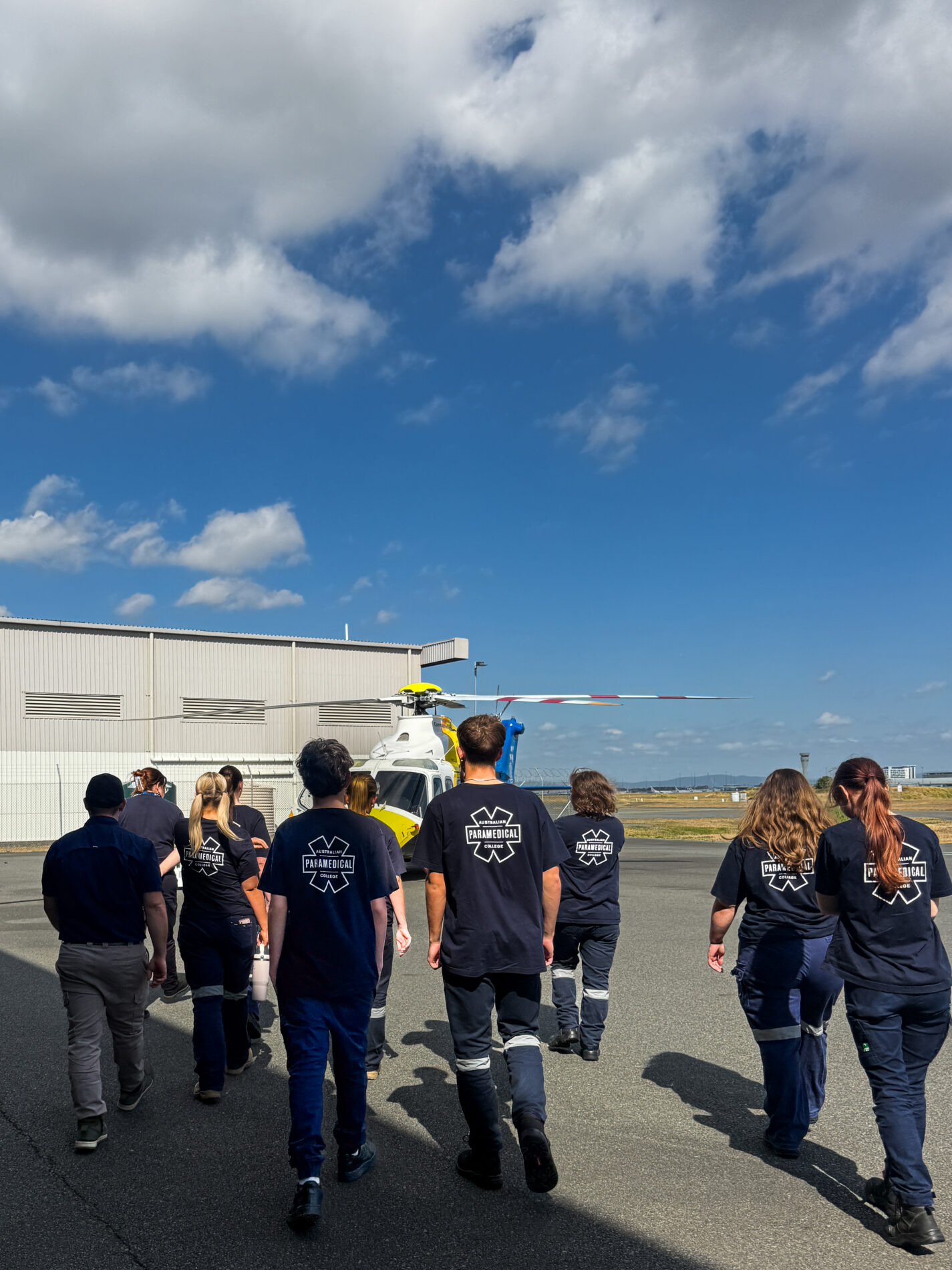
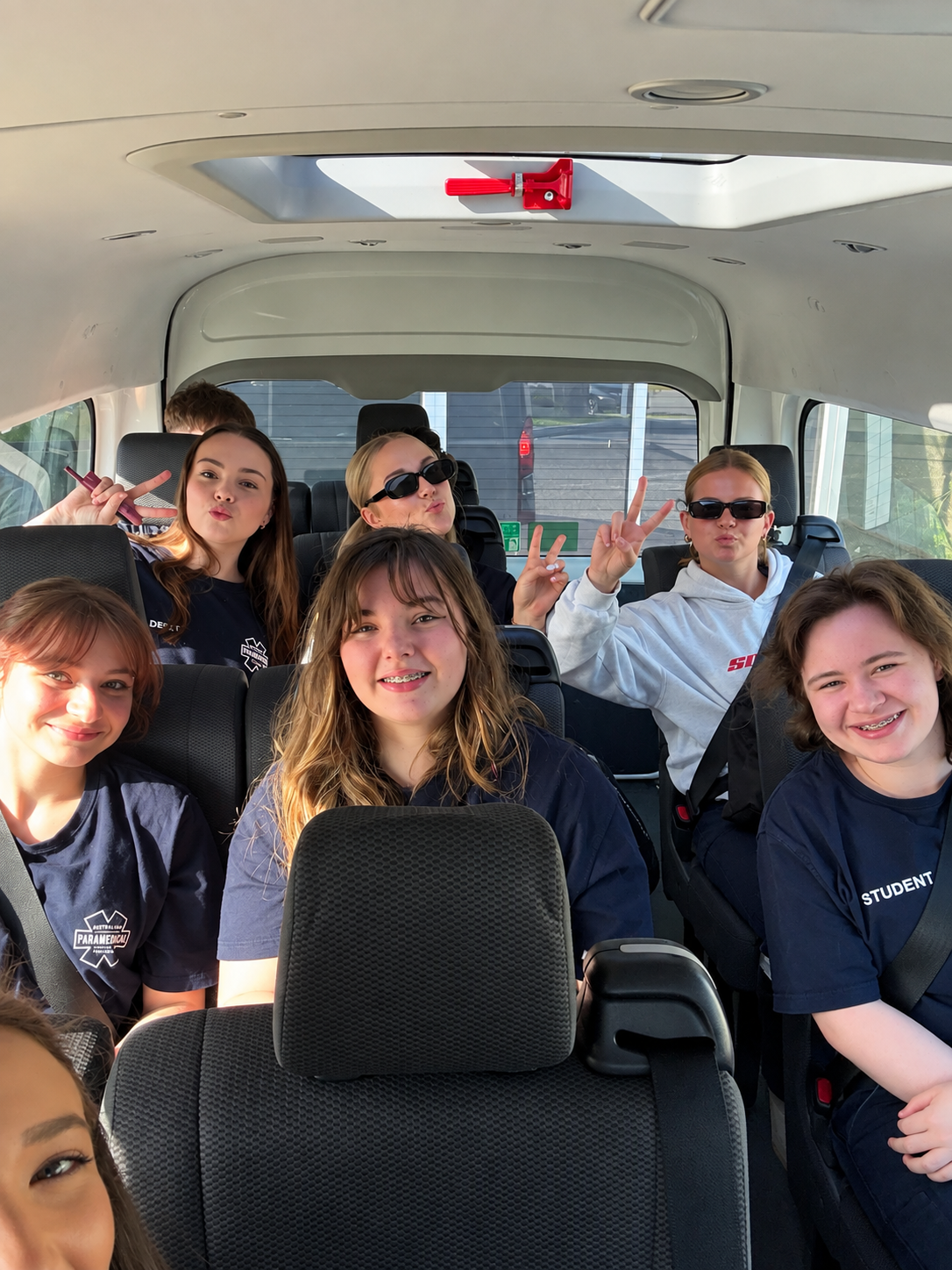
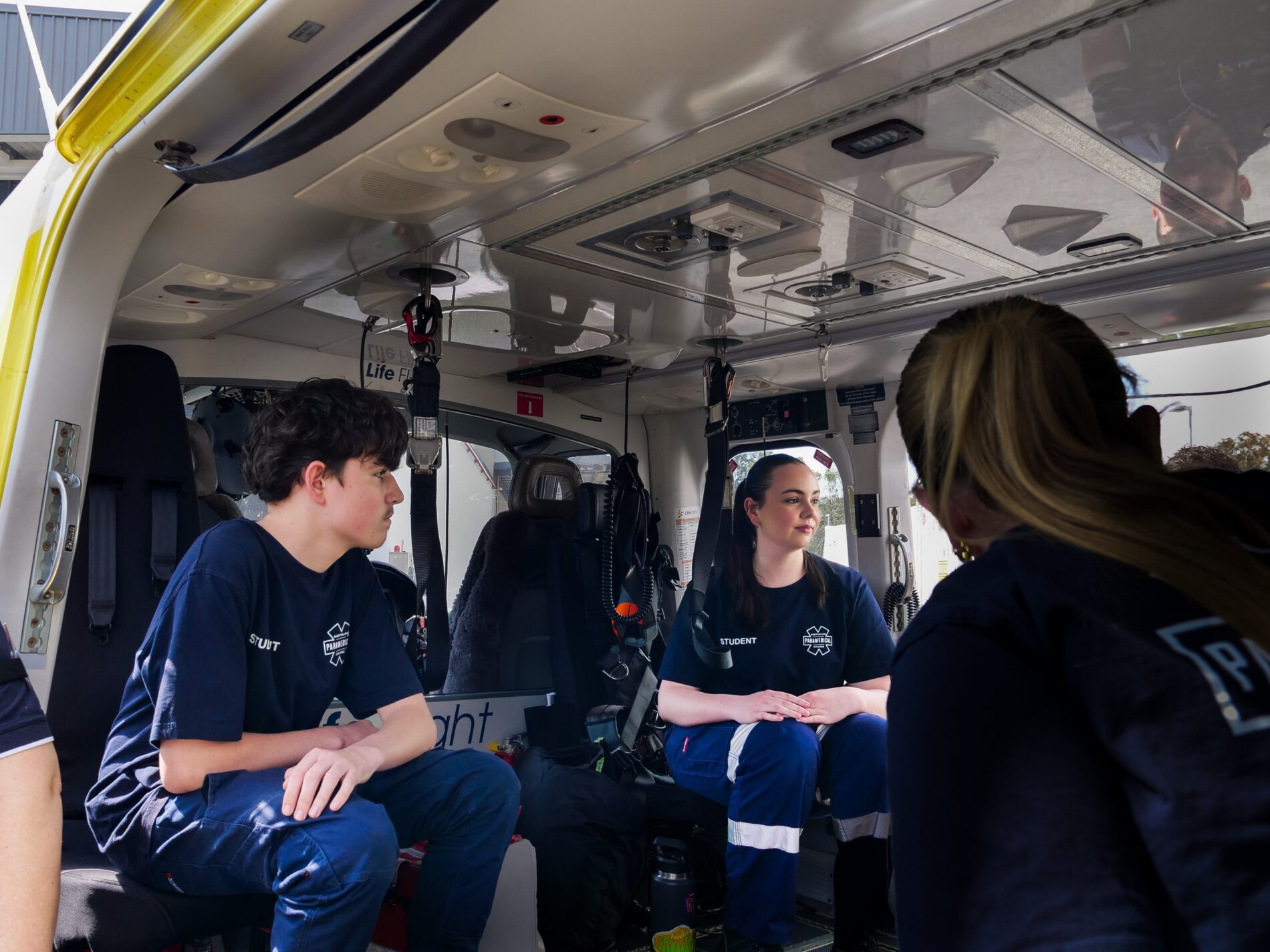
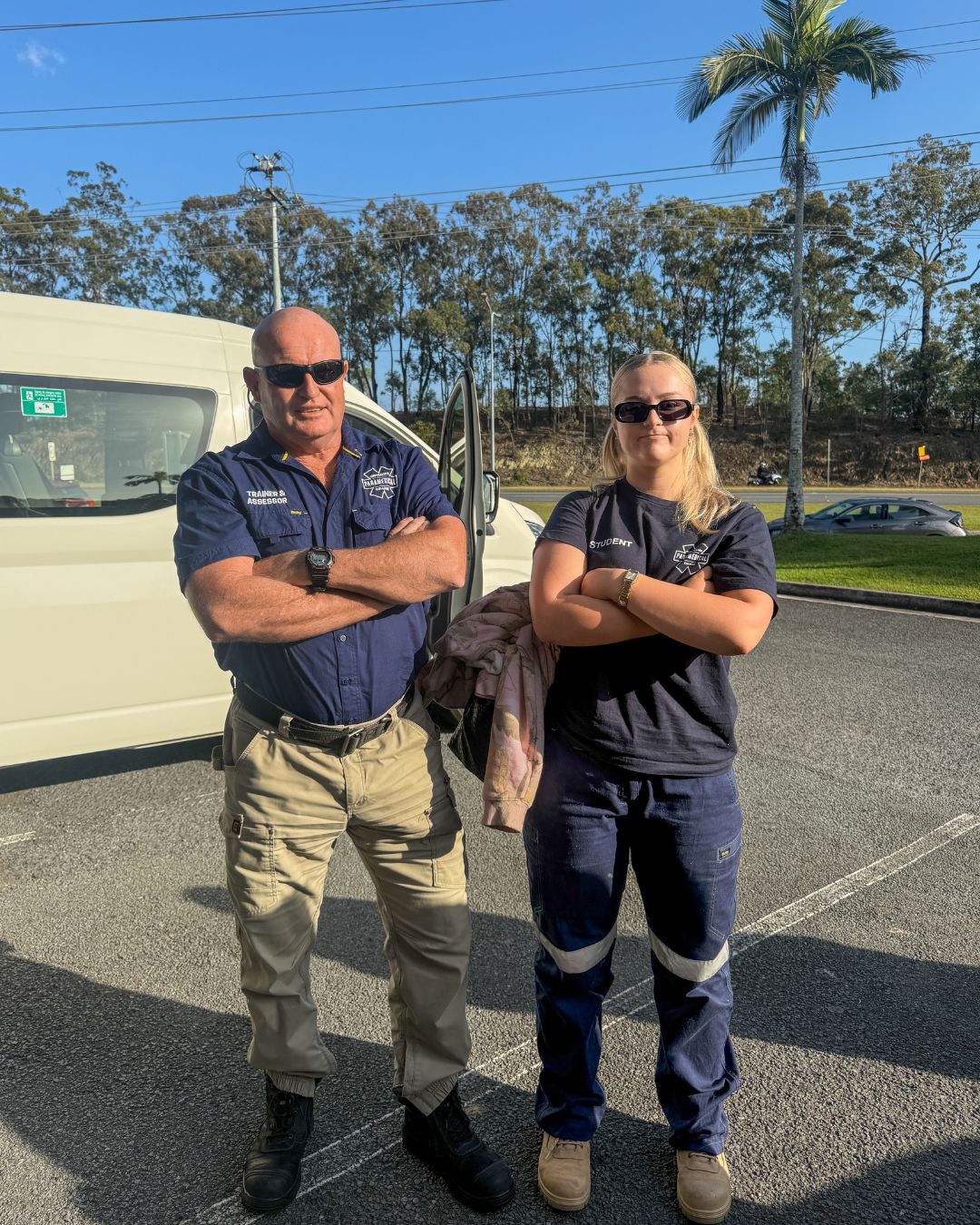
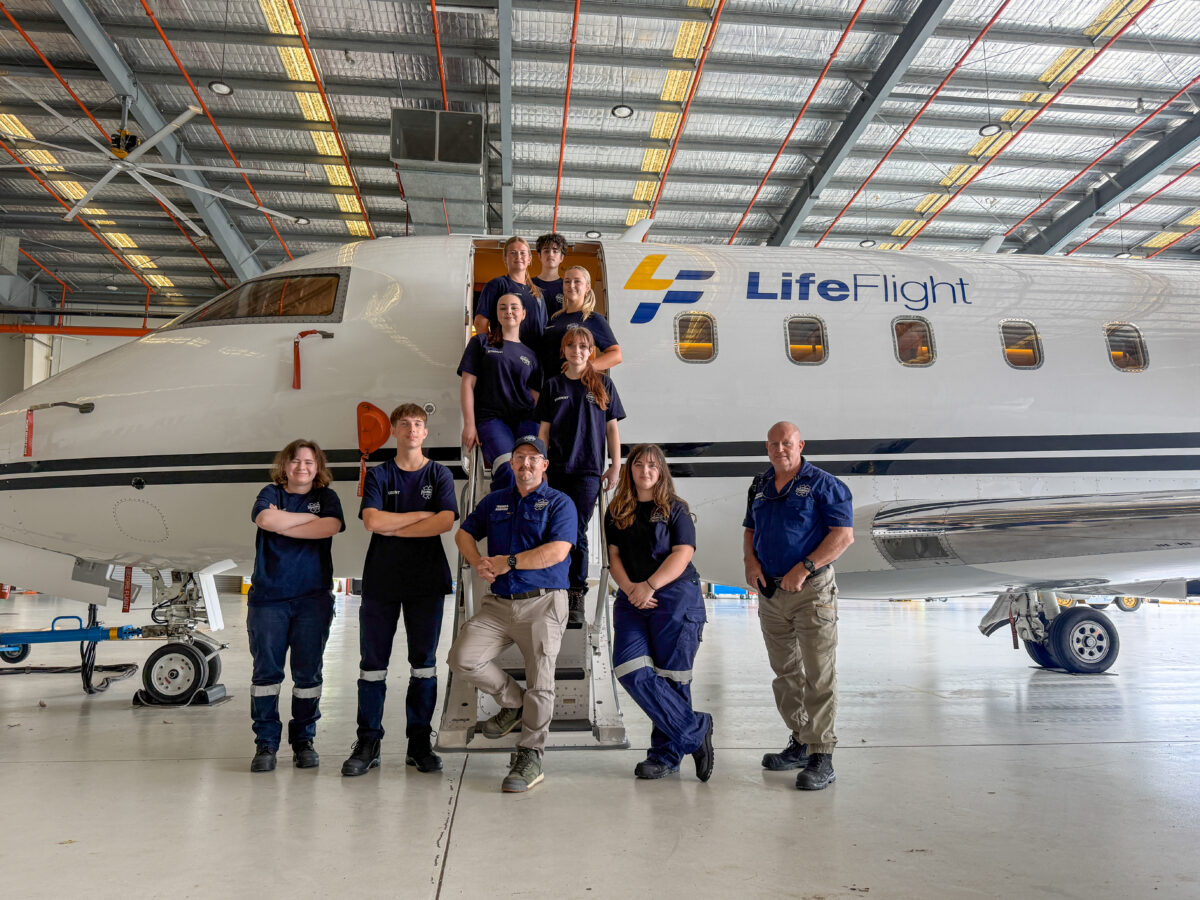
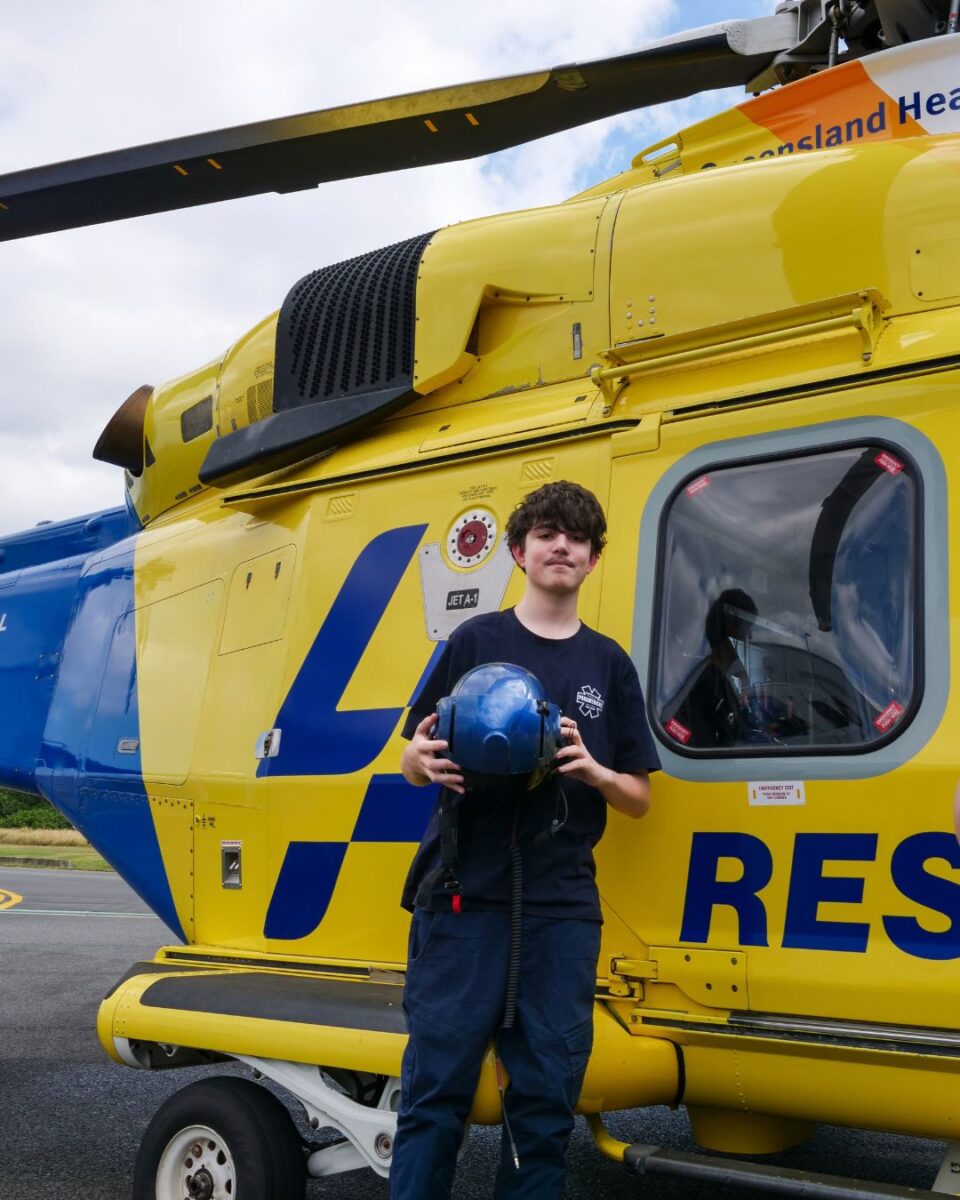
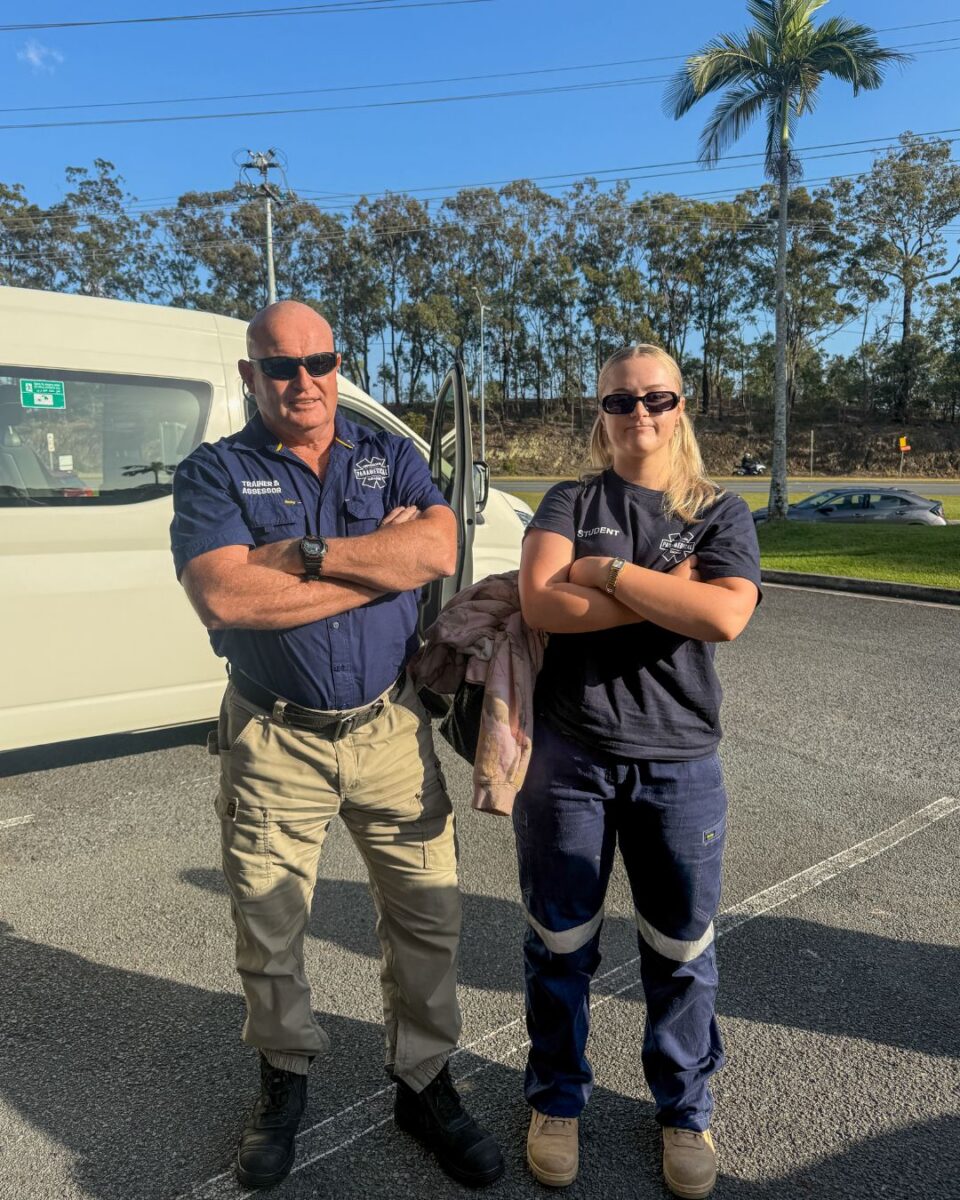
A rescue helicopter looks very different up close than it does passing overhead. Australian Paramedical College’s (APC) VET in Schools (VETiS) students in Queensland found that out when they went behind the scenes at LifeFlight’s Brisbane base with APC trainers, Ash and Jens.
The aim was simple: show students what a career in emergency healthcare can actually look like beyond the classroom, and introduce pathways they may never have considered.
 |
Seeing emergency healthcare beyond the classroom
Classrooms teach the theory. Real environments show the context: the equipment, the teamwork and the people who do the job every day.
For VETiS students still deciding what comes after school, that context makes all the difference. It turns a vague idea like “I want to work in emergency healthcare” into real roles, real workplaces and real next steps.
 |
 |
 |
Behind the scenes at LifeFlight Brisbane
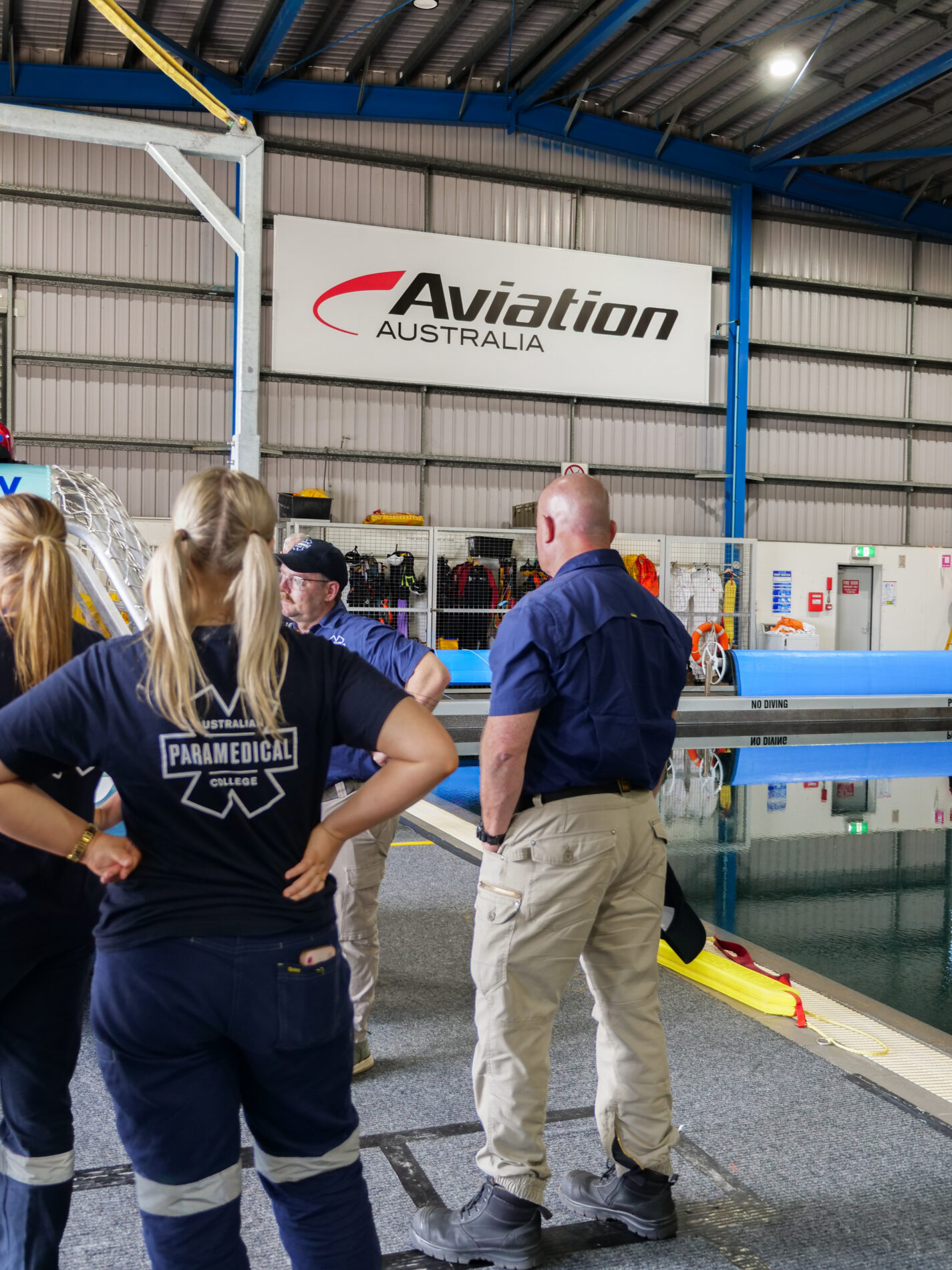
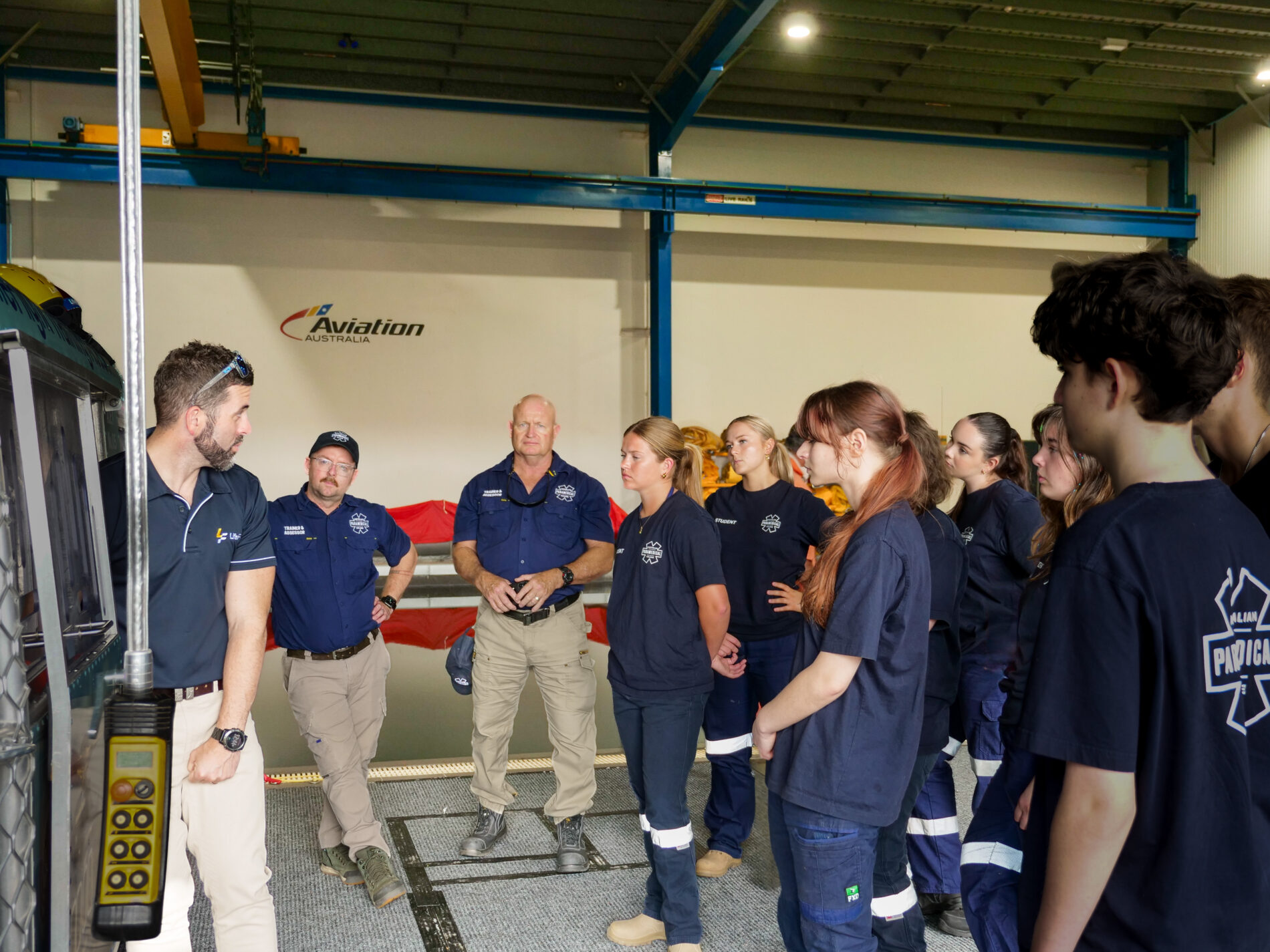
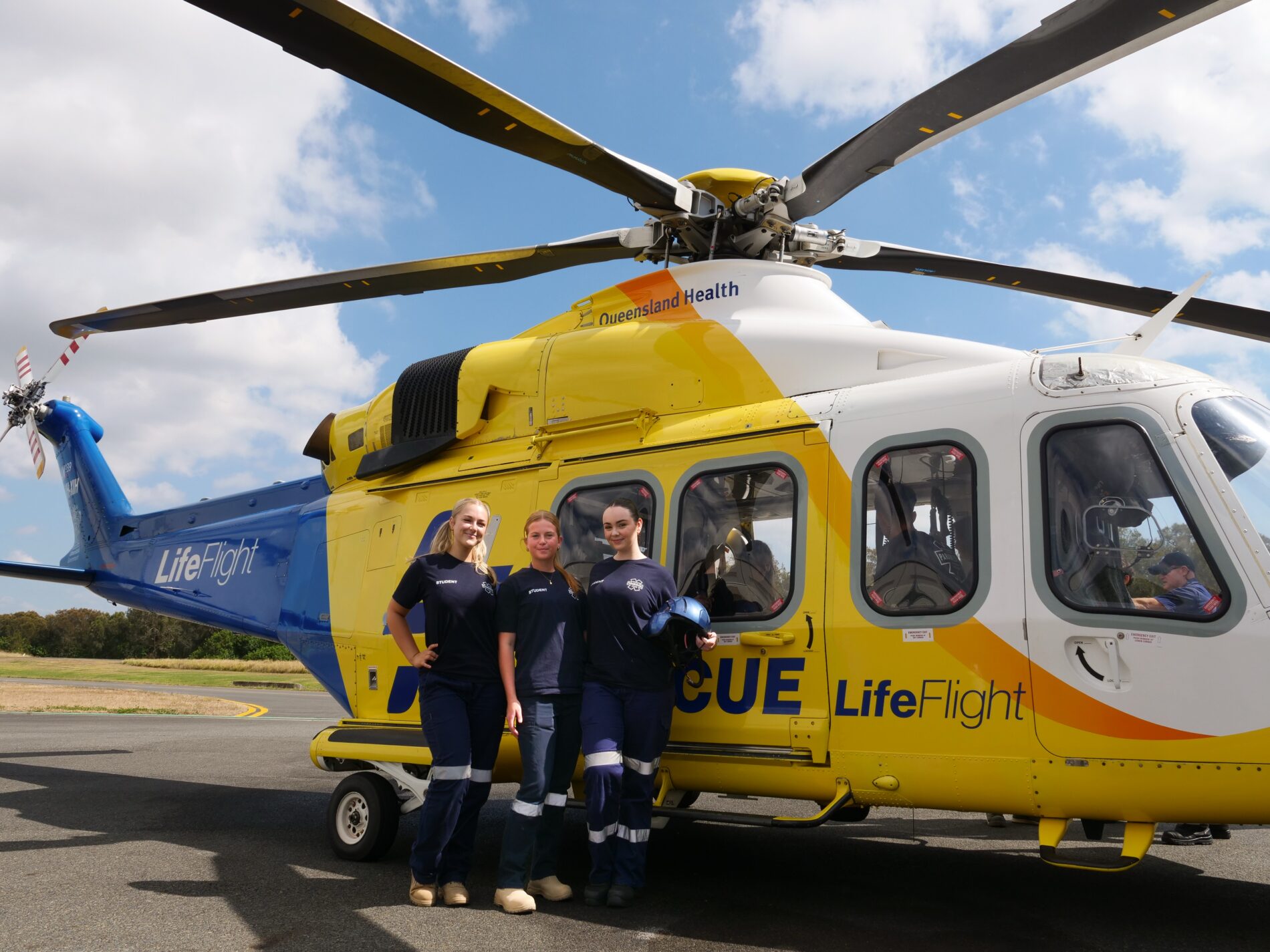
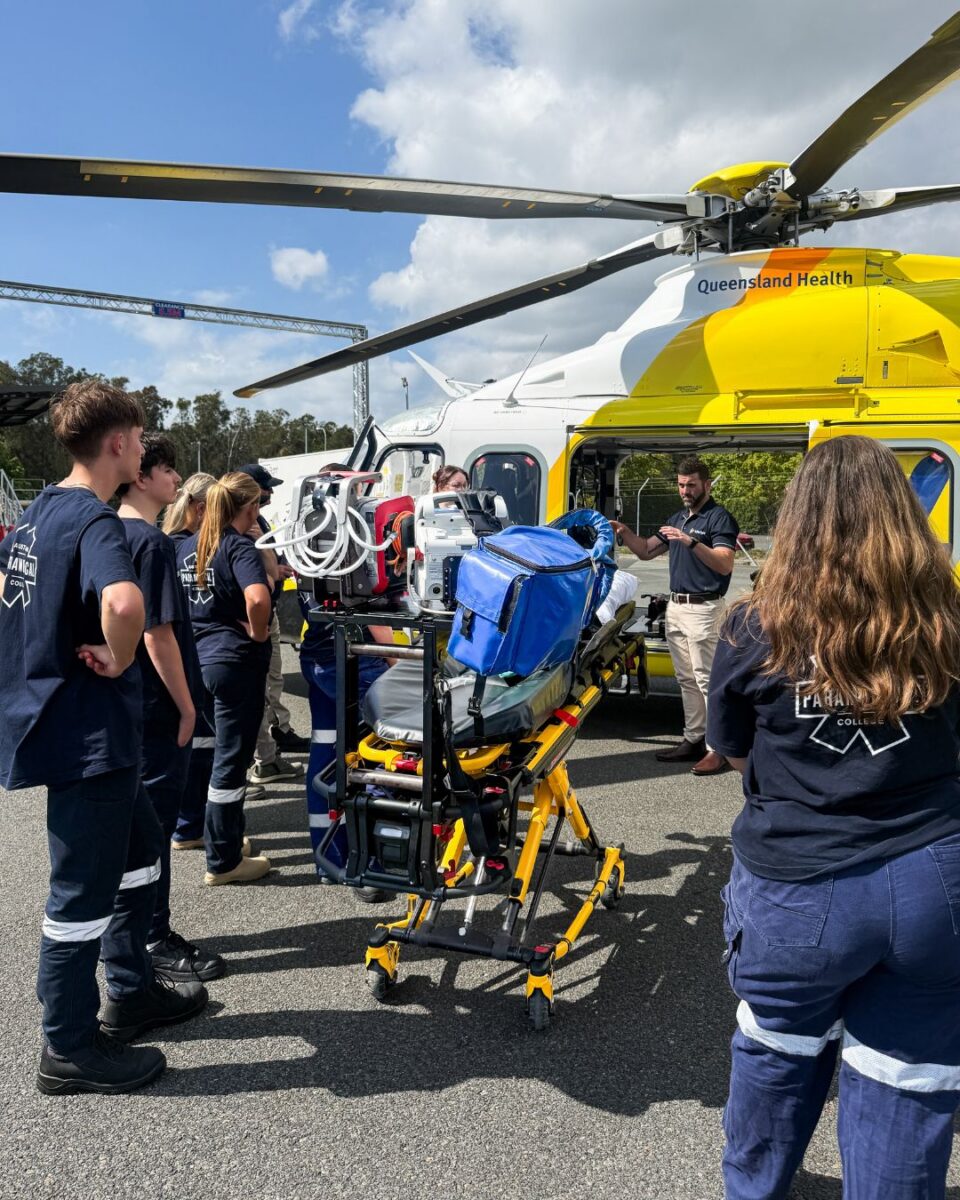
Students walked through LifeFlight’s facilities and saw the aircraft up close, including the LifeFlight jet and a rescue helicopter. LifeFlight’s jets are equipped to deliver intensive care in the air with Domestic bases in Archerfield, Brisbane, Bundaberg, Cairns, Mackay, Mount Isa, Rockhampton, Roma, Sunshine Coast, Toowoomba and Townsville and an International base in Singapore.
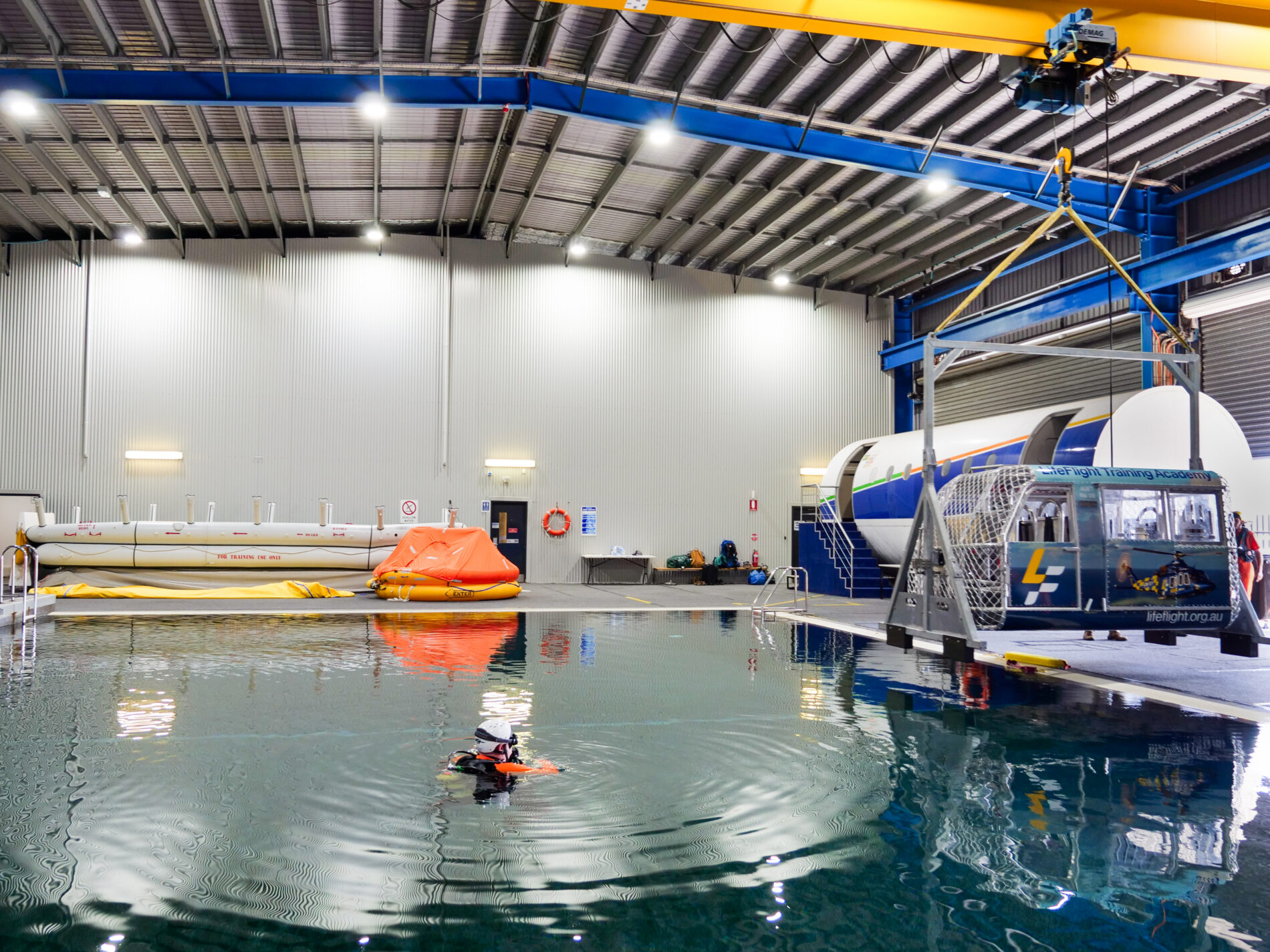
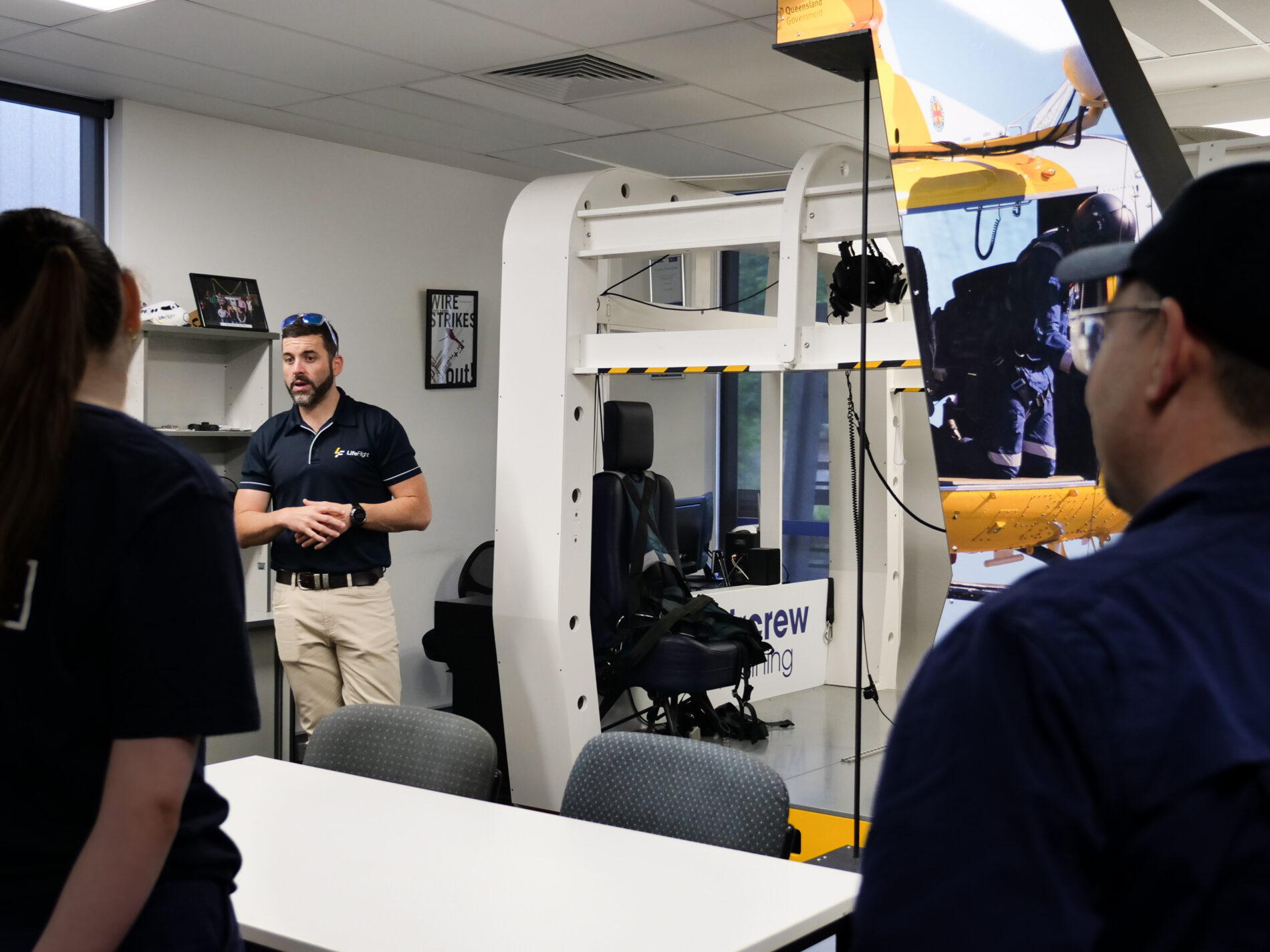
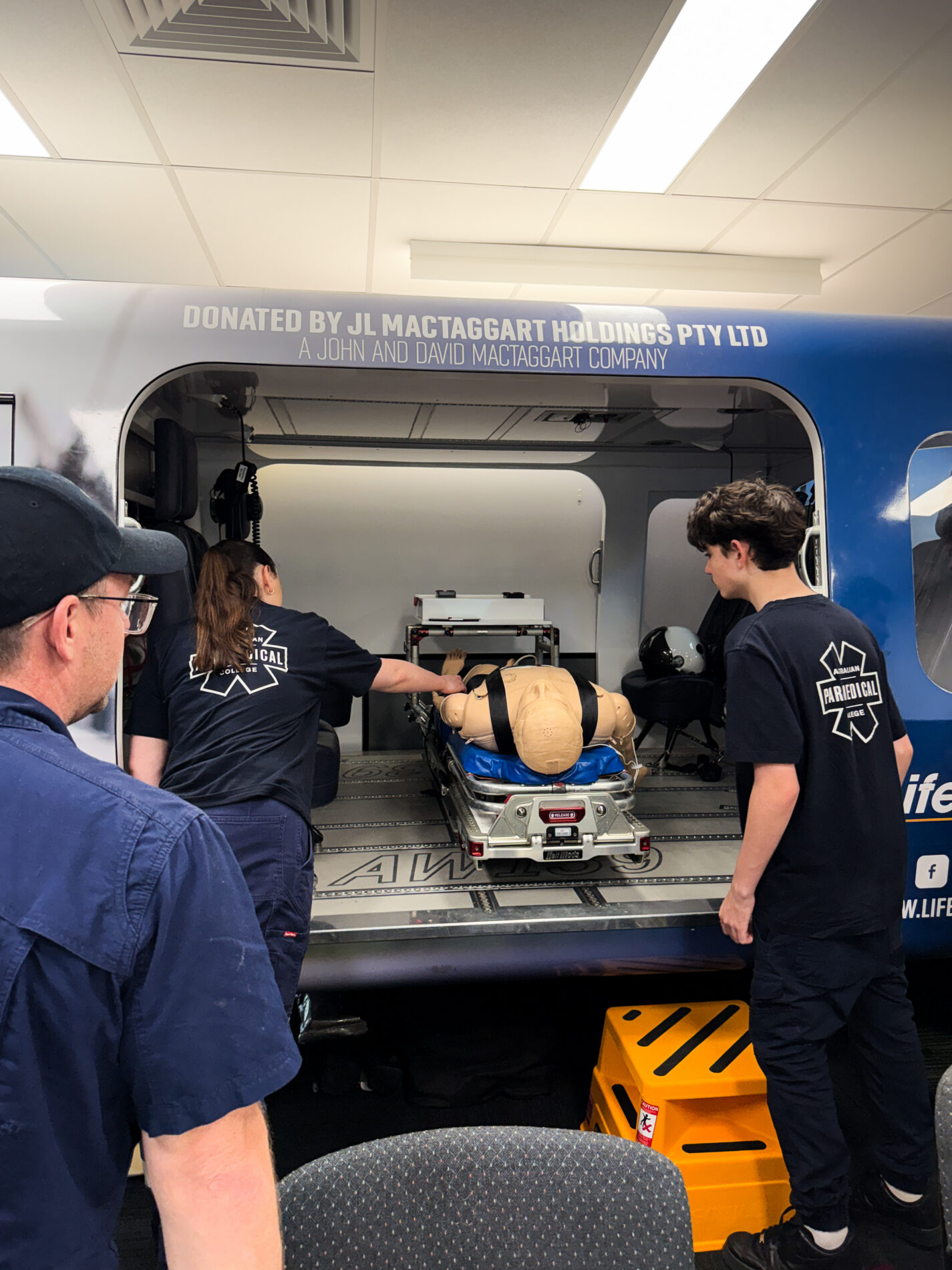
The group also explored training facilities and simulation technology. LifeFlight’s MediSim, for example, recreates a helicopter cabin, complete with intercom, medical oxygen, aircraft lighting and a high-fidelity patient manikin, so clinicians can practise in realistic conditions.
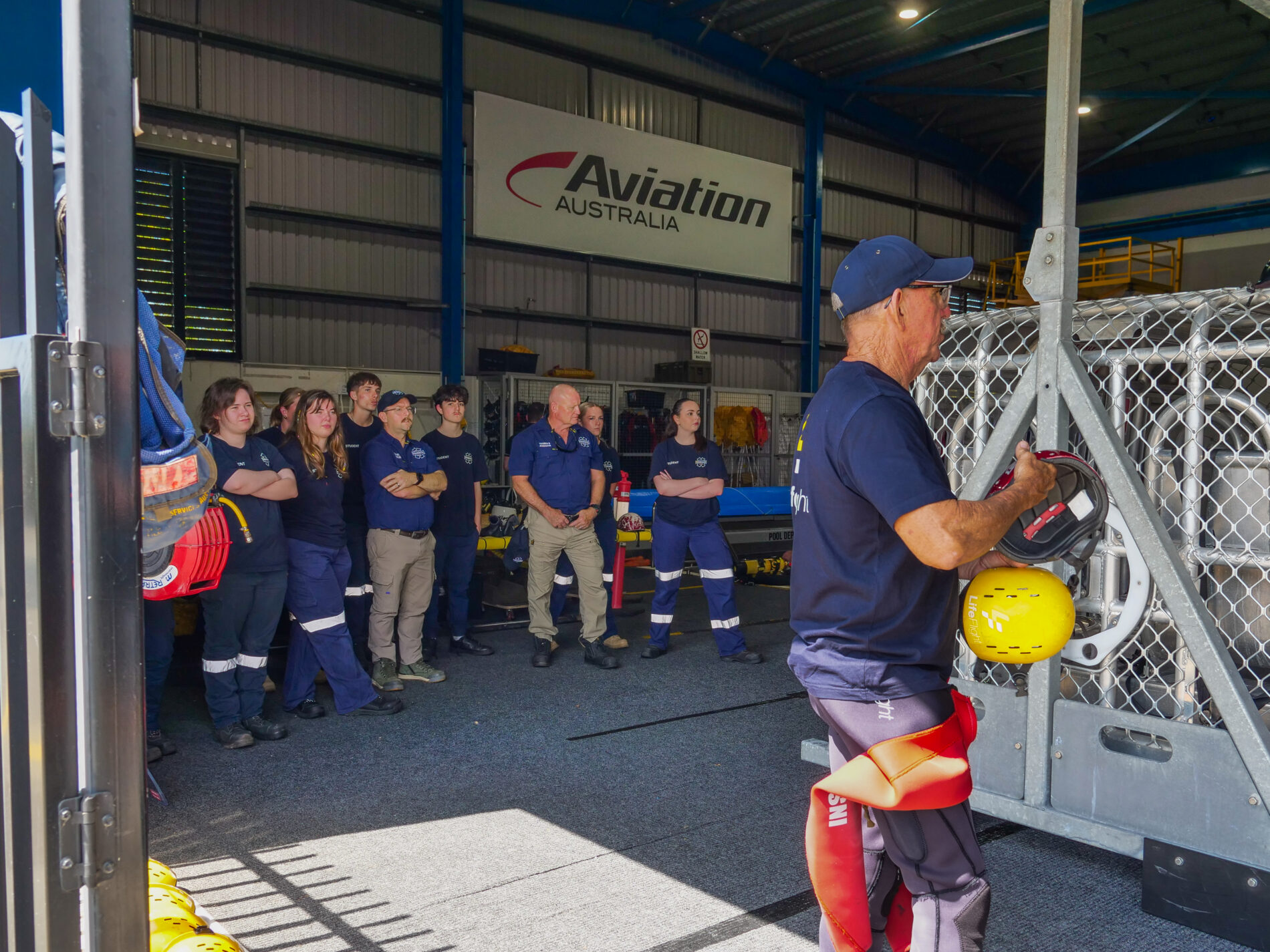
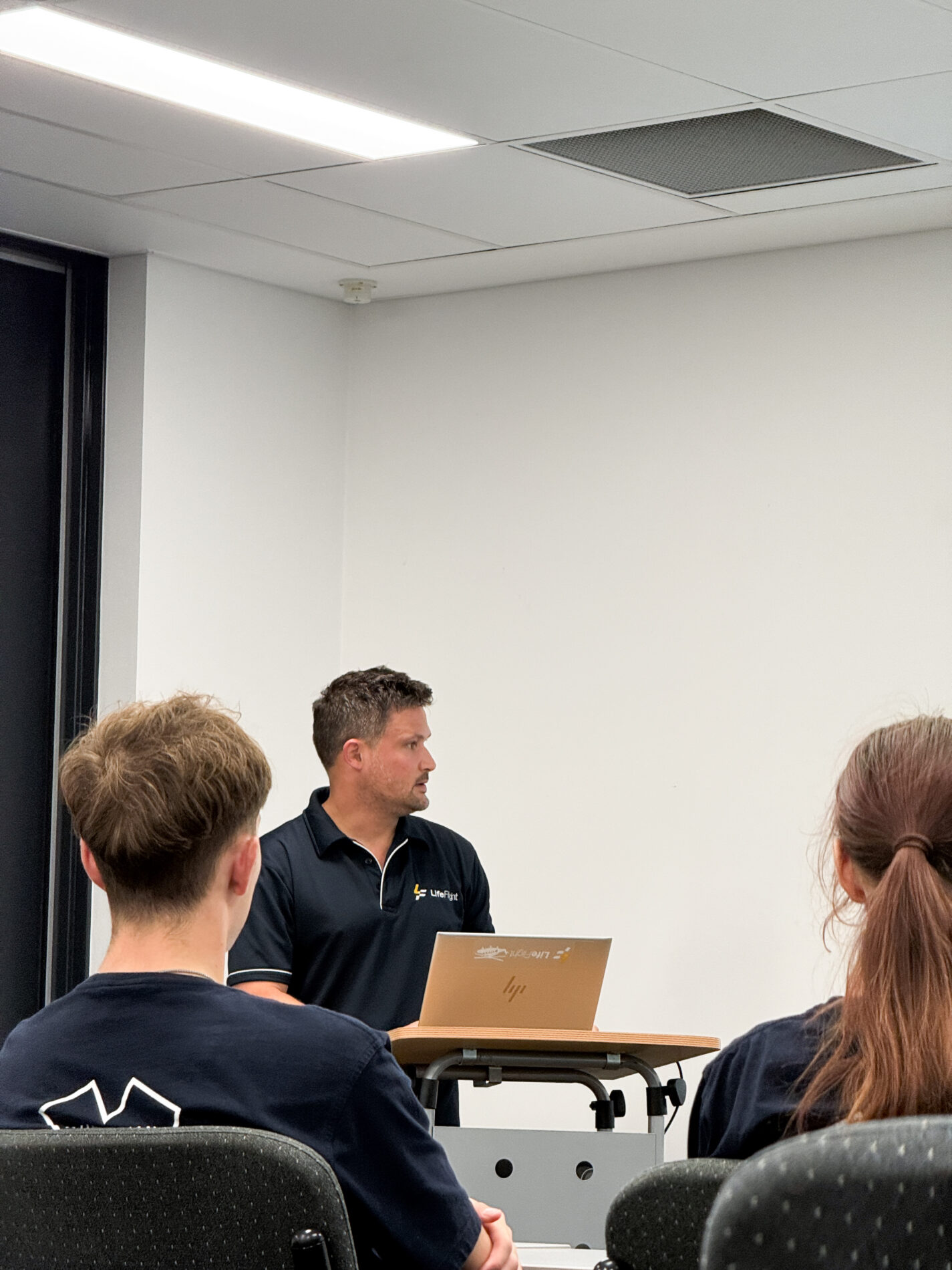
The highlight was hearing directly from the LifeFlight team. They explained how aeromedical rescues operate, what staffing and shift work can look like, and the training, qualifications and experience behind each clinical role. The questions (and the enthusiasm) kept coming all day.
What does it take to work in aeromedical healthcare?
LifeFlight’s clinical workforce includes doctors, nurses and flight paramedics. Each LifeFlight rescue helicopter is crewed by a pilot, co-pilot, rescue crew officer, critical care doctor and a Queensland Ambulance Service flight paramedic.
On the jets, a critical care doctor and flight nurse work alongside the pilots.
LifeFlight operates from eight Queensland bases, 24 hours a day, 365 days a year, so shift work is part of the picture.
One message came through clearly: these are not entry-level roles. They are generally built on a professional qualification, registration, solid clinical experience and specialised training.
*Requirements also differ between employers, so always check with the organisation you’re interested in on their website.
From paramedicine to the skies: exploring career pathways
Paramedicine is the health profession focused on assessing, treating and transporting people who are sick or injured, often in emergency and out-of-hospital settings. Paramedics are frequently the first clinicians a patient sees.
In Australia, a paramedicine career can branch in many directions over time: state ambulance services, aeromedical and flight paramedicine, FIFO and mining sites, event medicine and other specialised environments.
Each move usually requires more experience and training. Flight paramedic roles, for example, typically come after years of practice as a registered paramedic.
Flight nursing is a separate pathway.
Nursing and paramedicine are different professions, with different degrees and registration, so flight nurses start their careers as registered nurses.
What is HUET? Students see specialised training first-hand
HUET stands for Helicopter Underwater Escape Training. It teaches people how to escape a submerged aircraft, using a purpose-built simulator in a safe, controlled environment.
Our students watched a team complete their first HUET. It was a vivid reminder that some healthcare careers involve training you’d never expect, and that learning continues long after your first qualification.
Is the Diploma a pathway to Paramedicine
Not everyone goes straight from school to university, and that’s completely fine! Sometimes you don’t get the ATAR required to get direct entry, you have been working in another career for years and now want to change it up.
The HLT51020 Diploma of Emergency Health Care is nationally recognised healthcare training covering patient assessment, emergency care and transport in pre-hospital and out-of-hospital settings. It does not qualify you for registration as a paramedic but it is the perfect stepping stone for those who aren’t ready to dive head first into a University degree.
What it can do is build practical skills and confidence, and qualify graduates to work in roles such as emergency medical technician , patient transport, first response, and more – depending on employer requirements and also provide a stepping stone to university.
*Depending on each university’s entry requirements and credit arrangements.
Don’t have an ATAR? There are still pathways into healthcare
Not getting the ATAR you hoped for, or not having one at all, doesn’t have to end your healthcare ambitions.
Many universities consider completed VET qualifications for admission. A Diploma can also help you find out whether emergency healthcare suits you before committing to a longer degree.
The same goes for career changers: healthcare pathways aren’t only for school leavers.
A reminder to students: You don’t have to have your whole career figured out
The point of the LifeFlight excursion wasn’t for students to leave with a finished career plan. It was to show them that emergency healthcare is far broader than they might think, and that most careers in it are built one step at a time.
Start your healthcare journey before 2026 is over
There are only three months left in 2026.
If you are ready to make the first step in your emergency Healthcare career and having been thinking about joining APC, join us at our upcoming Open Nights.
Explore Australian Paramedical College’s HLT51020 Diploma of Emergency Health Care, here.
Find out what the course involves, where it can lead, and whether it fits your goals. When you’re ready, register your interest below and talk to our team.