|
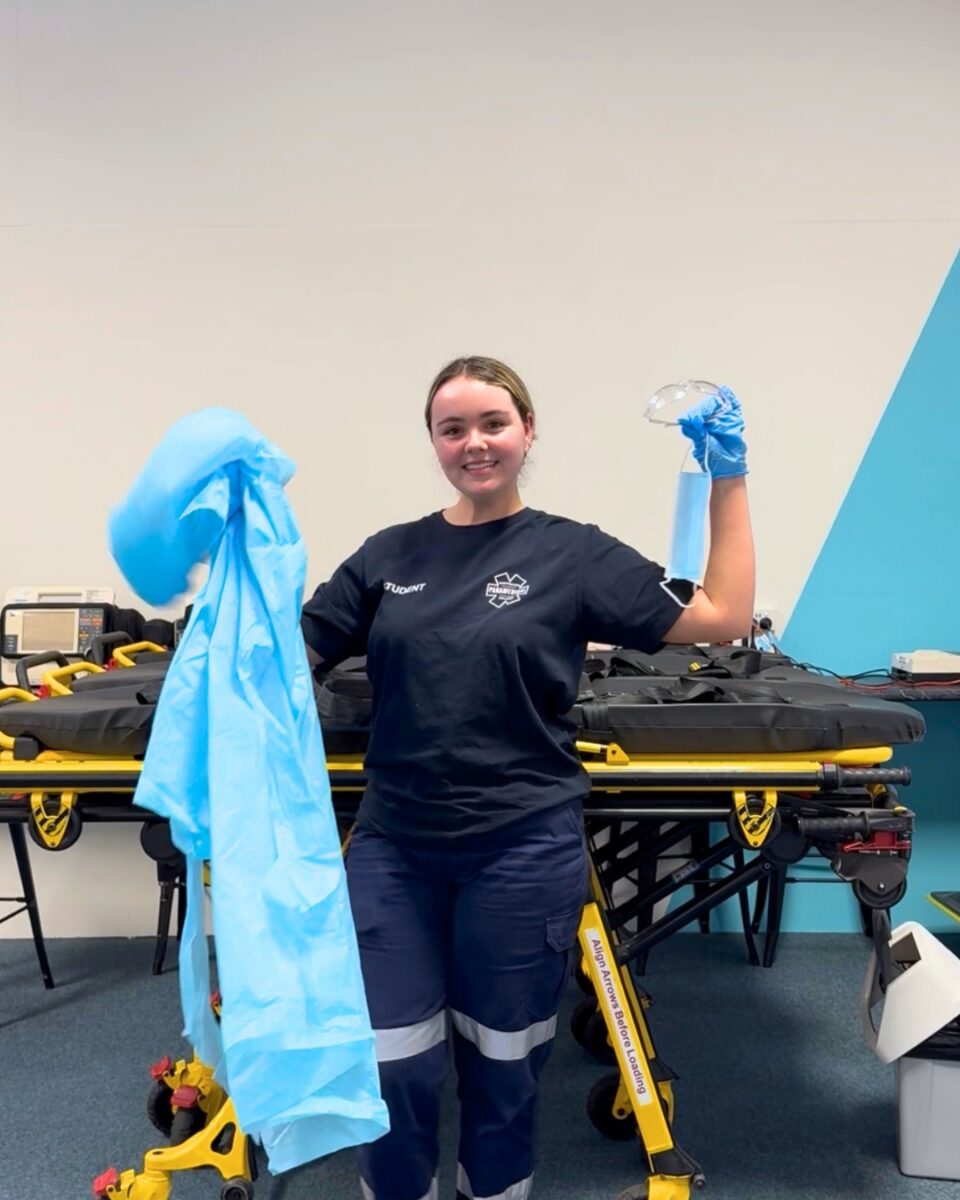
Not every high school student knows what they want to do after graduation. Chloe does. One day a week, she swaps her regular school timetable for hands-on healthcare training at Australian Paramedical College’s (APC) Burleigh Heads campus, working toward a real, nationally recognised qualification before she’s even finished Year 12. Chloe is one of the students currently enrolled in APC’s VET in Schools (VETiS) program, studying the HLT31220 Certificate III in Basic Health Care. It’s a program designed specifically for high schoolers who want a genuine taste of a healthcare career – and for Chloe, it’s already shaping her plans for the future. Why Chloe Chose a Different PathLike a lot of Year 11 and 12 students, Chloe had to think hard about what life after school might actually look like. For her, the answer wasn’t a traditional office job. “I just wanted an environment where I wasn’t stuck at a desk all day, like, doing a 9:00 till 4:00, 9:00 till 5:00,” Chloe explains. |
 |
Healthcare, and emergency healthcare in particular, offered something different.
“Especially with the shift work, you’re not just stuck in one spot. Like, it’s new patients, new treatments, everything. It’s not the same.”
That desire for variety and hands-on work is exactly what draws many students to APC’s VET in Schools program in the first place. It’s built for students who are curious about healthcare and emergency services but want to experience it before committing to years of further study — a chance to test the water while still at school.
What Is APC’s VET in Schools Program?
APC’s VET in Schools program gives Year 11 and 12 students the opportunity to study the HLT31220 Certificate III in Basic Health Care alongside their regular schooling – and it counts toward their ATAR.
The qualification equips students with the essential skills used in first aid and medical response roles, covering emergency first aid and elements of patient transport in both pre-hospital and out-of-hospital settings.
It’s also the first formal step on a pathway toward becoming a Registered Paramedic.
Who is the VETiS program for?
The program is open to any Year 11–12 student interested in healthcare or emergency service careers, with no prior experience required.
Whether a student already has their heart set on paramedicine, like Chloe, or simply wants to explore what a healthcare career involves, VETiS is designed to be an accessible entry point.
How the Program Works
VETiS runs for one day a week over 30 weeks, delivered on-site at APC’s campus. Classes blend hands-on practical training with essential theory, taught by experienced, supportive industry professionals.
Importantly, all learning and assessment happens during that single day of attendance — there’s no additional homework or at-home coursework required, so it fits around a student’s existing school workload rather than adding to it.
Hear From Chloe about her Experience in VETiS with APC
Inside the Classroom: What Chloe Has Learned So Far
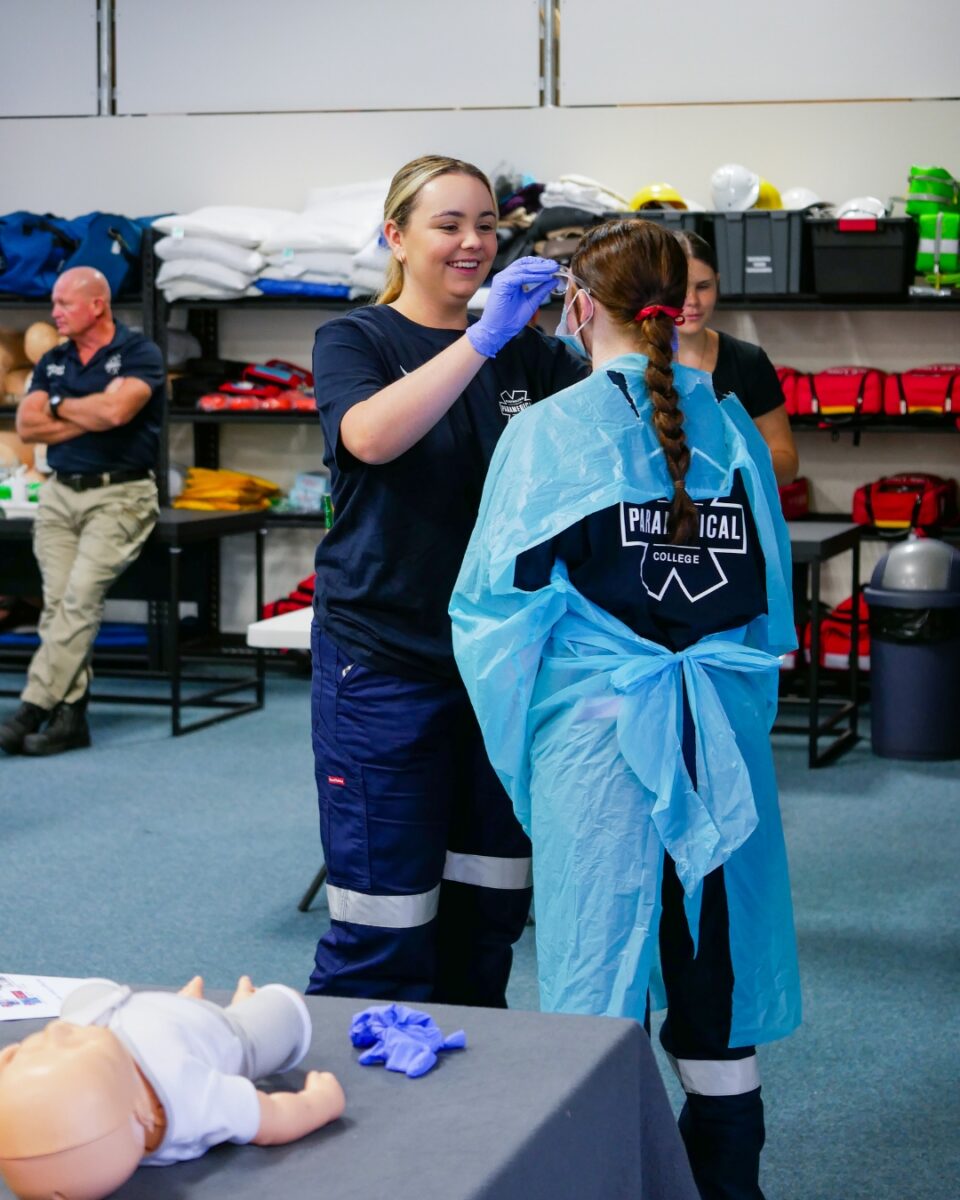
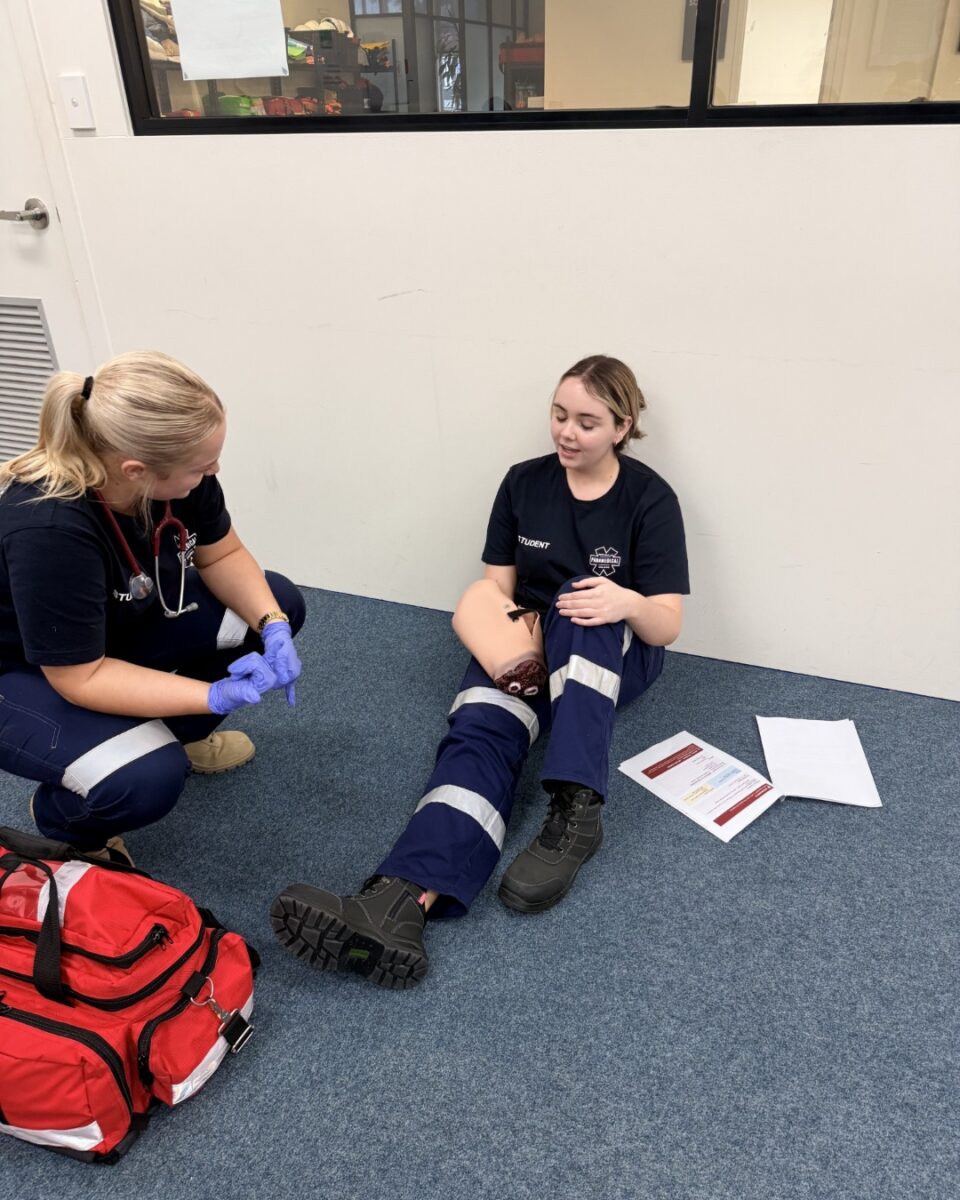
We asked Chloe about her favourite workshop experience only 2 months into the course, and she doesn’t hesitate: “My favorite experience so far has been learning how to take manual blood pressure.”
It’s a small detail, but it says a lot about what makes the program engaging for students like Chloe – with real clinical skills, taught hands-on, that make the theory feel immediately useful and relevant to real healthcare work.
 |
 |
Overcoming the Nerves of Starting Something New
Starting a course outside the usual school curriculum can feel intimidating, and Chloe was upfront about her biggest worry going in: “Probably not knowing the answers.”
It’s a completely normal concern for a student stepping into unfamiliar territory – but it didn’t last long.
“Once I got here I realised, everybody’s in the same boat,” she says. “Everybody’s really supportive as well, so no one’s really judging you at all.”
That sense of a shared, supportive learning environment is central to how APC designs its VET in Schools classes – students come in at different starting points, but they’re learning together, guided by instructors who understand they’re speaking to school-aged learners taking their first real steps into healthcare.
Discovering New Pathways in Healthcare
One of the biggest surprises for Chloe hasn’t been a particular skill or lesson – it’s been the sheer breadth of options the qualification opens up.
“One thing that surprised me is how many different pathways I can go down, especially once getting the Cert III (HLT31220 Certificate III in Basic Health Care),” she says. “There’s so many different things you can go into.”
This is one of the genuine strengths of the VETiS structure. Completing the Certificate III doesn’t just look good on a resume – it provides up to seven unit credits toward APC’s HLT51020 Diploma of Emergency Health Care, and that Diploma in turn opens doors to roles such as a First Responder, Emergency Medical Technician (EMT), Medical Emergency Services Officer (ESO), Event Medic, Industry Medic or Ambulance Transport Attendant.
For students who want to keep studying, several universities also offer a VET entry pathway into a Bachelor of Paramedicine, with some even crediting graduates’ prior study toward their degree.
Chloe’s Advice for Future VETiS Students
For anyone considering the program, Chloe’s advice is honest and encouraging in equal measure: “Be prepared to try and learn all the different acronyms, all the different theory-based learning, but it’s really fun and hands-on, so do it.”
It’s a fair summary of what the course demands – genuine effort with the theory side of healthcare – balanced against what students get in return: practical, engaging, real-world learning that isn’t confined to a textbook.
What’s Next for Chloe
Chloe already has a clear vision for where this pathway is taking her.
“Once I finish studying at APC, I wanna go and do event work while I’m still studying, ’cause I wanna go and study paramedicine at Griffith.”
It’s a plan that reflects exactly what the VET in Schools program is designed to enable: gaining real, applicable experience in emergency healthcare while still at school, then using that foundation to keep building toward a paramedic career — whether that’s through further vocational study, hands-on industry work, or university.
Is VET in Schools Right for You or Your Child?
Chloe’s experience captures what makes APC’s VET in Schools program valuable for students who are curious about a future in healthcare: real hands-on skills, a supportive learning environment, and a clear next step rather than a dead end.
For students, it’s a chance to explore emergency healthcare and earn a genuine qualification while still at school.
For parents, it’s a structured, supported way for their child to build confidence and direction without adding pressure to an already busy school schedule.
And for schools, it’s a practical, industry-relevant program that gives students real-world exposure to a growing sector!
Ready to Start Your Own Pathway?
Chloe’s journey into emergency healthcare started with one day a week at APC’s Burleigh Heads campus – and it’s a journey more students across the country will soon be able to start too.
In 2027, APC is running two VET in Schools intakes at our Burleigh Heads campus in Queensland, along with the launch of the program in New South Wales, with one intake at our Hurstville campus.
Enrolments are open now for students, parents and schools wanting to secure a place.
If Chloe’s story sounds like the kind of head start you or your child has been looking for, now is the time to find out more about APC’s VET in Schools program.
Find out more here
Upcoming Intakes
Choose the intake that works best for you and start your journey in emergency healthcare.
QLD
Intake 1
(Tuesdays)
Commencing
9th February 2027
QLD
Intake 2
(Wednesdays)
Commencing
10th February 2027
NSW
Intake 1
(Wednesdays)
Commencing
9th February 2027
REGISTER FOR OUR 2027 INTAKE!
If you’re a school student, parent or Industry Liaison Officer looking to learn more about studying with