If you’re researching how to become a paramedic in NSW, or weighing up emergency healthcare training providers, one thing shapes your experience more than almost anything else: who is teaching you.
Sophie is an APC trainer and registered paramedic based in New South Wales. She shares her story, her advice and what she loves about teaching emergency healthcare. It’s a story built around one lifelong goal.
About Sophie: Former Registered Nurse to Paramedic
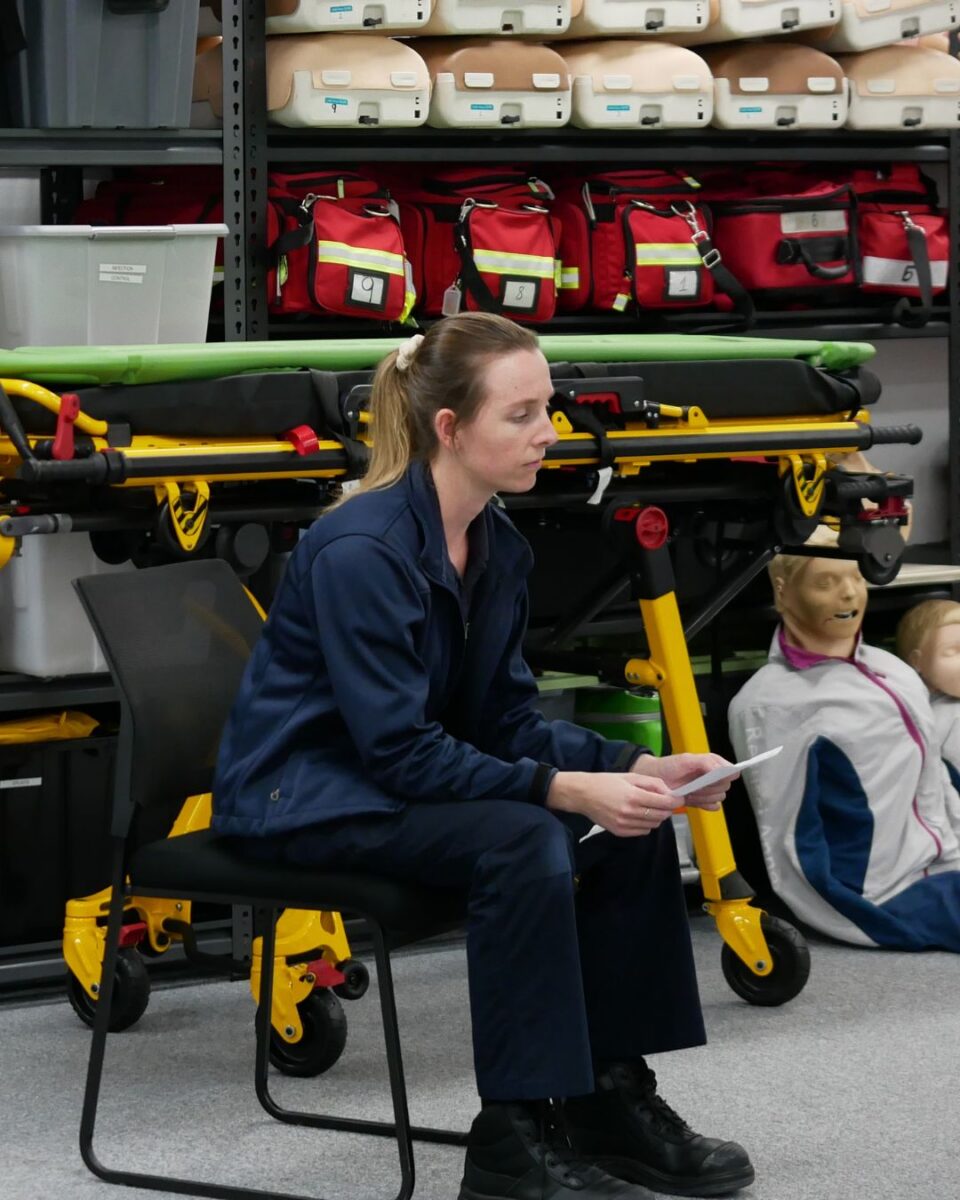
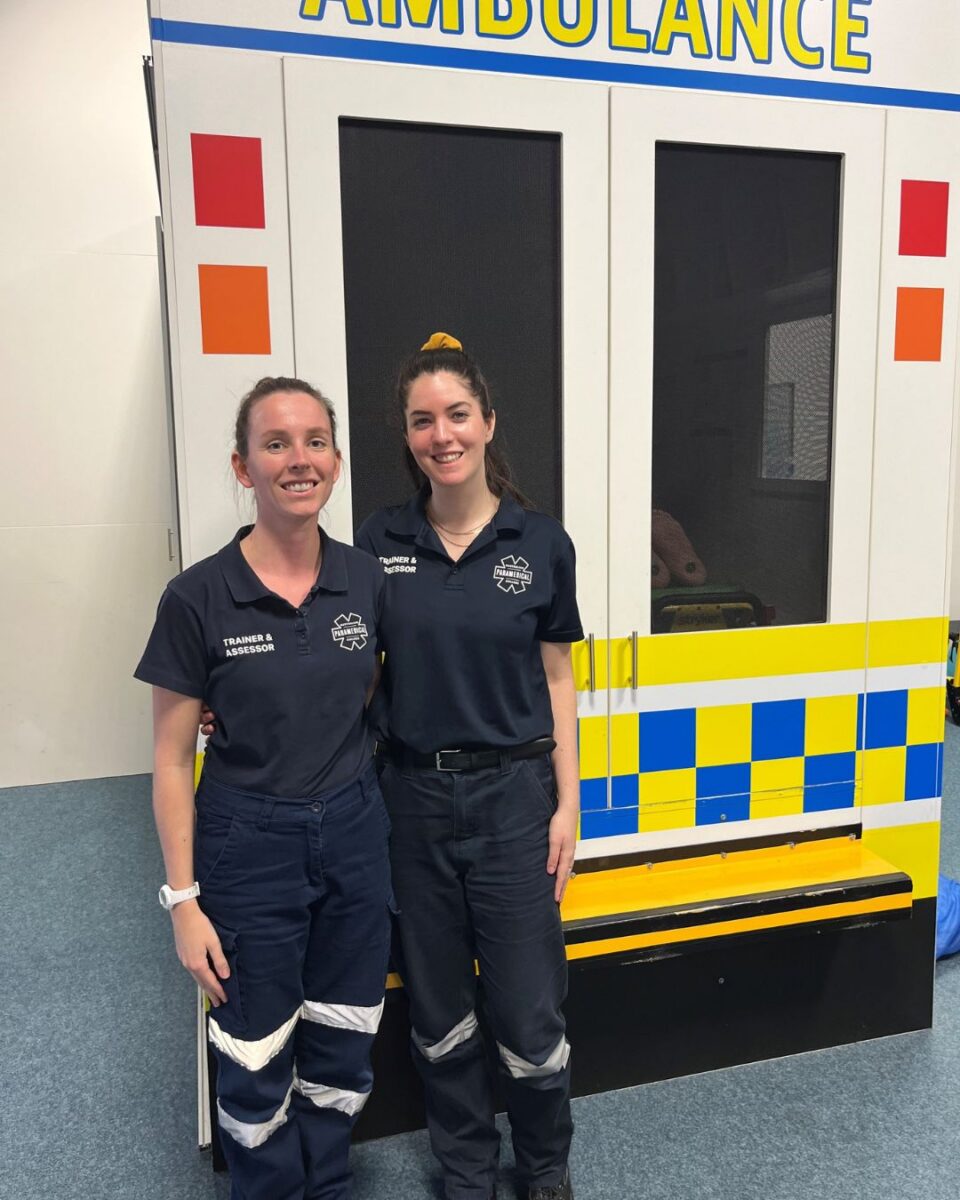
Sophie teaches online across a variety of units and also teaches in APC’s clinical workshop spaces. Before joining APC she was a registered paramedic with NSW Ambulance (rural and metro) and a couple of private organisations. Before that, she spent about ten years as a registered nurse in the UK and Australia.
She also has teaching experience behind her. At Charles Sturt University she worked as a peer tutor, a tutor for the Indigenous Academic Support Program and a sessional academic.
That’s a lot of real clinical and teaching experience to bring into a classroom. It also means students learn from someone who has worked in the settings they’re hoping to enter.
If you’re researching careers in emergency healthcare, and weighing up training providers, one thing shapes your experience more than almost anything else: who is teaching you.
 |
 |
Sophie’s Journey Into Paramedicine
Sophie’s career began as a paper girl in the UK, but her goal took shape early. As a voluntary member of St John Ambulance, she knew she wanted to become a paramedic. “It was my dream,” she says, and everything she did from then on worked toward it.
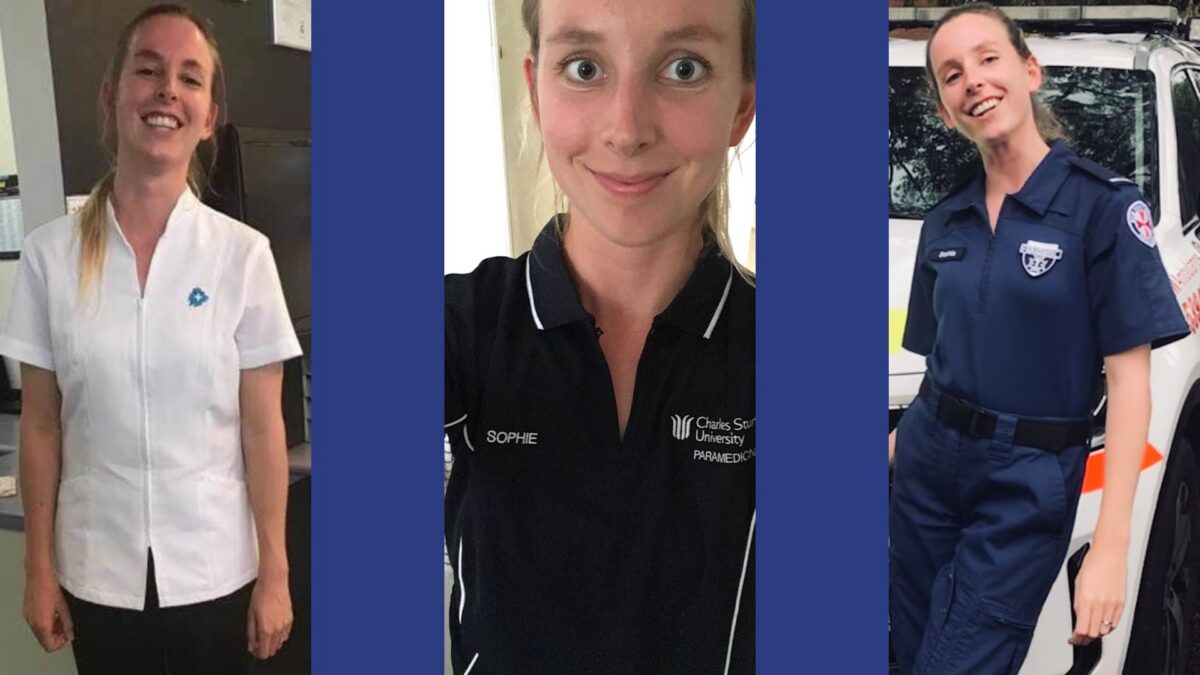
She took a detour through nursing on purpose, to build a varied skillset, clinical exposure and life experience before starting paramedicine. Her nursing placements included high dependency, medicine, surgery and palliative care, plus an elective placement with West Midlands Ambulance Service.
Later, life brought Sophie and her husband to Australia. She returned to study “a little later in life” to complete her Bachelor of Paramedicine, with placements on the Mid North Coast and in Sydney.
If you’re a nurse wondering about the pathway from nursing to paramedic, or a career changer wondering whether it’s too late, Sophie’s story is one real example of how it can be done.
 |
Nursing and paramedic experience across healthcare settings
Sophie’s work has taken her into very different environments. Her bio gives a few examples, not a complete list.
- Former registered nurse in the UK: dialysis nursing with Fresenius and primary care prison nursing in corrections.
- Now holds a non-practising nurse registration
- Former registered nurse in Australia: general practice, road transport with CareFlight and the casual hospital pool with NSW Health.
- Registered paramedic: NSW Ambulance, in rural and metro areas.
That range means she can speak to the many settings where healthcare skills are used, from clinics and prisons to the road and the ambulance.
From ambulance to classroom: Sophie’s move into education
Sophie’s reason for teaching comes back to one word: mentors.
Throughout her career she had plenty of mentors and preceptors who showed her what good mentoring looks like. She realised how much it matters early in someone’s career. Teaching gave her a way to be part of that early phase of a student’s journey, and to be that person for others.
Her time tutoring at CSU confirmed it. She left NSW Ambulance to move into the education space at APC.
“Education is my passion,” she told attendees at an APC trainer panel.
Academic qualifications and career pathway
Sophie’s study has been varied, and each step led toward paramedicine:
- BTEC National Diploma in Sport and Exercise Science, Worcester College of Technology
- Bachelor of Science with Honours in Adult Nursing, University of Worcester
- Bachelor of Paramedicine (with Distinction and Dean’s Award), Charles Sturt University
- Certificate IV in Training and Assessment
- Former registered nurse (about 10 years) and registered paramedic
Her path wasn’t a straight line. She moved through sport science, nursing and paramedicine, and across countries, with the same end goal in sight.
Sophie’s approach to teaching and supporting students
Sophie describes her favourite part of the job as supporting students and showing them what they can do, through the clinical skills they build and in themselves.
She loves seeing what happens in the workshop space. Students gain clinical skills, then turn around and teach and show others. That’s the moment she gets, in her words, a “warm, fuzzy” feeling. She can step back and think that these students aren’t only great clinicians, they’ll be good mentors too.
Her mentoring style goes beyond demonstrating a skill. She aims to be the kind of mentor who goes out of her way to dive into cases in more detail, because, as she puts it, every job is something you can learn from.
Key insights from industry experience
Three lessons stand out from Sophie’s journey.
You need a support network. Having a great mentor early on, and a good group of people around you, matters in emergency healthcare. Sophie says that network is important throughout your journey.
Stay curious. A good mentor lets you be curious about every single job. That, Sophie says, is how we learn and how we grow.
Persist. Sophie’s own path included countless hurdles, hard work and many tears, and then moments of joy where she knew she was right where she needed to be. Her message to students: never give up on a dream, because it can help you develop goals that keep you growing, personally and professionally.
She also has a message for anyone who thinks they have to be the smartest person in the room: that’s often not the case. Her advice is to start the process, and your career will open up many doors.
Why real-world experience matters in healthcare education
A trainer who has worked as a nurse and a paramedic can explain more than the steps of a skill. Sophie has worked in general practice, corrections, road transport, hospital settings and with NSW Ambulance, so she can talk about the context that goes with a skill and not only the technique.
Her habit of digging into cases in more detail gives students the chance to learn from real situations and to ask questions about how things work on the job.
Her own study path matters too. She has been through placements, hurdles and a return to study later in life, so she knows what students are working through.
That’s what separates a trainer who has studied emergency healthcare from one who has worked in it. And Sophie is one example of the kind of experienced practitioners students learn from at APC.
Working with Australian Paramedical College
Sophie brings registered paramedic and nursing experience, a mentoring philosophy and a love of education to APC’s online units and clinical workshops in NSW.
If you’re thinking about starting your own pathway into emergency healthcare, explore APC’s courses, including the HLT51020 Diploma of Emergency Health Care and the HLT31120 Certificate III in Non-Emergency Patient Transport.
Or create your career plan to find the pathway that suits you.
Ready to take the next step?
Apply using through our application form and one of our experienced Career Advisors will give you a call to discuss your pre-hospital healthcare course options and answer any questions you have.