Penne Clinch’s Journey
We connected with one of our graduates here at Australian Paramedical College (APC) who has a compelling story about her journey into Emergency Healthcare – and the role APC played in helping her get there through her HLT51020 Diploma of Emergency Health Care.
By just 22, Penne Clinch had already climbed quickly in her corporate career in commercial real estate. Most people would call that success, but Penne called it a sign that “something needed to change.”
Fast forward a few years later, she’s working full-time in emergency healthcare with our Industry Parter QEMS as Executive Officer – supervising student medics, attending industrial sites, and heading out on shifts with her loyal companion, Poppy, her kelpie by her side.
Her path into paramedicine wasn’t conventional, but it suited her perfectly – and now, she couldn’t recommend the change more.
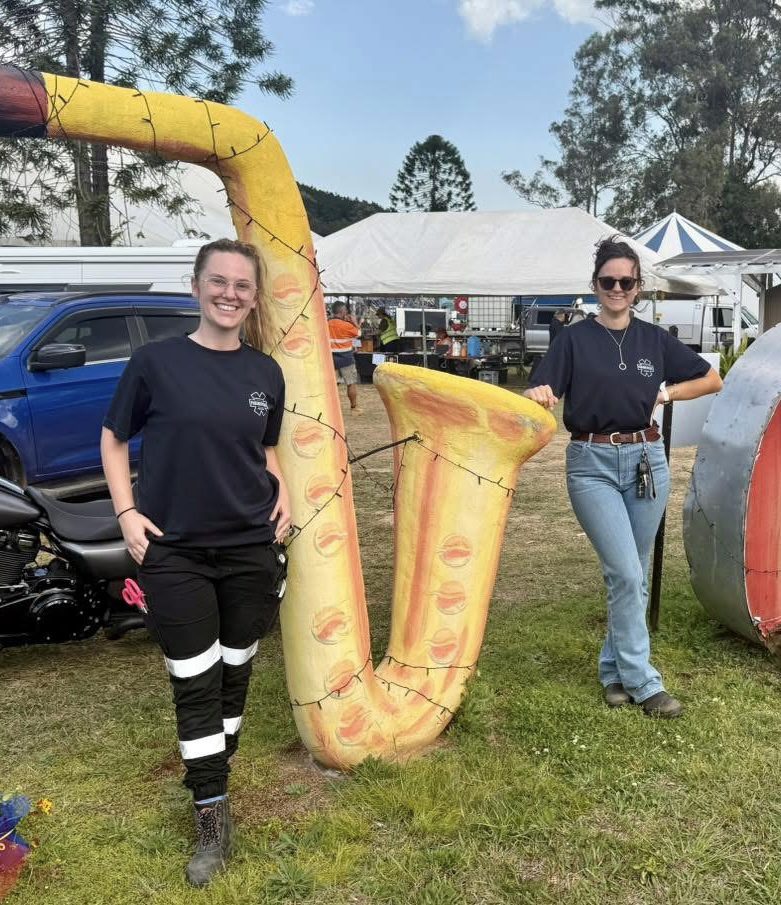
The Career Change
Six years in commercial real estate across Southeast Queensland. Marketing. Contracts. Multi-million-dollar developments. A fast-paced, high-pressure environment that Penne genuinely loved.
But reaching the ceiling in that career left her facing one big question: what comes next?
She’d always been curious about the health care field. She just hadn’t found her way in yet.
Two things happened around the same time: Penne felt stuck professionally, and her personal life shifted dramatically. Eight weeks before her wedding, she called it off.
“In a strange way, it gave me a clean slate. No plans, no expectations, just me and what I actually wanted to do.”
So she made a move. She relocated to Central Queensland, picked up admin roles at two rural hospitals, and started getting a real feel for the medical world.
Those hospital roles confirmed what she’d suspected. This was where she wanted to be.
How Penne Found APC
Like most people who end up exploring Paramedicine, Penne started with Google. A few late-night searches later, Australian Paramedical College kept coming up.
What stood out to her wasn’t just visibility, it was the fact that APC offered a real, practical pathway to paramedical work without requiring a three-year degree commitment upfront.
Whilst she was making big moves, changing careers and still finding her feet, that flexibility mattered.
Choosing HLT51020 Diploma of Emergency Healthcare
Penne enrolled in the HLT51020 Diploma of Emergency Healthcare, which opens doors to a wide range of emergency healthcare careers, including event medic, sport medic, and pre-hospital care roles.
Penne’s honest about the early stretch: “it was tough”. Figuring out a study-work balance while adjusting to an entirely new field took time.
About six months in, she was diagnosed with ADHD and rather than making things harder, it was a lightbulb moment.
“Suddenly a lot of things made sense. I was able to start using study techniques that actually worked for me.”
The Pomodoro technique became her go-to. Short, focused sprints. Structured breaks. A method that works with the way her brain operates, not against it.
Once she found her rhythm, everything became manageable.
The APC Experience: Real Talk
Penne won’t pretend the theory units were her favourite part. Sitting still and working through dense content isn’t for everyone, especially if you’re wired for action.
But once she hit the workshops and placement? That was a different story entirely.
“That’s when the motivation came back. I could finally see how it all translated into real life.”
This is the moment most APC students describe. The theory builds the foundation. The hands-on experience makes it real. And suddenly, pushing through those final units feels worth it.
What No Textbook Can Fully Prepare You For…
The jump from student medic to real-world pre-hospital care comes with one major lesson: patients don’t follow scripts.
They don’t present neatly. They don’t wait for you to feel ready. And the environment isn’t always ideal.
“As a first responder, you have to be adaptable. Sometimes you just have to think on your feet and make it work.”
It’s something Penne now passes on to the students she supervises in her role. APC gives you the foundation and the field teaches you the rest.
Placement: From Nervous to Confident
Penne completed about 90% of her placement with our Industry Partner – QEMS, working alongside Grant, whose mentorship, she states, shaped her experience significantly.
She arrived nervous. She left confident.
The difference?
A supervisor who made it safe to ask questions and make mistakes, and who brought genuine passion to teaching.
That kind of environment build upon her learnings dramatically.
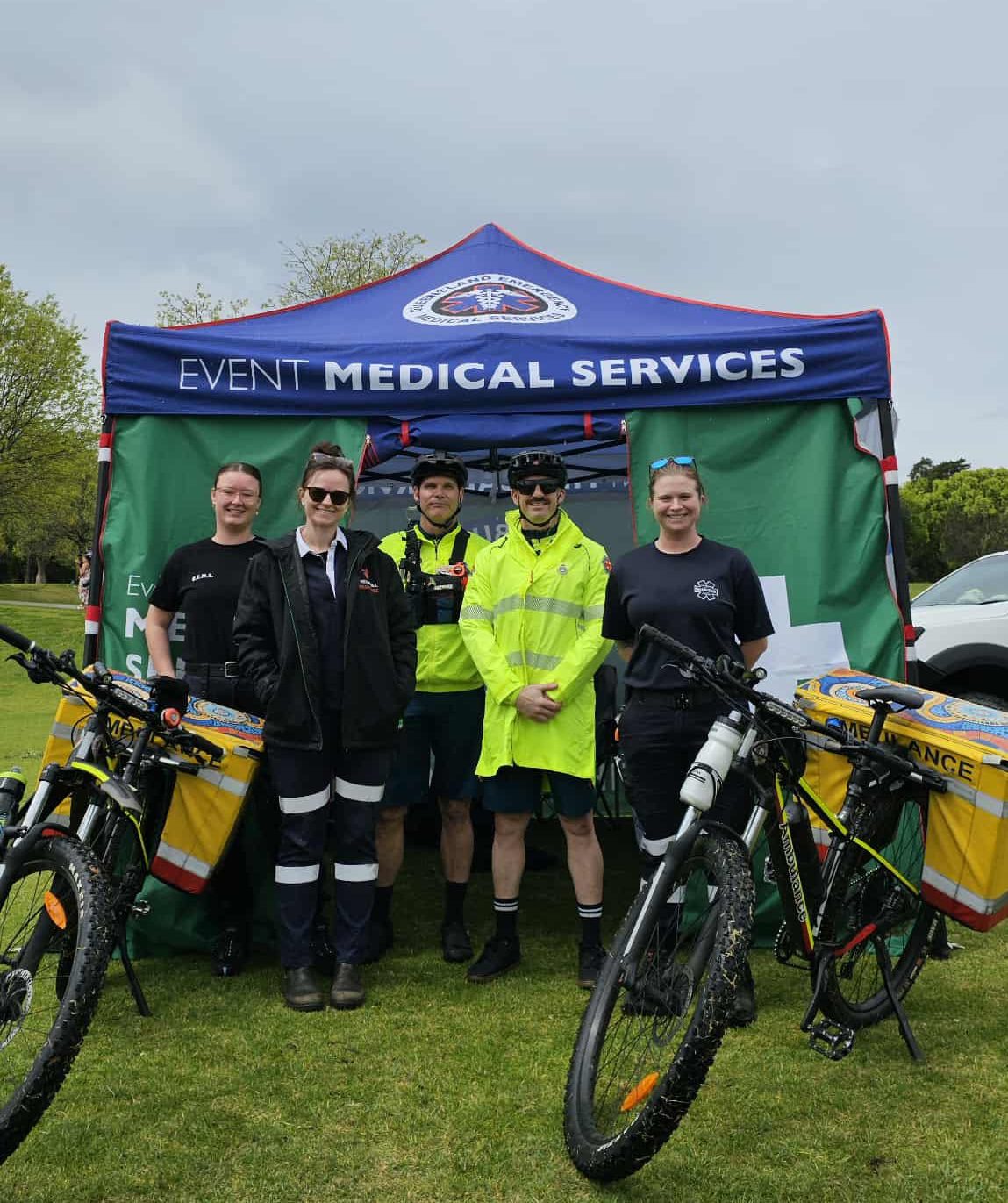
A Job Offer on Day One
Here’s a detail that tends to raise eyebrows: Penne was offered a job after her very first patient, on her very first day of placement.
It was a complex case and she handled it well – putting all her foundational learning into action. Grant’s (QEMS) response was straightforward: finish the diploma and there’s will be a role waiting for you.
She did. He followed through. Penne now works full-time with Salus Group as Executive Officer, supporting Grant across seven businesses. Her day-to-day touches on lifeguard and aquatic rescue, industrial ERT scenarios, clinical support for a locum GP, and shaping placement experiences for incoming APC students. Her work spans ESO (emergency service officer) responsibilities, event medic and sport medic work, and broader emergency response operations.
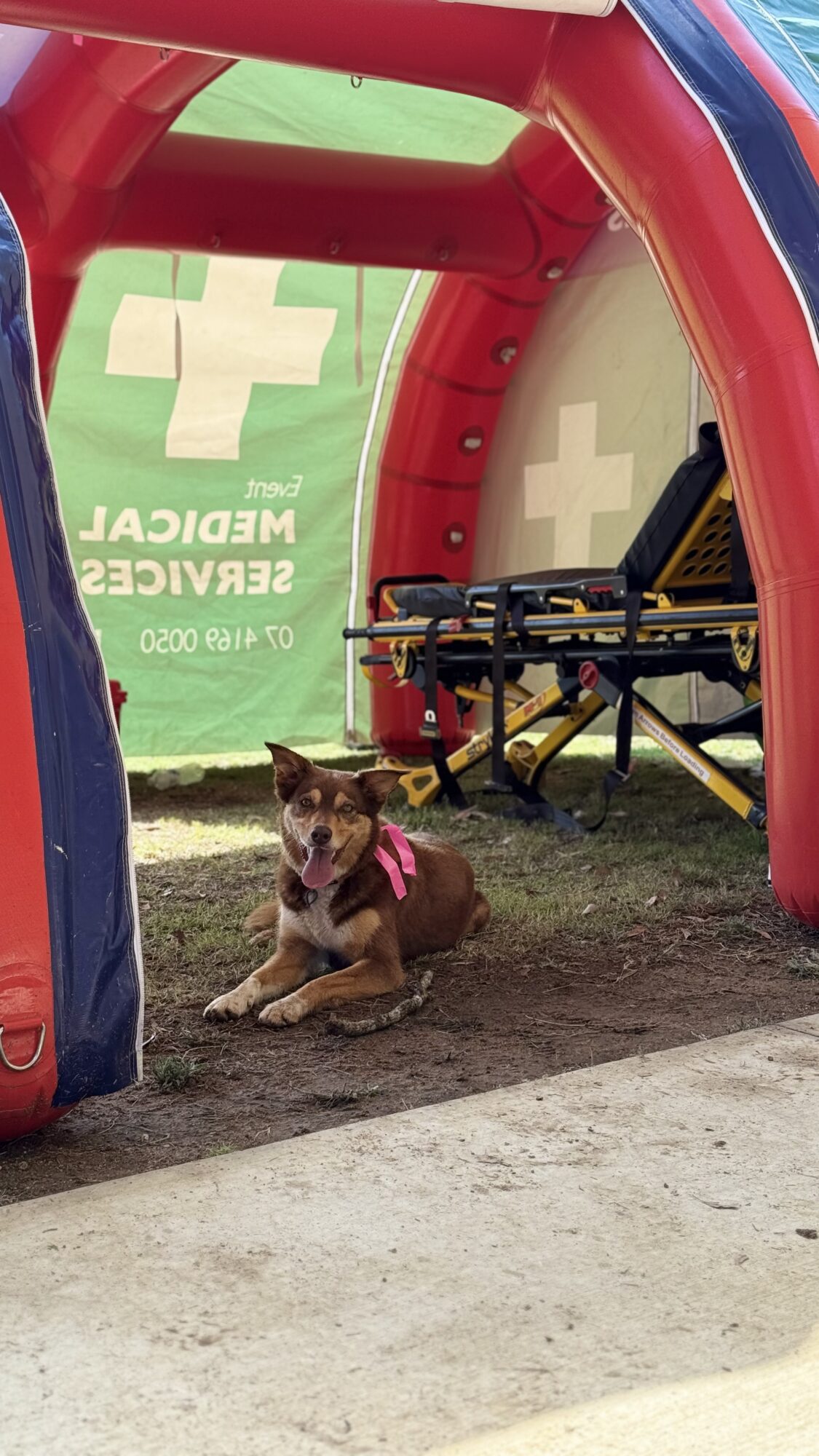
Oh, and one of her favourite parts – Poppy (her kelpie) comes to work every day and makes the occasional appearance at events as ‘Patient Support’.
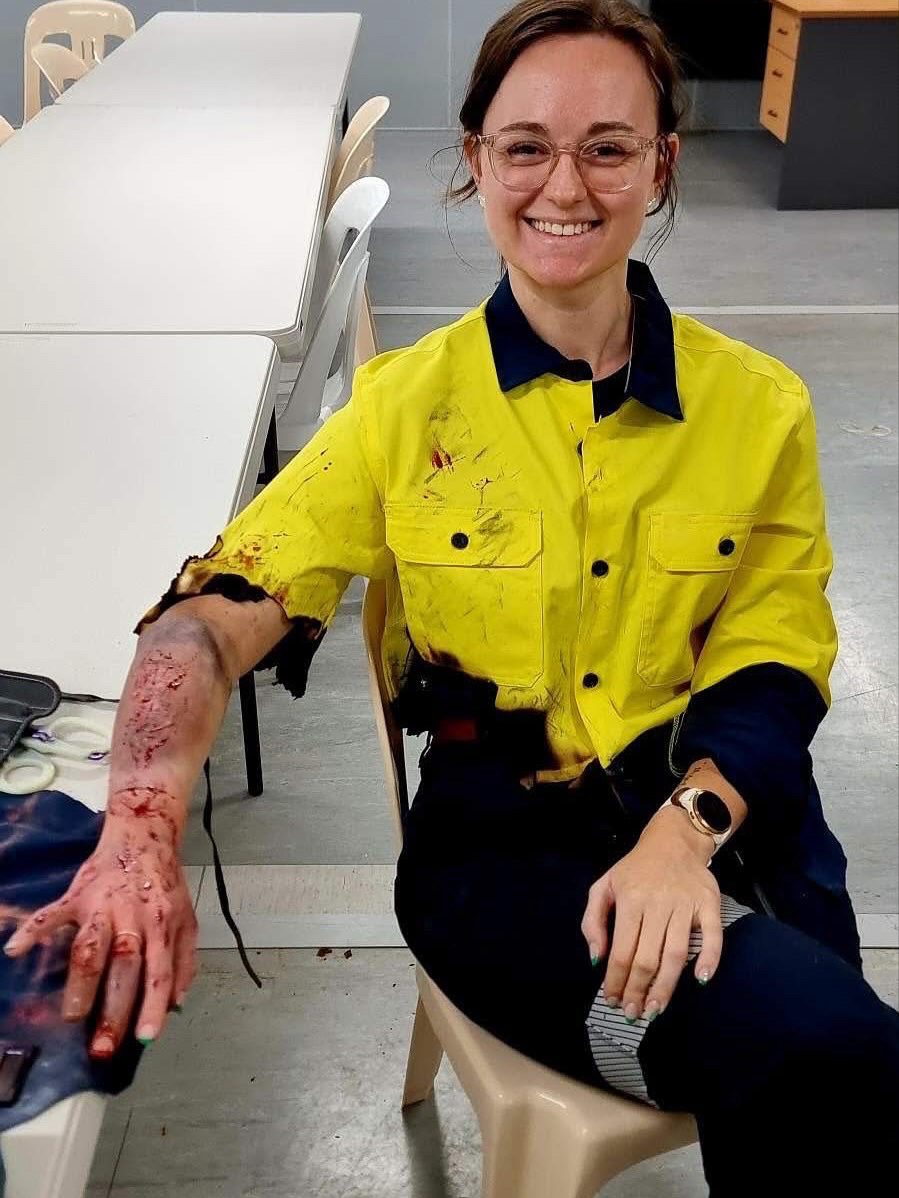
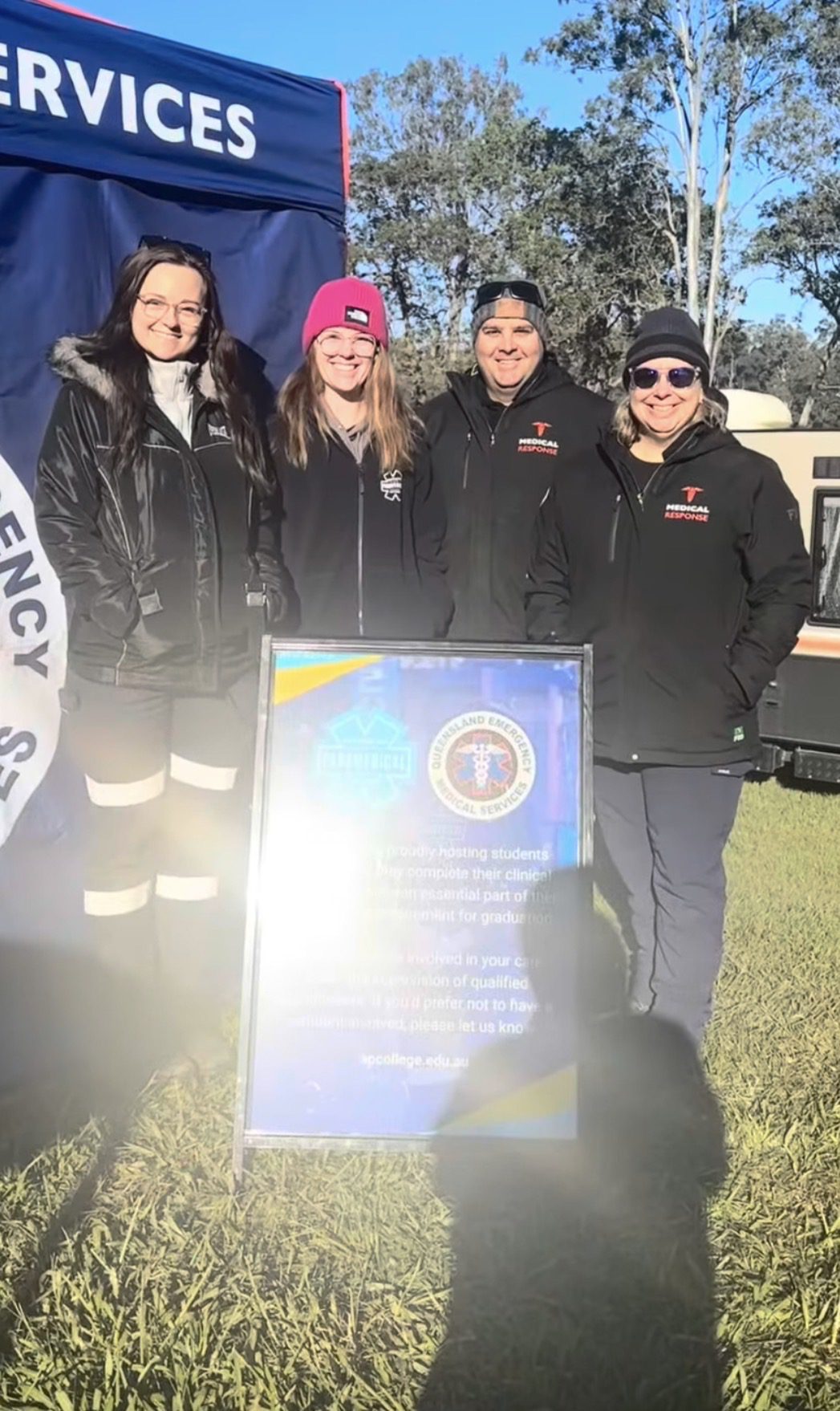
The Full Circle Moment
One of the most rewarding parts of Penne’s current role is working with students who are exactly where she was not long ago.
She knows what the early nerves feel like. She knows what it’s like to wonder if you’ve made the right call. And she knows what it looks like when it all clicks into place.
That lived experience makes her a genuinely great mentor for anyone just starting their pathway to paramedicine.
What’s Next?
Penne is currently studying a paramedicine and disaster and emergency management degree online through Central Queensland University, full-time, alongside her full-time job.
It’s the kind of trajectory that shows what’s possible when you find the right starting point. The HLT51020 Diploma of Emergency Health Care wasn’t the destination. It was the door.
Why Study with APC?
Ask Penne if she’d recommend APC and she’ll tell you she already has, multiple times.
“Especially for people who don’t come from a medical background, it’s a great starting point. It lets you explore paramedicine properly without committing to a full three-year degree straight away.”
The HLT51020 Diploma of Emergency Health Care gives you real skills, real placement experience, and real clarity about whether a career as a first responder, ESO, event medic, or sport medic is right for you. Without the decade-long academic commitment from day one.
Thinking Of A Career In Emergency Healthcare?
Penne’s story isn’t unusual in one important way: she had no idea where she’d end up when she started – she just took the first step.
If you’re considering a move into emergency healthcare careers, whether you’re drawn to pre-hospital care, emergency service officer work, event and sport medic roles, or you’re simply curious whether paramedicine could be the right fit, APC offers a practical, flexible, and respected pathway to find out.
Explore the HLT51020 Diploma of Emergency Health Care and take the first step.
Your new career might be closer than you think.