What Does a Career in Emergency Healthcare Really Look Like?
If you’ve ever wondered what it takes to build a meaningful, dynamic career in emergency healthcare – one where no two days look the same — Nathan Seidel’s story is worth paying attention to.
Nathan is a trainer at Australian Paramedical College (APC), a working paramedic, an Emergency Services Officer (ESO) at BHP’s iron ore mine sites across Western Australia, and a published author. He’s also living proof that the pathway to paramedicine doesn’t have to be a straight line.
His journey started where many APC students begin: with curiosity, a spark of interest in pre-hospital care, and a willingness to take that first step. From there, he built a career that spans underground mine sites, remote medical emergencies, university lecture halls, and now an APC training room, a full-circle moment he clearly treasures.
Whether you’re exploring paramedical careers for the first time or you’re already partway through your studies, Nathan’s experience offers real-world perspective on what this industry looks like from the inside.
Nathan’s Career Journey: From APC Student to ESO and Beyond
Starting Out: A Process Operator with a Passion for Emergency Services
Nathan didn’t start his career in healthcare. He was working as a process operator in the mining industry when he first got involved in emergency services — volunteering for his mine’s emergency response team on weekends, earning his Certificate III in Mines Emergency Response and Rescue along the way.
“I thought, what an exciting career – they do both the medical and the fire rescue stuff,” Nathan recalls. “I don’t think any other career in the world has that dual requirement.”
That realisation set him on a clear path. He enrolled with Australian Paramedical College, completing his HLT51020 Diploma of Emergency Health Care. Within a relatively short time, he was offered his first ESO role, and hasn’t looked back in over nine years.
Building on the Foundation: University and Beyond
Nathan’s education didn’t stop with APC. After completing his Diploma, he enrolled in a Bachelor of Paramedicine at university, studying part-time over three years. He then went further still, completing a Graduate Certificate in Advanced Paramedicine — covering advanced clinical reasoning, supervision and leadership, pharmacology, and human behaviour in extreme environments.
“There’s always a bazillion qualifications you can do that are relevant to this industry,” he says with a laugh.
His trajectory — from Certificate IV, to Diploma, to Bachelor, to postgraduate study — is a great example of how incremental steps in paramedical careers can open increasingly specialised doors. Nathan estimates the full educational arc, from first APC enrolment to advanced postgrad, took him around five years. But he’s quick to note it’s entirely dependent on your pace and your goals.
What Does an Emergency Services Officer (ESO) Do?
This is one of the most common questions aspiring students ask, and Nathan is well placed to answer it.
An ESO is a dual-qualified professional, trained in both the medical and fire rescue disciplines. In the mining context, this means responding to everything from workplace injuries and medical emergencies to vehicle accidents, HAZMAT incidents, fire events, and vertical rescue situations.
“It’s not all emergencies and lights and sirens,” Nathan is quick to clarify. “A lot of it is primary healthcare. People will come and see you with whatever ailments they have.”
In remote mine sites – where the nearest hospital can be four hours away by road and the Royal Flying Doctor Service is the only realistic evacuation option – an ESO needs to be confident working with significant autonomy. You have clinical guidelines and drug therapy protocols to work within, but backup is rarely just around the corner.
Nathan has worked across gold mines, lithium mines, surface and underground operations, in solo roles and large teams. He’s currently seconded into a specialist medical trainer role at BHP, visiting around 10 iron ore sites from Newman up to Port Hedland, providing mentoring and clinical governance to ESOs, paramedics, and nurses across the Pilbara.
It’s a role that sits squarely within the broader landscape of emergency healthcare careers and one that’s growing as the resources sector continues to expand across regional Australia.
Key Skills Needed for Paramedical Careers
Whether you’re aiming to become an ESO, a first responder, an event medic, a sport medic, or to work as a student medic building clinical hours, Nathan’s advice on core skills is consistent: get the fundamentals right before anything else.
Master the basics first. Nathan returns again and again to the Dr ABCs framework – Danger, Response, Airway, Breathing, Circulation, and so on, as the non-negotiable foundation of good pre-hospital practice. “Doesn’t matter how high your skill set is. If you’re missing these things, you’re not setting your patient up for success.”
Be receptive to feedback. The ability to receive constructive feedback is something Nathan flags as essential for new practitioners. “The rest comes with exposure and experience.”
Stay open and adaptable. In the ESO space especially, you may encounter far more complexity than your training prepared you for. The Diploma might cover around 20 medications; some mine sites operate with 100 or more. The mindset of continual learning isn’t optional – it’s a professional necessity.
Understand the lifestyle. Remote and mining environments come with genuine lifestyle changes. Rosters, fly-in fly-out arrangements, and weeks away from family and friends are simply part of the deal. “It’s not for everyone,” Nathan says honestly. “That can have a huge impact on a person.”
Build volunteer experience early. Industry professionals consistently recommend getting volunteer hours in before committing to expensive qualifications. It’s a way to test your fit for the environment before you invest time and money in further study.
Education Pathways: Your Route into Emergency Healthcare
One of the most valuable things Nathan communicates is how clearly the qualifications ladder maps to career progression. Here’s how it looks in practice, informed by his own experience.
HLT41120 Certificate IV in Emergency Healthcare
The HLT41120 Certificate IV in Health Care is the entry point for many aspiring first responders and ESOs. Combined with a Certificate III in Mines Emergency Response and Rescue and a drug and alcohol testing certification, the HLT41120 Certificate IV in Health Care is typically the minimum requirement to be considered for a base-level ESO role in the resources sector. Australian Paramedical College provides this qualification and supports students through flexible, online learning.
HLT51020 Diploma of Emergency Healthcare
The HLT51020 Diploma of Emergency Healthcare expands on the HLT41120 Certificate IV in Health Care with additional clinical skills and broader scope of practice. Nathan completed his Diploma with APC and credits it as a foundational step that opened the door to his first ESO role. HLT51020 Diploma of Emergency Health Care also translates directly into what Nathan calls an “advanced medic scope” once you’re working in the field – and is often a prerequisite for university paramedicine entry for mature-age students.
Pathway to Paramedicine: Bachelor’s Degree and Beyond
For those looking to reach the higher-level paramedic ESO roles, Nathan describes a Bachelor of Nursing or Paramedicine as unlocking “the unicorn level.” With a bachelor degree behind you, work options expand significantly – including roles across ambulance services, remote health, aviation medicine, and specialist mining operations.
From there, postgraduate study in critical care, nurse practitioner pathways, or advanced paramedicine allows further specialisation, career longevity, and leadership opportunities.
The pathway to paramedic is genuinely accessible – but it rewards patience, persistence, and a willingness to keep learning at every stage.
Watch our Interview with Nathan:
Insights from Nathan’s Book: The ESO Guidebook
Perhaps the most surprising thing about Nathan’s career is that on top of his clinical work and training role, he’s also a published author.
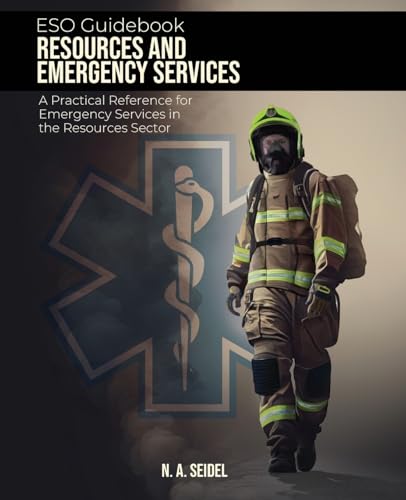
His book, ESO Guidebook: Resources and Emergency Services, was born out of a very practical frustration: when you’re new to the ESO industry, the volume of acronyms, abbreviations, mnemonics, equipment names, and clinical protocols is genuinely overwhelming. And there was nowhere that pulled it all together in a clear, accessible format.
“I thought, there’s no easy way for people to quickly look all these things up,” he explains. “There’s information everywhere, but nothing that brought it all together.”
The first edition contained 545 items spanning both the medical and fire rescue sides of the role. The second edition, Nathan teases, will be released very soon.
Crucially, the book is deliberately neutral. It doesn’t prescribe dosages or contradict site-specific policies; instead it explains what things are and how they work, acting as a reference guide for those moments when you encounter something unfamiliar and don’t feel comfortable asking.
“People who are new to industry or scared to ask something,” Nathan says. “You know, or they don’t know one of the hundreds of pieces of equipment they’re expected to know – people may not necessarily want to ask.”
The book also reflects the collaborative spirit of the ESO community: between 40 and 50 industry contributors were involved, either reviewing the first edition or suggesting entries that should be included.
It’s a practical tool for anyone entering emergency healthcare careers in the resources sector, and a testament to Nathan’s commitment to making the industry more accessible for newcomers.
Find the second edition here: https://amzn.asia/d/058abC5k
How to Start Your Journey in Emergency Healthcare
If Nathan’s story has you thinking seriously about a career in paramedicine or emergency services, here are some practical starting points.
Step 1: Get your first qualification. The HLT41120 Certificate IV in Health Care is the natural entry point. It gives you foundational clinical knowledge, introduces you to the pre-hospital environment, and satisfies part of the minimum requirement for ESO roles.
Step 2: Consider volunteering first. Before investing further, explore volunteer opportunities with your local ambulance service or emergency response teams. This experience gives you exposure to the reality of the role and helps you confirm it’s the right fit.
Step 3: Build toward your Diploma. The HLT51020 Diploma of Emergency Healthcare is where your scope of practice expands meaningfully. It supports progression into higher-level ESO roles and acts as a genuine stepping stone toward university paramedicine.
Step 4: Think about your long-term goals. Are you drawn to mining and remote health? Urban ambulance services? Event medic or sport medic roles? Working as a student medic while studying? Your longer-term direction will shape which qualifications to pursue next.
Step 5: Be patient with yourself. As Nathan says, “Rome wasn’t built in a day.” He’s nine years into this industry and still learning. The best practitioners stay curious, stay humble, and keep developing – no matter how experienced they become.
Conclusion: Emergency Healthcare Is One of the Best Careers in the World
Nathan Seidel is the kind of trainer that students remember. Not because he makes the work seem easy… he’ll be the first to tell you it’s genuinely challenging, but because he’s proof that the investment is worth it.
From a process operator in the mines, to APC graduate, to qualified paramedic, to specialist trainer, to published author: Nathan’s career is a compelling argument for taking that first step into emergency healthcare. The pathway to paramedicine is clear, structured, and supported – you just have to begin.
“Do it,” he says simply, when asked what advice he’d give to anyone considering this career. “Every day is different. It’s all exciting.”
Ready to Start Your Career in Emergency Healthcare?
Australian Paramedical College offers flexible, nationally recognised courses designed to take you from curious beginner to qualified practitioner — at a pace that works for your life.
- HLT41120 Certificate IV in Health Care — your entry point into paramedical careers
- HLT51020 Diploma of Emergency Healthcare – expand your scope and open more doors
- Explore all APC courses — find the right pathway for your goals
Talk to our student advisors today and take your first step toward a career that truly matters.