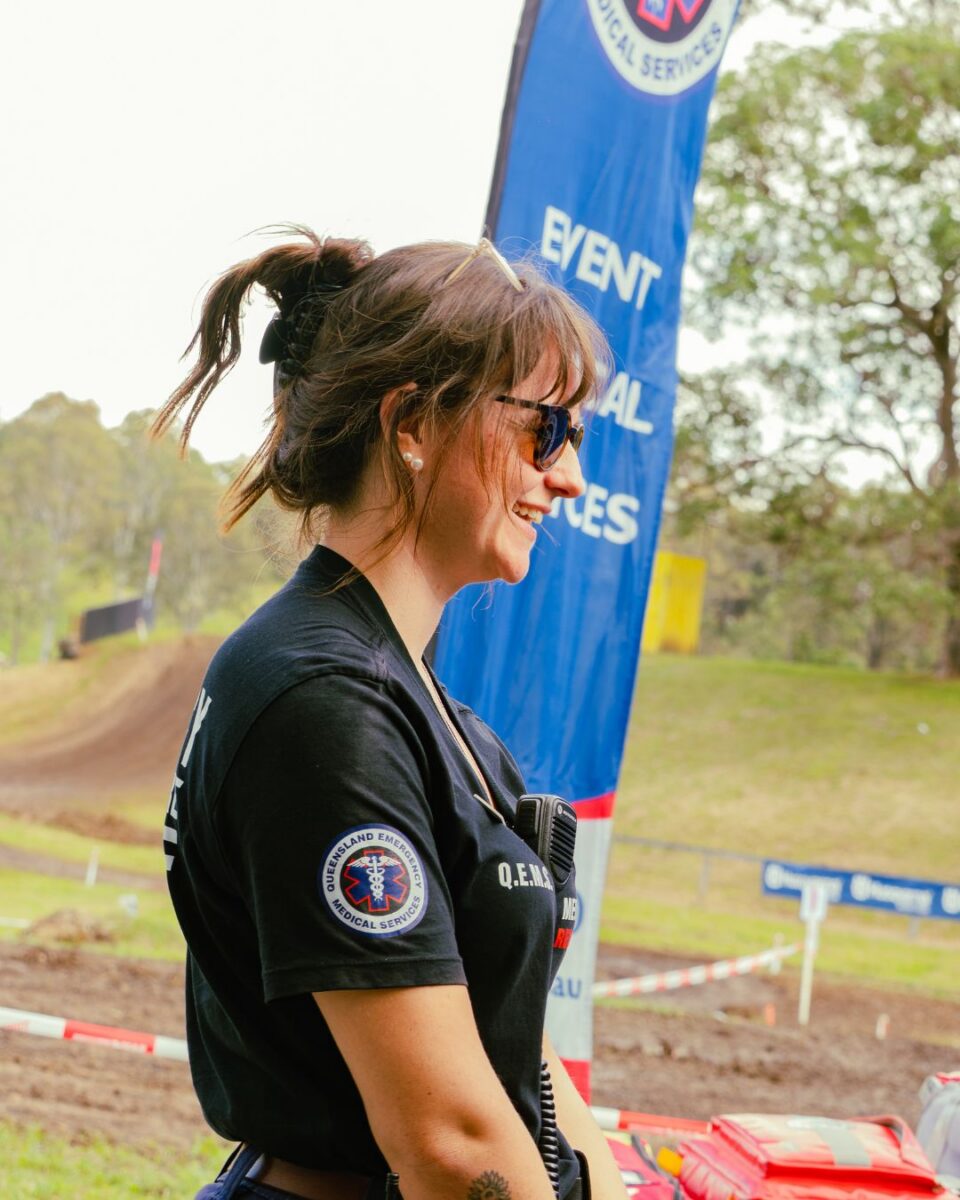
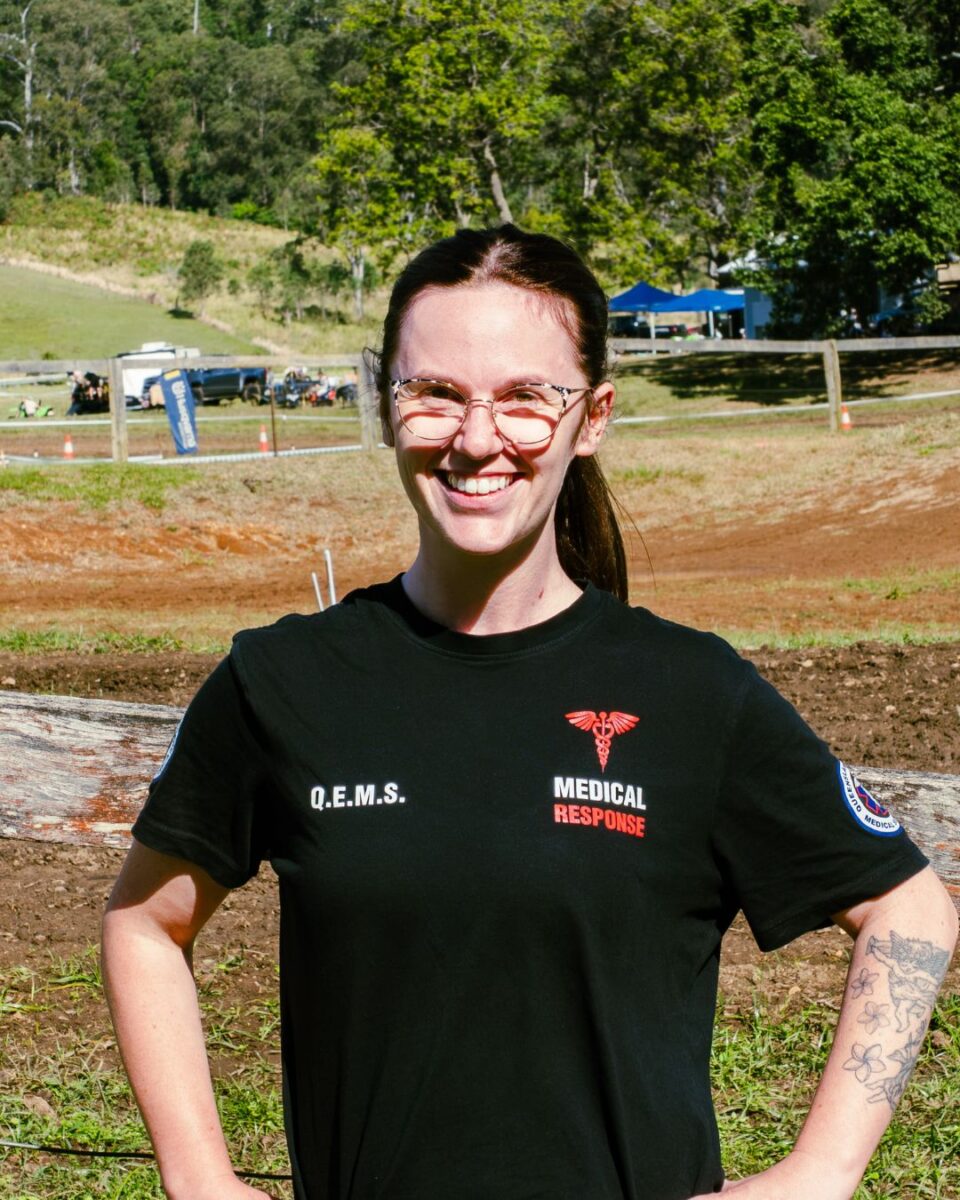
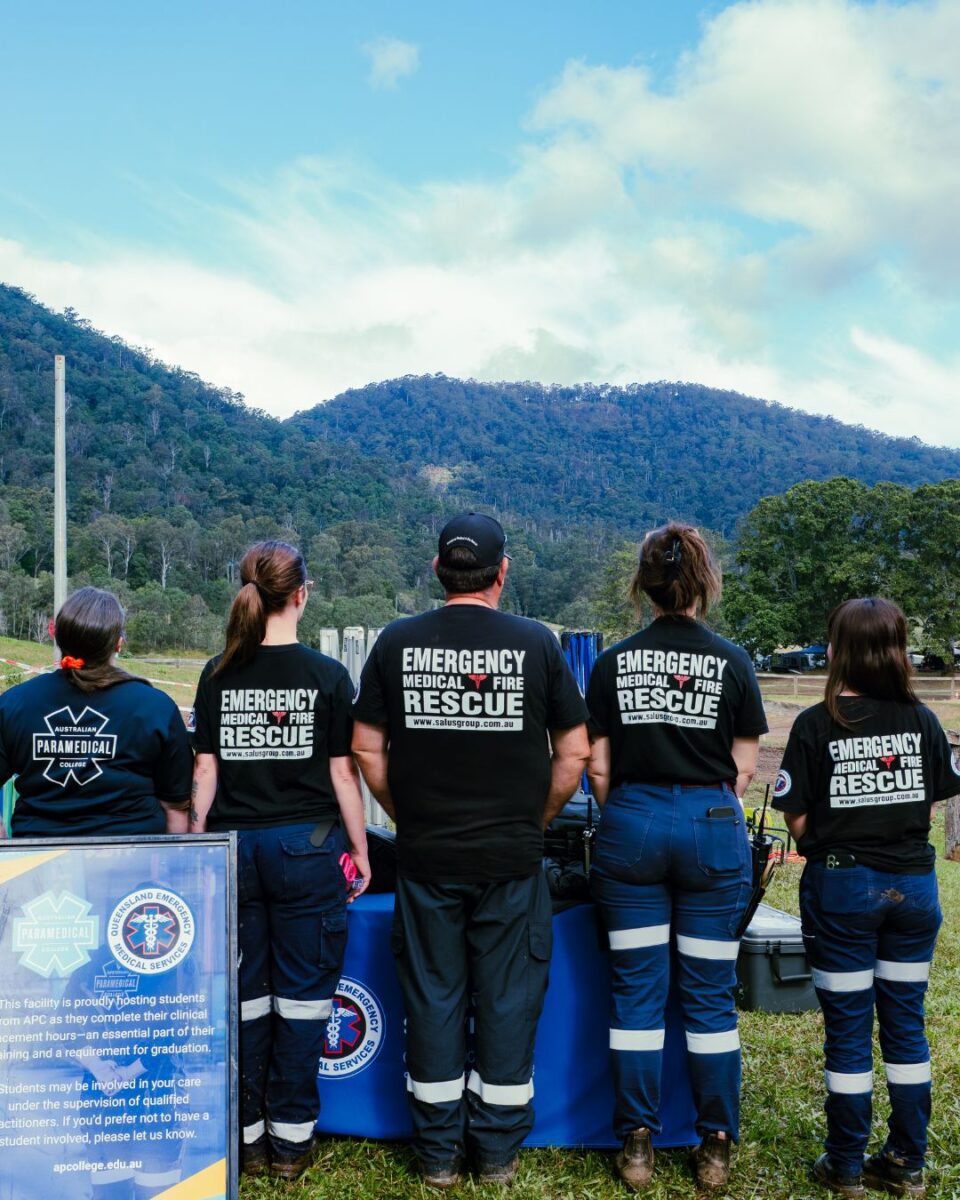
A year ago, Penne treated her first patient on placement at the Husqvarna Women’s Trail Ride in the rural Sunshine Coast region. “I had a really hectic first patient,” she says. Straight after those first days, she says, QEMS offered both her and fellow APC student Drew jobs. A year on, Penne is back at the same event as part of the QEMS team, and both women are now studying paramedicine at university.
Hear from Grant, Director of Salus Group (QEMS)
Studying the Diploma as a pathway to Paramedicine.
APC’s HLT51020 Diploma of Emergency Health Care is a nationally recognised emergency health care course. Students study online, attend two five-day clinical workshops and complete 160 hours of clinical placement. Career outcomes listed on the course page include event medic, patient transport officer and emergency medical technician.
To become a registered paramedic you need a university degree such as a Bachelor of Paramedic Science, plus AHPRA registration. Some universities accept the diploma for entry or credit. Read more on APC’s university pathways page.
That’s the route Penne and Drew are on: they graduated with the HLT51020 Diploma of Emergency Healthcare from Australian Paramedical College where they gained hands-on experience with APC industry partner, QEMS, and now they are working in the industry and studying at University to become Registered Paramedics.
Read about Penne’s story here.
 |
 |
Who is QEMS, and what do event medics do?
Queensland Emergency Medical Services, or QEMS, provides medical support at events across Queensland, including the women-only Husqvarna Women’s Trail Ride, where riders of all abilities tackle trails and tracks and organisers list an on-site paramedic during riding hours.
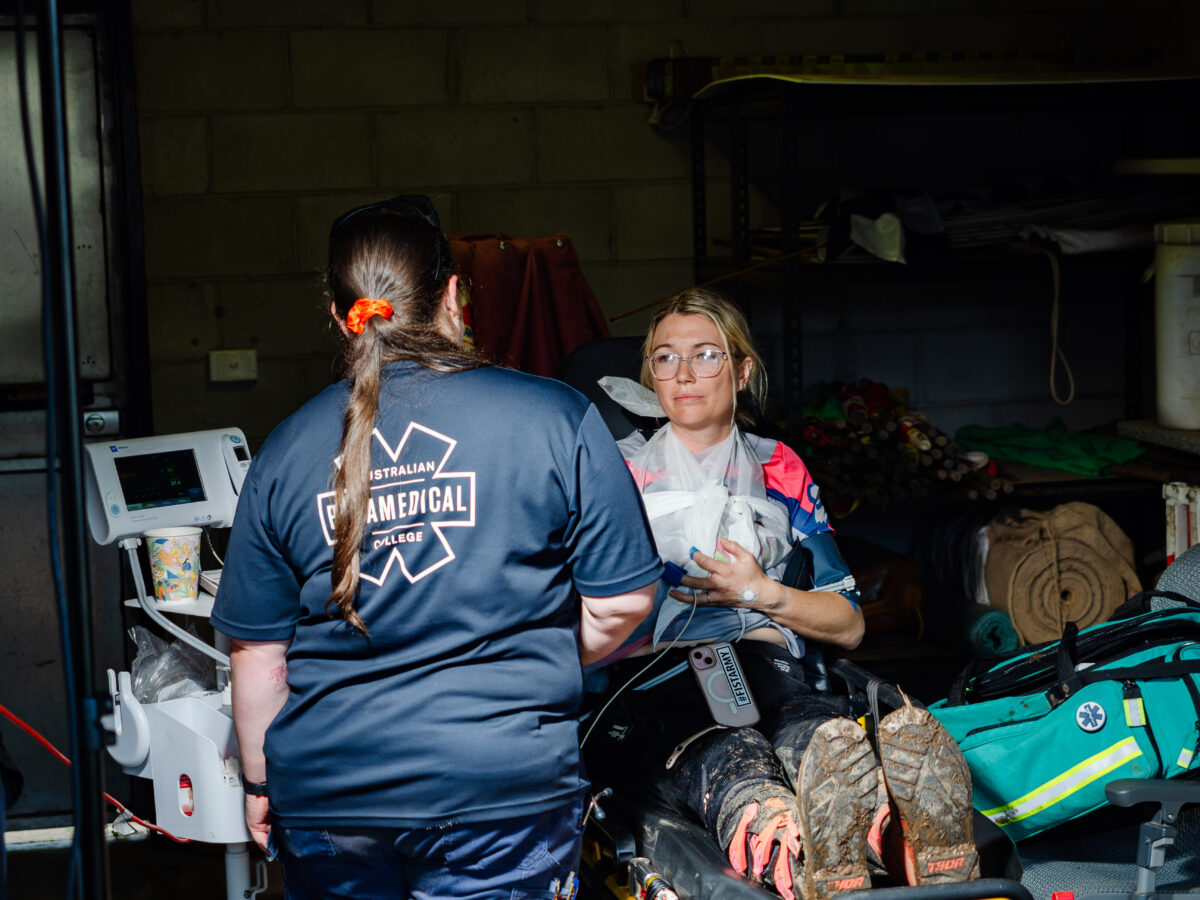
QEMS says its teams include doctors, nurses, paramedics and medics. An event medic works within that wider team, providing first-line assessment and care and working with colleagues when a patient needs more help. Duties vary with the event, the individual’s training and scope of practice, and the medical arrangements in place.
Variety is part of the appeal. “Every event is different,” says Penne, who is QEMS’s executive officer and also works as a medic. “You’re treating such obscure injuries… that are really niche to whatever event that you’re going to.”
 |
Penne and Drew’s pathways
Penne: a stepping stone from a non-medical background
Penne chose APC for flexibility. Other providers offering the diploma were “a lot more structured and a bit more rigid,” which didn’t work around full-time work. She came “from a completely non-medical background,” so the diploma suited. “Committing to a diploma is a lot easier than committing straight to a degree.”
Her placement led to her first job in the industry. She started with casual medic shifts, and later QEMS needed someone full-time in its office. She was offered the job and moved to take it. Today she is doing a Bachelor of Paramedicine, and she is “keeping my options open” for what comes next, with rescue and retrieval work of interest.
Drew: from missing out on university to the field
Drew “had no clue what I wanted to do” at school, and after deciding on paramedicine “couldn’t get into university.” A friend recommended the APC diploma, and Drew “fell in love with it.”
A working paramedic was among the trainers at Drew’s first clinical workshop. “I wanna be as cool as these people,” Drew remembers thinking. “All the content and hands-on stuff that I learned in that first workshop just really solidified, like, this is something I wanna do.”
“APC opened up the doors for QEMS for me,” Drew says. After graduating the diploma, Drew started with QEMS, works event shifts every weekend and helps teach APC students and others who come along. The diploma led into a Bachelor of Paramedicine, and Drew says it also helped secure a place on an EMS program in the United States: “I wouldn’t have gotten into that program without my APC diploma.”
Why learning in the field matters
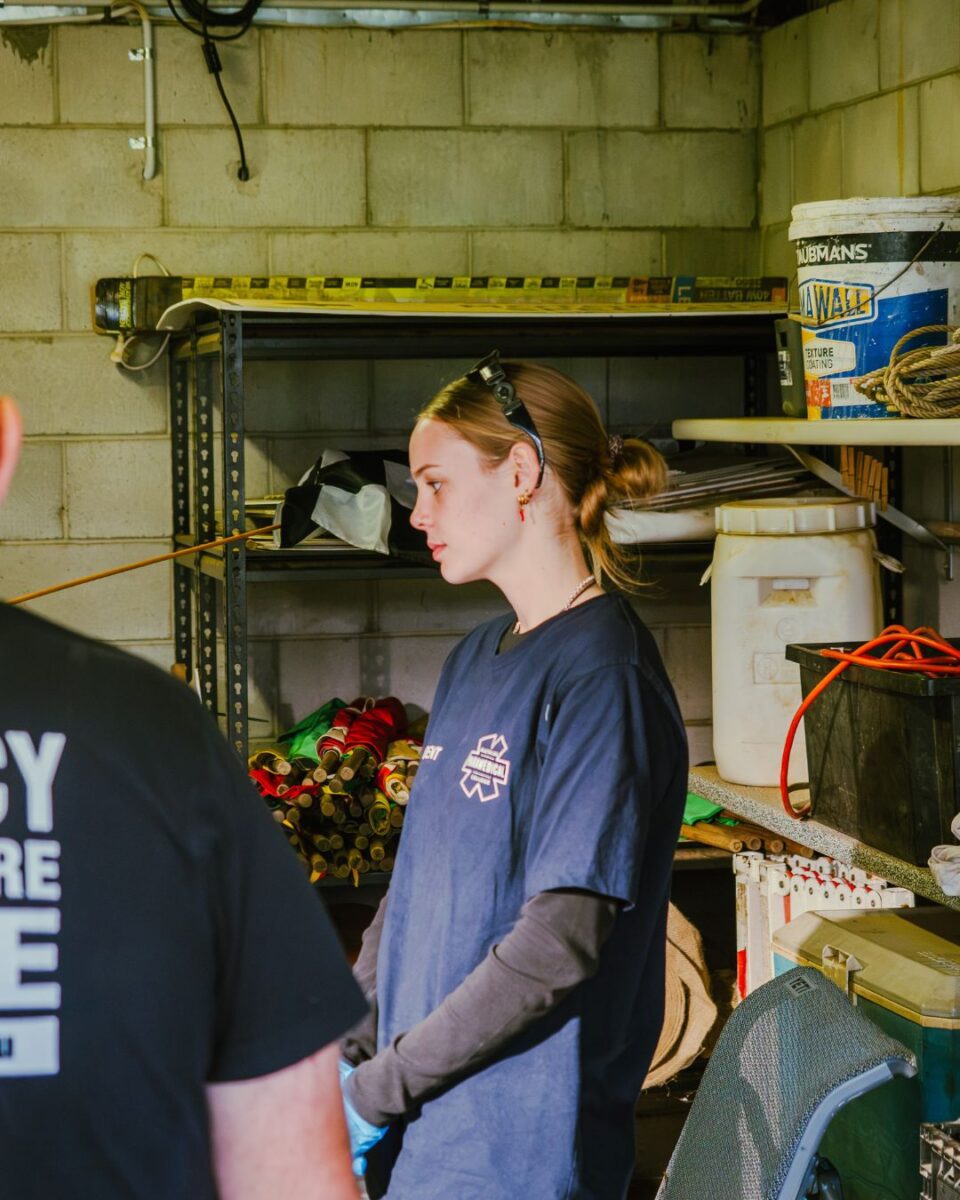
For Grant Geddes, CEO of Salus Group, placements are about giving students a safe first step. “This is a safe place where they can actually talk to a stranger for the first time,” he says. “That’s hard to do in a lecture-theatre-type situation where it’s a mannequin that’s not talking back to you.”
QEMS aims “to provide a clinical pathway from nothing to excellent,” he says. The team has watched APC students “go through the diploma,” put them on as medics and sponsored some of their university degrees. Some graduates teach first aid, some move into administration across the Salus Group’s businesses, and some stay on as permanent weekend medics.
Real events give students things a classroom can’t: talking to patients, working as part of a team and seeing how an event medical post runs. It also builds connections, as Penne’s and Drew’s jobs show. Not every placement leads to a job, and the outcome depends on the student, the provider and the opportunities available.
Grant sums up the partnership: “It’s been one of the greatest ten years of my life being a partner with APC.”
 |
 |
Is a diploma-first pathway right for you?
If you’re weighing a degree against a diploma, think about what you need now. The diploma has no prior qualifications required, so it can suit people who missed out on university entry or who are changing careers and want to test the industry first. It also leads into degree study, which is the only route to registration. Placement providers have their own requirements, and some may charge fees. Check the course page for current details.
Why learning in the field matters
For Grant Geddes, CEO of Salus Group, placements are about giving students a safe first step. “This is a safe place where they can actually talk to a stranger for the first time,” he says. “That’s hard to do in a lecture-theatre-type situation where it’s a mannequin that’s not talking back to you.”
QEMS aims “to provide a clinical pathway from nothing to excellent,” he says. The team has watched APC students “go through the diploma,” put them on as medics and sponsored some of their university degrees. Some graduates teach first aid, some move into administration across the Salus Group’s businesses, and some stay on as permanent weekend medics.
Real events give students things a classroom can’t: talking to patients, working as part of a team and seeing how an event medical post runs. It also builds connections, as Penne’s and Drew’s jobs show. Not every placement leads to a job, and the outcome depends on the student, the provider and the opportunities available.
Grant sums up the partnership: “It’s been one of the greatest ten years of my life being a partner with APC.”
Your next step
Penne and Drew started as students on placement. Now they work with QEMS and are building towards careers in paramedicine. Their path won’t be identical for everyone, but it shows what practical training and industry connections can open up.
Curious about this pathway?
Explore the HLT51020 Diploma of Emergency Health Care, or read about APC’s industry partnership with QEMS.