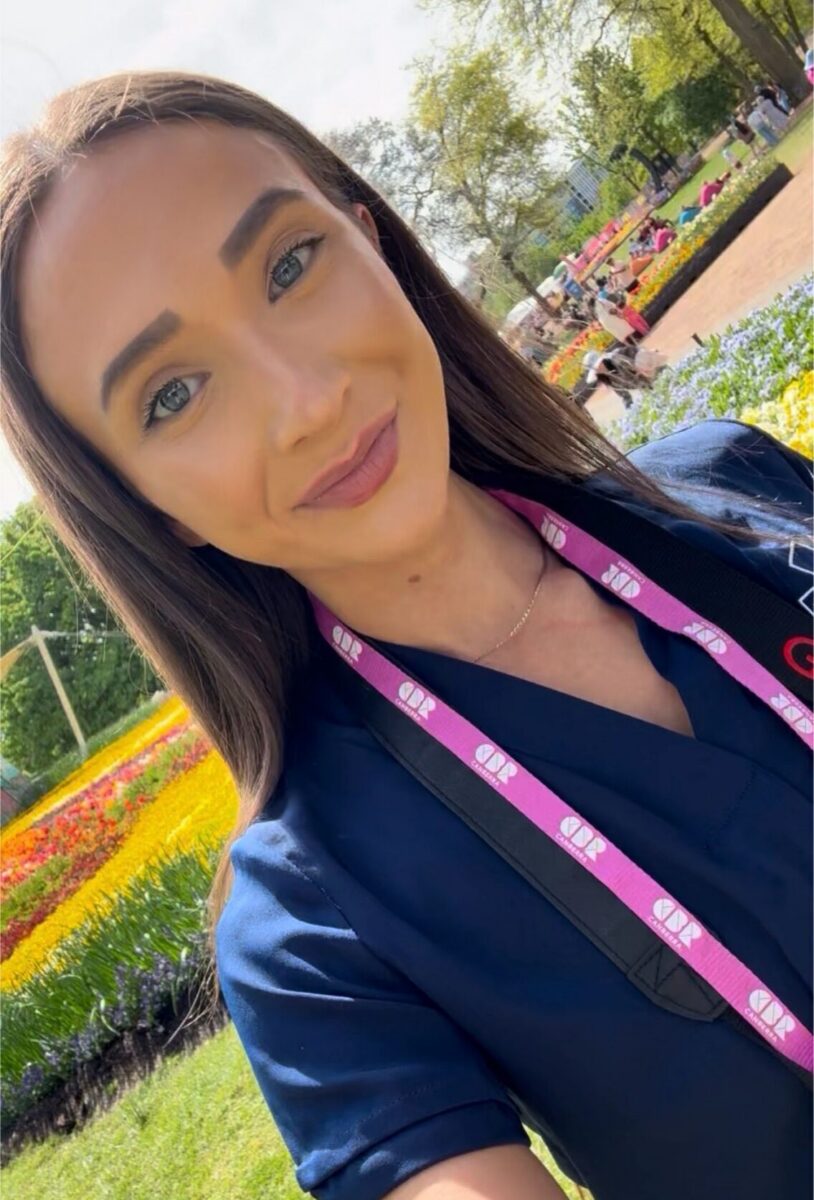
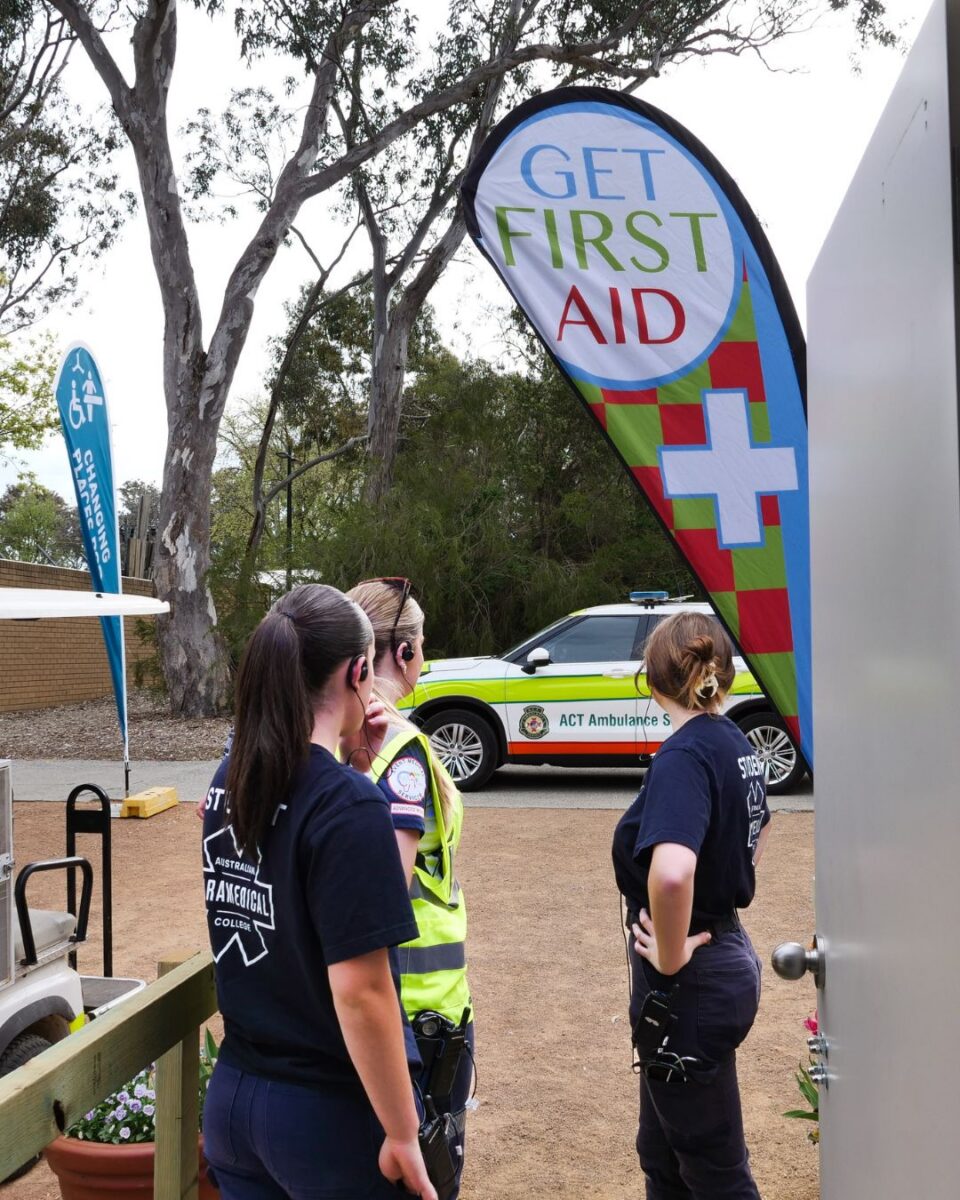
I’d flown into Canberra from our head office on the Gold Coast as APC’s Marketing Coordinator to see our industry partnership with Get First Aid in action. Within the first 15 minutes of arriving at Floriade, straight from the airport, I was climbing into a medical buggy after a radio call came through about an injured patron. As the day went on, I had the opportunity to watch the Get First Aid team respond to more than eight different medical incidents, ranging from fractures and falls to a variety of unexpected situations. Seeing the team in action really cemented the reality of event medicine and just how unpredictable working at a major public event can be. You never really know what might happen or what the next call will bring, which is exactly why having professional event medical services on-site is so important. |
Monique Kane |
Meet Get First Aid: APC’s Event Medical Industry Partner
Before I take you to Floriade, I should introduce the team I was there with. Get First Aid is one of APC’s industry partners, and a big reason our students can step out of the workshop and into real event medical work.
Ryan, Get First Aid Event Medical’s Director of Clinical Services, explained that the team primarily works at events across New South Wales, the ACT and Queensland, and has newly moved into South Australia. At each event, they provide medical care to members of the public who attend.
For APC students, that variety is the real draw. Event medical work isn’t one setting, it’s many. Ryan described a typical day at Floriade as very varied: trauma-related presentations that started outside the event, plus complex medical conditions including cardiac and neurological conditions. In his words, the list is endless.
That range is what makes a placement with Get First Aid so valuable. At Floriade, I was about to see it for myself.
Watch my Floriade Placement experience with Get First Aid
What Is Floriade, and Why Does It Draw So Many People to Canberra?
Floriade is where Get First Aid was providing event medical services on the day I visited, and where our students were out on placement.
Floriade is billed as Australia’s biggest celebration of spring. It’s held every year in Commonwealth Park, beside Lake Burley Griffin in Canberra, and runs from mid-September to mid-October. The official Floriade site describes more than a million blooms on display, over 480,000 local, interstate and international visitors each year, and the title of the largest flower festival in the Southern Hemisphere.
It started in 1988 as a one-off celebration of Canberra’s 75th birthday and the Bicentenary of European settlement. It was inspired by the Keukenhof gardens in the Netherlands, and it has now run for nearly 40 years, with a new theme each year.
Those numbers put the day into perspective for me. When close to half a million people move through one park over a month, it makes sense that a medical team is part of the plan from the start, and not an afterthought.
A Day With the Medics: What I Saw at Floriade
The first radio call
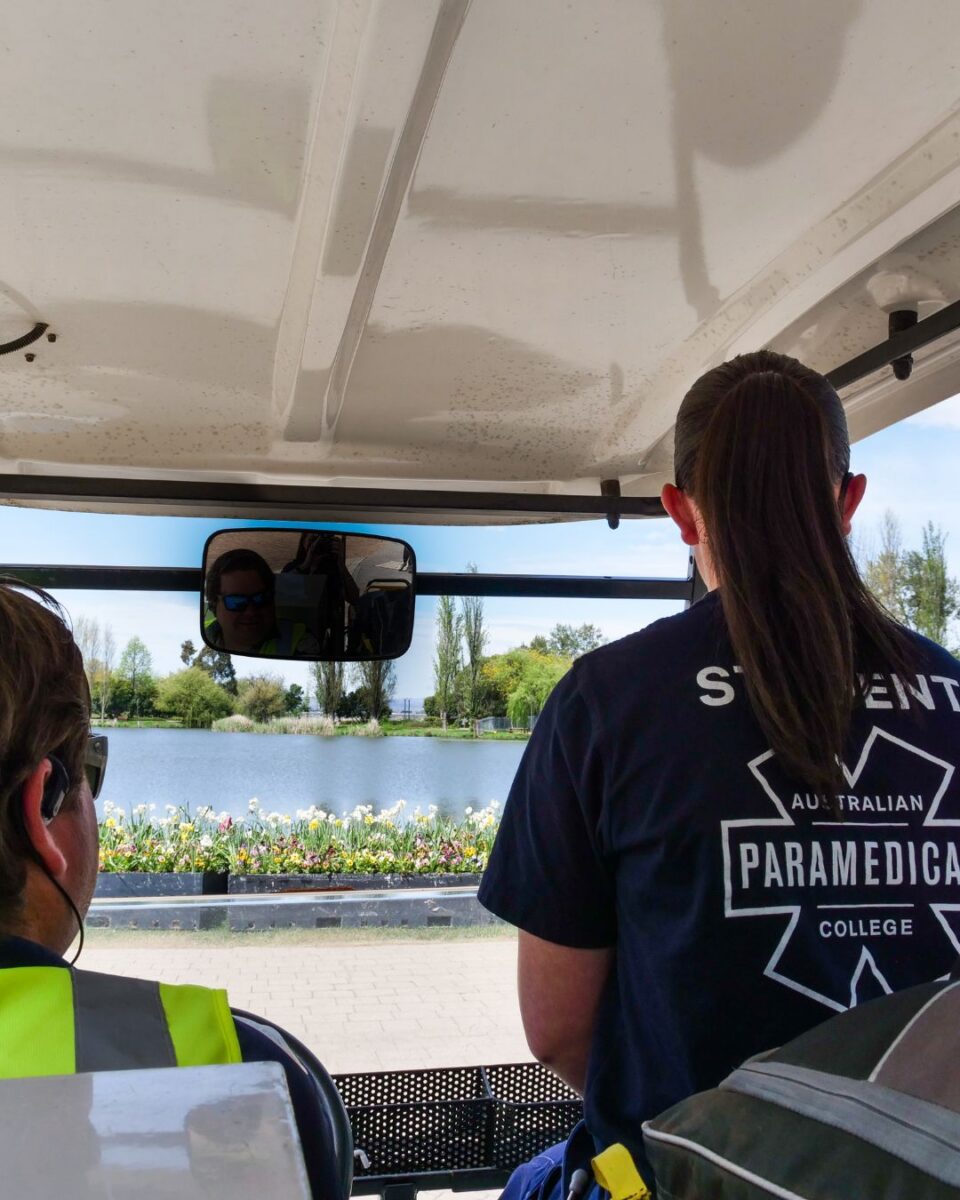
The radio call came through within 15 minutes of my arrival, and the team moved straight away. I joined them in the medical buggy, and we headed towards the injured patron.
That first call was only the beginning.
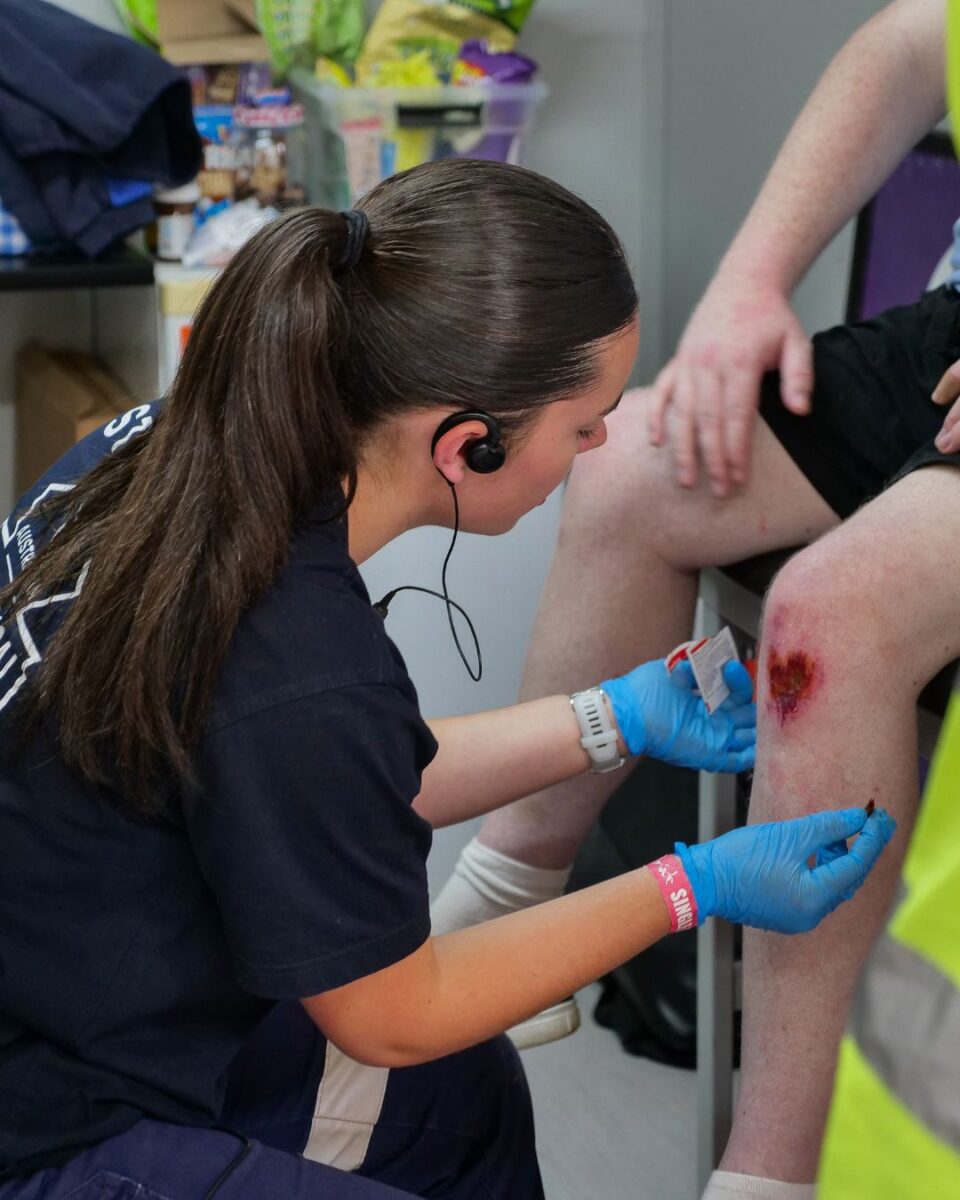
Across the day, I observed the Get First Aid team respond to and manage more than eight different medical cases. They ranged from fractures and falls to other unexpected incidents.
None of it was what I’d have guessed when I pictured a flower festival.
 |
 |
What stood out to me
- The variety. Ryan had told us the day was very varied, and I saw it first-hand. No two calls were the same.
- How quickly a quiet moment can change. One radio call, and the team were moving.
- Everyone had a role. Our APC students were working alongside the Get First Aid team, not watching from the sidelines.
One thing I took from the day is that preparation is the point. A major public event can’t predict what will happen. It can only make sure skilled, calm, well-equipped people are close by when it does.
APC Students on Placement: From Mannequins, to Real Patients.
One of the main reasons I was in Canberra was to see our students at work. APC’s clinical placement gives students the chance to apply what they’ve learnt in workshops, and Floriade showed me what that looks like in practice.
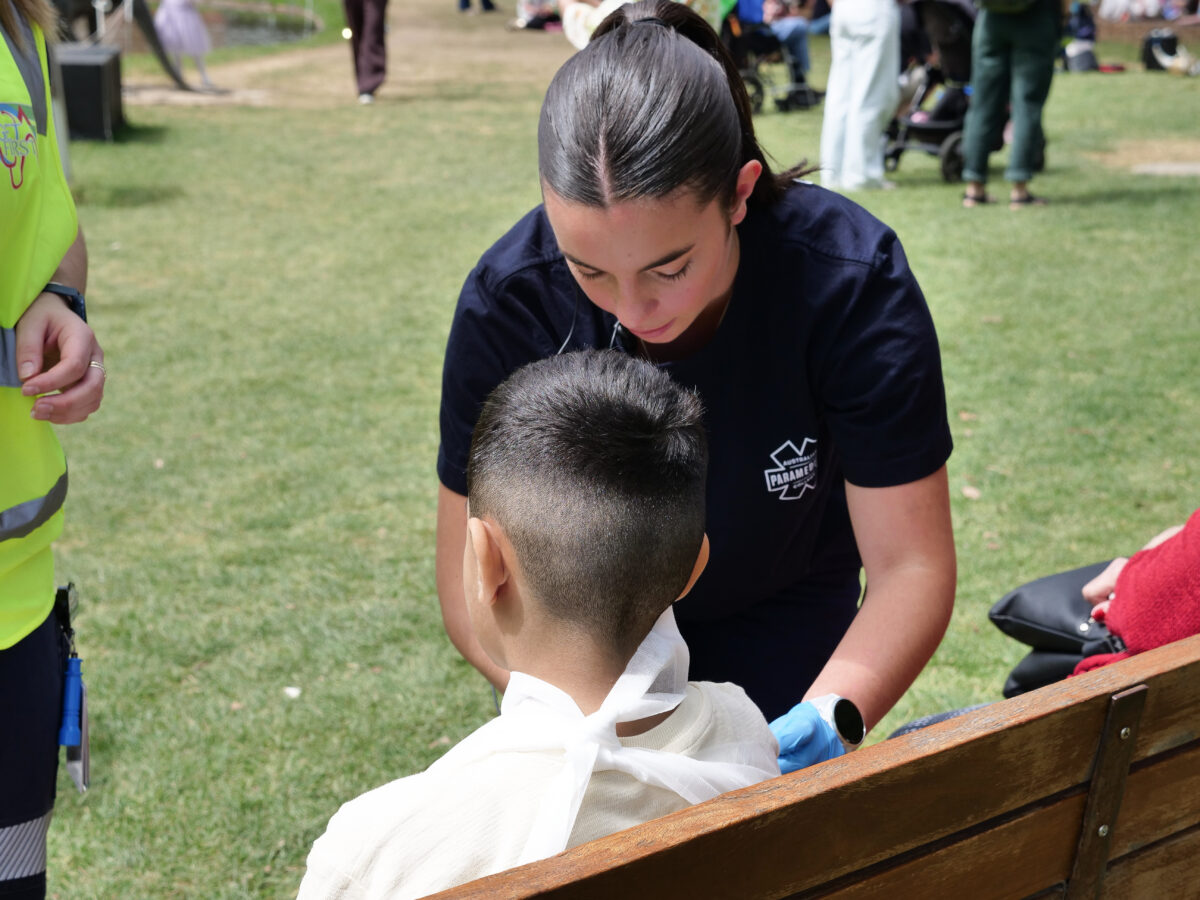
Ryan put it simply. Students at an event like this get real people interaction, and seeing a mannequin is very different from having a person right in front of you. He said he’s watched students grow, gain confidence and start to apply the clinical skills from their workshops, then develop them further in a clinical environment like Floriade.
Bethan’s experienceBethan, a student in our HLT51020 Diploma of Emergency Healthcare, told us that Get First Aid had already made her far more confident in her learning and abilities. She described the placement as fun, said the team was experienced and knew their stuff, and added: “I would 100% recommend Get First Aid for placement.” |
 |
Our Industry Partnership With Get First Aid
This is what an industry partnership looks like on the ground. Ryan told us the relationship between Get First Aid and APC started about four or five years ago. What he values most is watching students grow, gain confidence and put their workshop skills to work in a real clinical environment. You can read more about how it began in our post APC Partners with Get First Aid.
The partnership also reaches beyond placement. Ryan said Get First Aid has hired quite a few APC graduates, and that a qualification can lead in many directions, including medic roles in the mines and even film sets.
Whether a student chooses a HLT41120 Certificate IV in Health Care or HLT51020 Diploma of Emergency Health Care, he sees plenty of opportunities. If you’re curious about the career side, our post on event medic roles with Get First Aid covers it in more detail.
Because Get First Aid covers events across several states, our students aren’t limited to one kind of environment. They can build experience across different venues, crowds and situations, which is exactly the diverse exposure that helps new medics grow.
For students, the benefit is simple: they learn the skills in APC’s workshops, then test them with experienced clinicians who work at real events every week.
Why Being an Event Medic Is One of the Coolest Jobs in Healthcare
If there’s one thing that stuck with me, it’s that no two days as an event medic are the same. One day you could be at a concert, the next at a festival, then a sporting event, and more. Different crowds, different venues, different cases, and a team around you every time.
Here’s what I think makes it such an exciting career:
|
 |
How APC Can Help You Get Into Event Medical
If this sounds like the kind of work you’d love, here’s how APC fits in:
-
Study
The Diploma of Emergency Health Care combines online learning with hands-on clinical workshops.
-
Practice
Take your skills into real events through clinical placement with industry partners like Get First Aid.
-
Explore roles
Our career pathways page shows where the qualification can take you, including event medic work.
-
Get your questions answered
Browse our FAQs, or ask about credit transfers and recognition of prior learning if you’ve studied before.
Students come from all walks of life. Ryan mentioned an example of people who came from corporate backgrounds and fell in love with this environment.
You can hear from more of them on our student stories page.
Learning from an experienced mentor
|
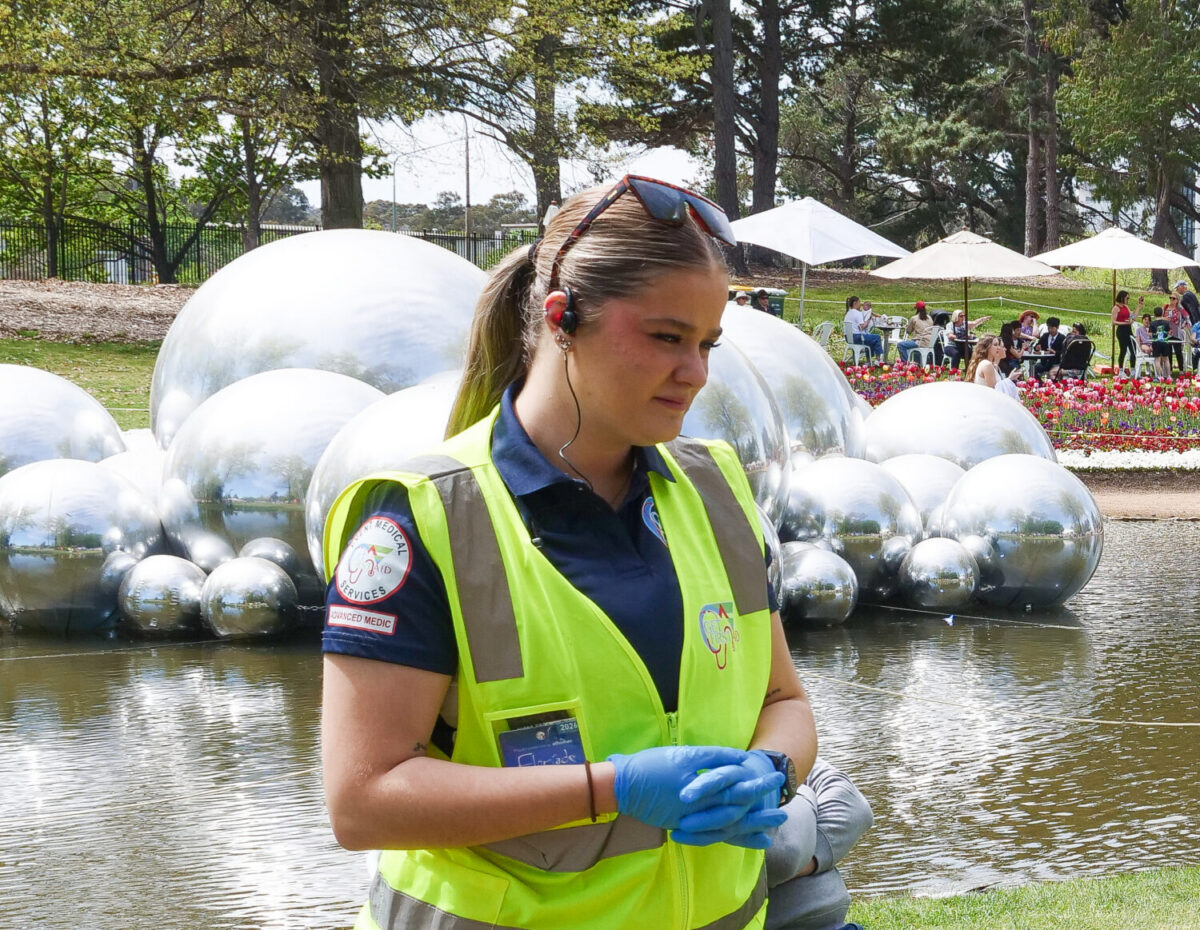
Abbi, an Advanced Medic with Get First Aid, has mentored a lot of APC students on placement. She passes on what she has already learnt, and says the variety is a big opportunity for students. They get to attend so many different events, they see every type of injury, every type of illness and allergic reaction. In her words, it’s quite broad. Students from all kinds of backgroundsRyan also pointed out how different placement students are. They come from many backgrounds and age groups. Some he has spoken to came from accounting and had never been to an environment like this, but after speaking with APC trainers and coming out on placement, they fall in love with it all. |
 |
That’s the part I think career changers should hear. You don’t need a clinical background to start.
Why Emergency Healthcare Training Matters in the Real World
Seeing the Get First Aid team work made one thing clear to me: learning first aid and being confident enough to use it are two different things.
Practical experience builds confidenceA classroom or workshop teaches skills. Placement is where those skills meet a real person who is injured or unwell.
|
Real-world exposure builds judgementReal-world exposure is hard to recreate in a training room, and it’s a big part of why these placements are valuable.
|
Industry connections open doorsFor anyone considering emergency healthcare, these connections between learning and working matters.
|
The lesson I took away from Floriade: you can’t know what will happen at a major public event, and that’s exactly why confident, trained professionals matter.
What I’m Taking Home From Floriade
A flower festival isn’t the first place most of us would think of for a medical emergency. But with more than eight cases managed in a single day, I won’t make that assumption again.
If Floriade has you wondering whether you could be the person who knows what to do when something goes wrong, here are some places to start:
- Explore the HLT51020 Diploma of Emergency Health Care at Australian Paramedical College.
- Read about clinical placement and how students put their skills into practice.
- See where the qualification can lead on our career pathways page.
- Learn more about our industry partnerships and the roles they offer.
- Hear from graduates on our student stories page.