Quick Snapshot
- Course studied: Certificate III in Non-Emergency Patient Transport (HLT31120) → Diploma of Emergency Health Care (HLT51020)
- Why APC: Practical pathway into emergency healthcare when university wasn’t yet accessible
- Career outcomes: Patient Transport Officer · Event Medic · Remote & On-Road Medic · Senior Medic · Clinical Training Manager · Trainer & Assessor
- Current role: Trainer & Assessor at Australian Paramedical College, Clinical Training Manager at Rescue Recovery 1 (casual, on-road)
- Still studying: Bachelor of Nursing (part-time), with future dual registration pathway
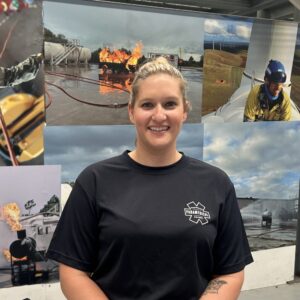
2010–2013: Early Career Foundations in Health, Fitness, and Injury Management
Macaylor completed Year 10 in 2010 and briefly commenced Year 11 before making a clear decision: traditional schooling wasn’t the right fit.
Instead, she pursued her long-standing interest in health, fitness, and helping people, by commencing her personal training qualifications.
By 2011, she had started her own personal training business inside a gym, working primarily in women-focused environments. Alongside this, she became heavily involved in community and rural football, working as a sports trainer with the Yanchep Red Hawks Football Club from 2011–2013. Her role went beyond fitness programming – she worked closely with players on injury prevention and management, particularly chronic issues like shin splints.
2014–2015: Working in Elite Sport and Re-Evaluating Career Direction
In 2014, Macaylor progressed into elite sport, working with:
- The AFL umpiring department
- VFL North Melbourne Football Club
Her role combined sports training, injury management, and rehabilitation.
What was becoming clear was this:
Her interest was beginning to shift from performance to medical care and injury response.
2016: Choosing a Practical Pathway into Emergency Healthcare Through APC
By 2016, Macaylor knew she wanted to work in emergency and pre-hospital healthcare.
She explored university paramedicine options, including applying to ECU. Like many non-traditional students, she encountered barriers:
- No ATAR
- Entry criteria that didn’t fully recognise her years of real-world injury management and sports training experience
Rather than forcing an academic pathway that wasn’t yet accessible, she made a deliberate, strategic decision to find a practical entry point into emergency healthcare.
That search led her to Australian Paramedical College (APC).
APC offered exactly what she needed:
- Hands-on clinical training
- Real clinical placement
- A direct connection to industry roles
- A way to test whether emergency healthcare was the right long-term career fit
Macaylor enrolled in the HLT31120 Certificate III in Non-Emergency Patient Transport – not as a shortcut, but as a foundation.
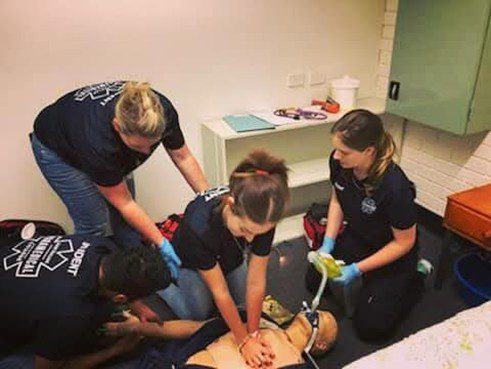
Image above: Macaylor Hull during an APC clinical workshop, participating in hands-on resuscitation training alongside fellow students.
During and shortly after completing the course:
- She commenced work as a Patient Transport Officer with National Patient Transport
- Gained real patient care experience in clinical environments
- Built confidence working with vulnerable patients and healthcare teams
- Picked up casual Event Medic work with a private ambulance provider
This period confirmed what she already suspected: Emergency and patient care was where she belonged.
2017: Diploma of Emergency Health Care, International Clinical Experience, and Trauma Response
With real-world experience behind her, Macaylor progressed into HLT51015 – Diploma of Paramedical Science, now superseeded by the HLT51020 Diploma of Emergency Health Care at APC.
While completing the diploma:
- She travelled interstate for workshops
- Continued working as a PTO
- Expanded her scope through event medical work
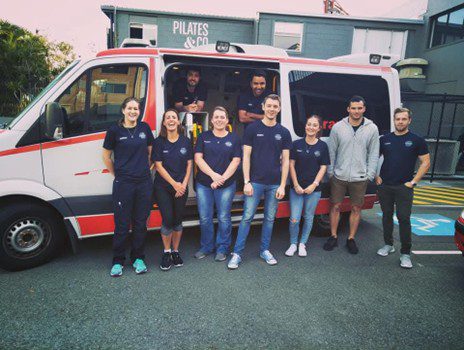
Image above: Macaylor Hull with her APC cohort on their final workshop day. Members of this group have since progressed into paramedicine, nursing, mining medical roles, and active military service.
Once she graduated from the Diploma:
- She continued working as a PTO with National Patient Transport, and as a Medic with a local ambulance provider
- Specialised in trauma-focused event work, particularly motocross events involving fractures, lacerations, and major bleeding
2018–2019: Mental Health Response, Remote Medic Work, and High-Risk Care
In 2018, Macaylor joined Wilson Medic One as a Medic, becoming part of their newly established mental health response division.
This role involved:
- Working alongside police
- Managing high-risk, involuntary patients
- De-escalation, restraint, and sedation
- Exposure to locked and high-security facilities
- Patients ranging from adolescents to the elderly
She also undertook remote mine-site medic work at Newmont Tanami (NT), managing serious injuries in isolated environments.
Throughout this time, she maintained casual ambulance and event work to retain broad clinical exposure.
2020–2021: Clinical Training, Career Break, and Transition into Nursing
By 2020, Macaylor moved into the training space at Wilson Medic One, assisting with:
- Vehicle extrication
- Trauma response
- Cannulation
- Advanced clinical skills
Later that year, she commenced maternity leave. Transitional paramedic registration lapsed during this period. In 2021, she welcomed her first child, enrolled in a Bachelor of Nursing at ECU, with the aim to complete this and gain dual AHPRA registration. While studying, she worked in aged care, developing skills in palliative care, dementia support, and end-of-life care.
2022–2023: Returning to Frontline Care and First Responder Roles
Macaylor returned to patient transport with AMR, easing back into frontline work while continuing her nursing studies. During this time, she received a formal patient commendation for professionalism and quality of care.
In 2023, she joined Medical Edge, gaining broader exposure and working as a First Responder at Ironman WA and other major events.
2024–2025: Advanced Clinical Training, Tactical Medicine, and Leadership Roles
In 2024, Macaylor joined RTS Training Group as a Trainer & Assessor, delivering:
- Basic, remote, and advanced first aid
- Advanced resuscitation
- High-risk workplace safety training
She developed strong expertise in:
- Compliance-aligned course design
- Contextualising training for police, fire, and industry clients
- Session planning and assessment delivery
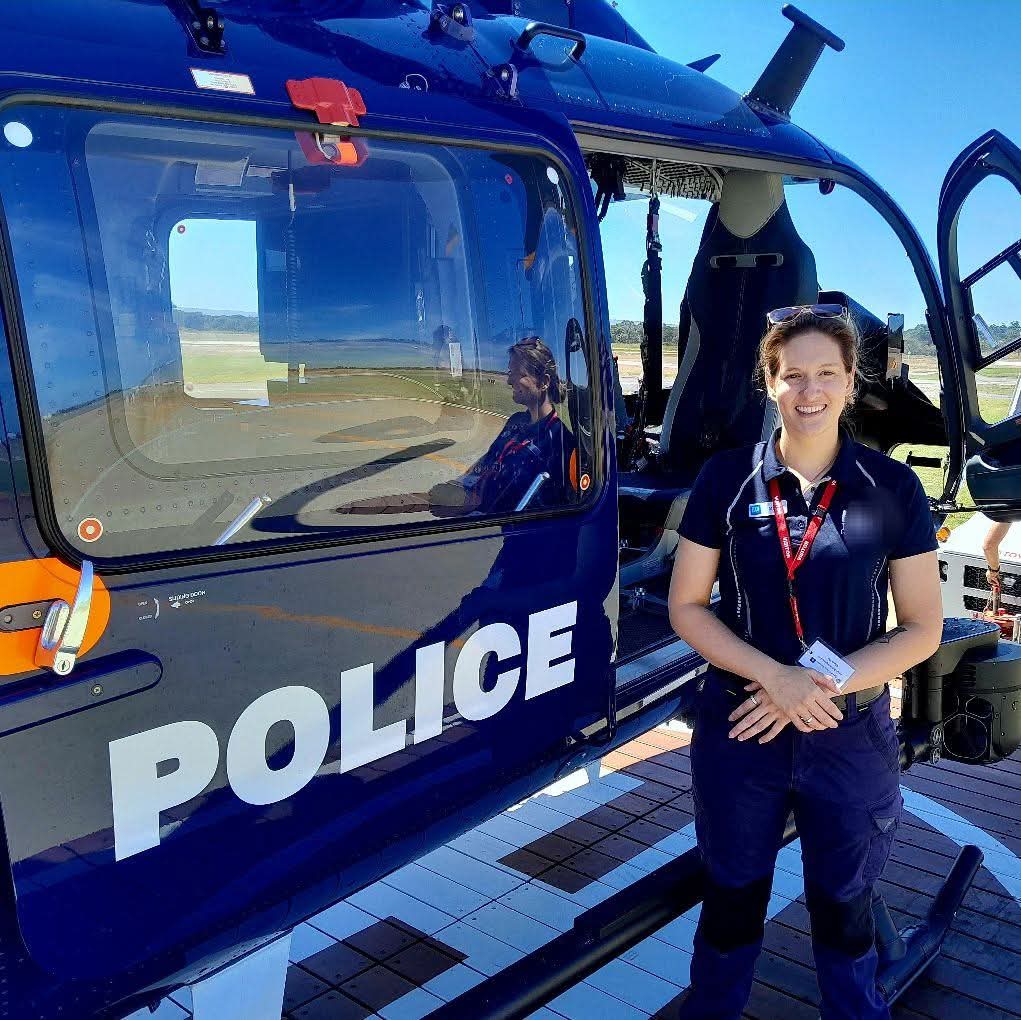
Image above: Macaylor Hull during advanced emergency response training with the police airwing, gaining practical experience in tactical and remote medical care.
Later that year, she commenced casual work with Rescue Recovery 1 (RR1) as a Senior Medic, before being promoted in 2025 to Clinical Training Manager.
She also joined TacMed Australia, delivering tactical medical training, including:
- Tactical Combat Casualty Care (TCCC)
- Advanced resuscitation
- High-acuity emergency response training for police and tactical units
2026–Present: Training the Next Generation at Australian Paramedical College
In late 2025, Macaylor joined Australian Paramedical College full-time as a Trainer & Assessor in WA.
Today, she:
- Trains and mentors students following the same pathway she once took
- Continues casual on-road work with Rescue Recovery 1 (RR1)
- Is completing her Bachelor of Nursing part-time, with plans for dual registration
She now regularly works alongside APC graduates – including former classmates – who have progressed into ambulance services, RFDS, and advanced clinical roles.
What This Graduate Journey Shows Future Students
Macaylor’s journey demonstrates that:
- There is no single “right” path into emergency healthcare
- Practical training can be a powerful foundation, not a limitation
- Pathways matter more than shortcuts
- Sustainable careers are built step by step
As Macaylor puts it:
“This pathway works if you’re willing to learn, stay humble, and put the work in. It’s not a shortcut – it’s a foundation.”
Considering a Career in Emergency Healthcare?
This journey began with no ATAR, no university entry, and no clear paramedic plan — and evolved into senior clinical and training roles across multiple sectors.
That’s the kind of pathway APC is designed to support.
Explore the Diploma of Emergency Health Care