Don’t have the right ATAR for direct Uni entry?
Explore our alternative entry pathway to a Bachelor of Paramedicine
If you did not achieve the ATAR required for direct entry into a Bachelor of Paramedic Science, a HLT51020 Diploma of Emergency Health Care ( can provide an alternative pathway into the industry and to study at university.
The HLT51020 Diploma of Emergency Health Care (which superseded the HLT51015 Diploma of Paramedical Science) is a nationally recognised qualification designed for people seeking careers in pre-hospital and emergency health care environments.
This qualification develops foundational clinical knowledge and practical skills used by emergency health care professionals working in areas such as private medical services, event health care, industrial sites, community response roles, and other pre-hospital settings.
Graduates may use the qualification as a pathway to further study, including university-level paramedicine degrees. Entry requirements, credit recognition and admission pathways vary between universities, so students should confirm requirements directly with their chosen institution.
If you missed out on university, this diploma can assist with securing an offer to study paramedical science at uni, if your end goal is to eventually become an Ambulance Paramedic.
A Pathway Into Pre-Hospital Emergency Health Care
The HLT51020 Diploma of Emergency Health Care (previously HLT51015 Diploma of Paramedical Science) reflects the skills and knowledge required by workers who provide patient assessment, emergency care and transport support services across a range of health care and emergency response settings.
Throughout the qualification, students develop knowledge in areas including:
- Patient assessment and clinical decision-making
- Emergency response procedures
- Basic and advanced life support principles
- Trauma management
- Cardiac assessment and monitoring
- Respiratory emergencies
- Medication administration within approved protocols
- Clinical documentation and patient handover processes
The qualification helps students develop the practical skills and theoretical understanding required to work in supervised or authorised pre-hospital health care roles, depending on employer requirements and applicable regulations.
Who would you choose at an interview for a Paramedic position?
John Smith with a Bachelor Degree…
or YOU who holds a Bachelor degree, HLT51020 Diploma of Emergency Health Care and 2 years’ of industry experience
It just makes sense – best of both world’s (not to mention the networking you can do in the industry to get that Paramedic career at the end of university).
- APC diploma graduates have previously been credited for multiple subjects within their degree. This often shortens the length of their degree while allowing them to work in the health care industry while they study
- The subjects credited differ depending on the courses offered within the degree per university. This can be subject to change as some universities have different entry requirements. We recommend you check with your chosen university.
Develop your clinical knowledge faster – complete the training sooner
Which pathway is right for you?
1. Complete this qualification in around 18-24 months and begin working in the private sector as a medic, EMT or First Responder.
As a diploma-qualified graduate, you’re equipped with high-level clinical knowledge in an authorised scope of practice within the private sector. Your training will prepare you to save lives; our graduates can testify to this.
2. Use the diploma to get into university, work in the private sector and build connections as you study the Bachelor of Paramedic Science, and then begin your career as a registered Ambulance Paramedic.
The diploma prepares graduates for entry into university to study the Bachelor of Paramedic Science.
Graduates of the college enjoy a less-stressful transition into university because of the knowledge they already possess. Degree credits have been awarded to APC graduates. We recommend contacting your preferred university because not all universities are the same. when it comes to credits.
With this diploma you can develop a career as a medic, EMT or First Responder in mining, offshore on rigs and ships, events, concerts, sporting events (motor racing, footy, rugby, tennis, cycling, equine etc), public and community events (Basic Life Support Medic) and a host of local and international volunteering roles.
Hear from a Senior Lecturer at Charles Sturt University about the benefits of completing the Diploma before commencing university studies
Course overview
This qualification contains 17 units of competency, comprised of 7 core and 8 mandatory electives.
The course curriculum has been designed to allow you the flexibility to learn by accessing a library of learning materials through a purpose-built online platform. Study on a smartphone/tablet/laptop/desktop. The learning materials are easy to follow with plenty of help and support from trainers, student success team, and your fellow students.
Payment options
Low deposit payment plan options are available.
Flexible Study
The diploma is delivered through a blended learning model, allowing you to study online while completing practical workshops and clinical placement requirements.
Students have a maximum of 24 months to complete the qualification, with study time varying depending on individual circumstances.
Typical study guide (approximate):
- 28 hours per week: 6–12 months
- 14 hours per week: Approximately 18 months
- 7 hours per week: Up to 24 months
These timeframes are provided as a guide only and will vary based on your study schedule and individual progress.
Clinical skills development
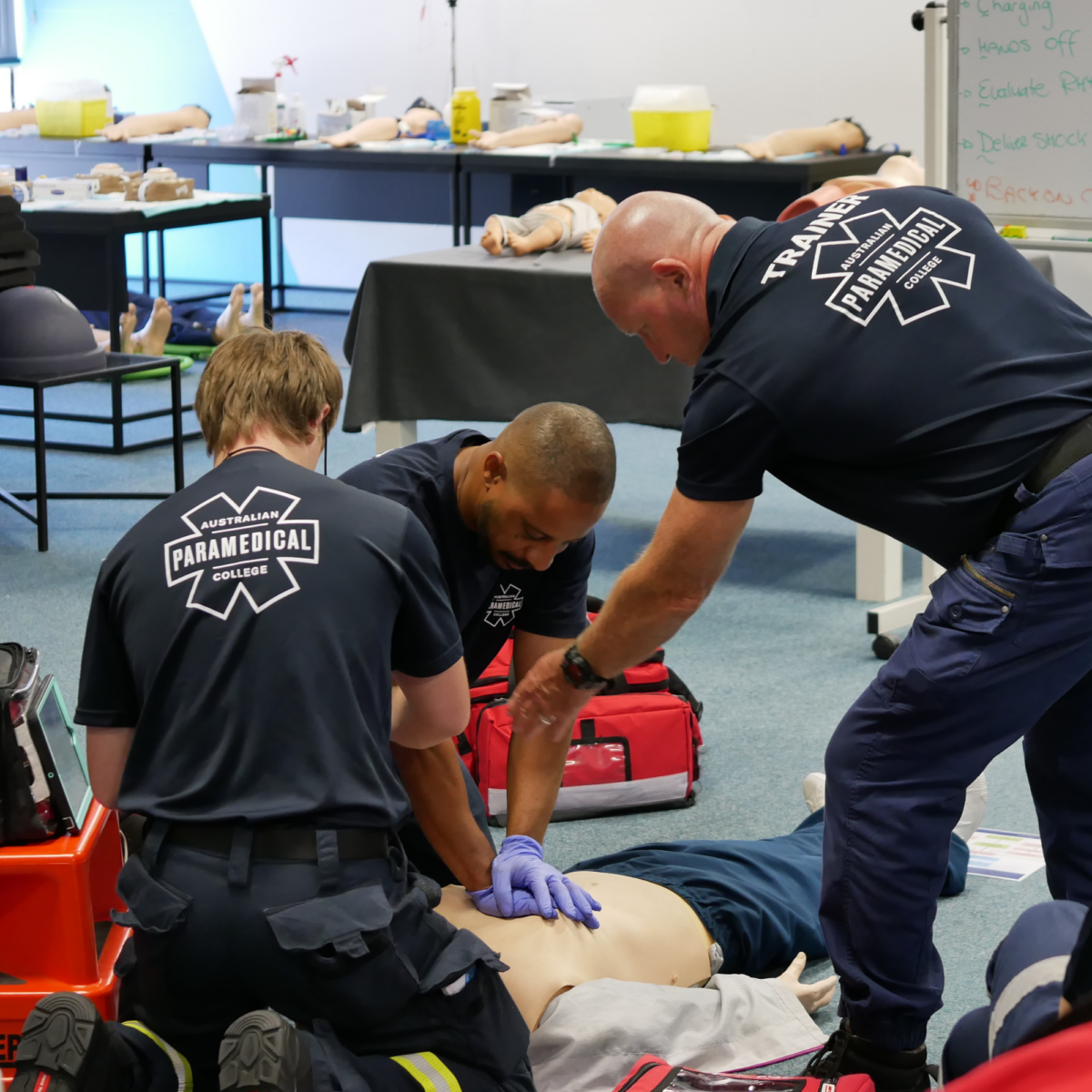
Clinical Workshops are an essential part of the HLT51020 Diploma of Emergency Health Care, providing the opportunity to apply your online learning in a practical, hands-on environment. Delivered at modern training facilities in Queensland, New South Wales, Victoria and Western Australia, the workshops allow you to develop and practise clinical skills in realistic emergency healthcare scenarios under the guidance of experienced trainers.
One of the most practical units in the course is Assess and Deliver Standard Clinical Care, where you’ll consolidate your knowledge and develop confidence in performing a broad range of clinical assessments and procedures. The workshops are designed to reinforce the theory you’ve studied online through supervised practice, realistic scenarios and structured skills development.
The course includes two separate five-day Clinical Workshops. Following Clinical Workshop 1, you’ll complete your first 80 hours of supervised clinical placement. After further online study—including preparation for Clinical Workshop 2 and completion of the Assess and Deliver Standard Clinical Care unit – you’ll attend your second workshop before completing your final 80 hours of clinical placement, giving you a total of 160 hours of practical placement experience.
During the course, you’ll develop knowledge and skills across a broad range of emergency healthcare topics, including:
- Patient assessment and triage
- Clinical decision-making
- Basic and advanced airway management techniques
- ECG acquisition and interpretation
- Intravenous cannulation and other clinical procedures included within the course
- Management of common medical and trauma presentations
- Safe patient transport and ongoing patient care
- Mental health presentations
- Communication with patients and healthcare professionals
- Clinical documentation and patient handover
- Personal wellbeing, resilience and teamwork
Clinical skills are taught in simulated and supervised educational settings. Graduates are expected to work within the scope of practice authorised by their employer, workplace protocols and relevant legislation.
Read the full scope of practice here
Personalised training
Although the Australian Paramedical College is the largest pre-hospital emergency health care training provider in Australia, we offer personalised training for small groups of students. The learning curriculum is a self-paced, blended learning style training program.
Our state-of-the-art campus facilities include:
- A wide range of clinical practice environments (Queensland (QLD), Western Australia (WA), New South Wales (NSW) and Victoria (VIC) locations.
- Dedicated rooms for self-directed medical learning
- Fully-equipped lecture rooms
- Clinical practice rooms
- Scenario and medical emergency simulation facilities
- A fully-equipped Mercedes Sprinter ambulance (as used by State Ambulance Services)
- An in-house, life-sized ambulance simulator for practice and group scenarios
- The latest emergency-healthcare equipment as used by Ambulance Paramedics
- Life-like mannequin technology for immersive experiences
 |
 |
Support and mentoring
Our students enjoy unlimited support and help from our dedicated in-house student success team; and instructors and trainers make sure you get the most out of the training.
Additionally there is a private Facebook group for students where a strong community of like-minded people gather to help, inspire and motivate one another. Industry partner and placement provider updates are also posted here. This is an integral part of the learning environment because surrounding yourself with people who you share common goals with is a perfect recipe for successful study outcomes.
Additional information / Entry Criteria
- Age: Be at least 16 years of age (parental consent required for those under 18 years of age). * There is no upper age limit
- Education: Complete at least year 10 of school or equivalent.
- Residency: Be an Australian/NZ citizen, Australian PR, or hold an approved temporary visa.
- Driver’s license: Hold a current and valid driver’s license (at least Ls in QLD, but otherwise at least Ps).
- Language Literacy Numeracy (LLN): Complete LLN test (unless holding equivalent or higher qualification in English).
- Health: Complete Medical Declaration form and be deemed physically and mentally fit to study.
- Technology: Have regular access to a computer and internet and be comfortable with online study and assessments.
- Clinical Placements will require:
- Evidence of National Police clearance
- Current Working with Children’s check (blue card)
Clinical placement
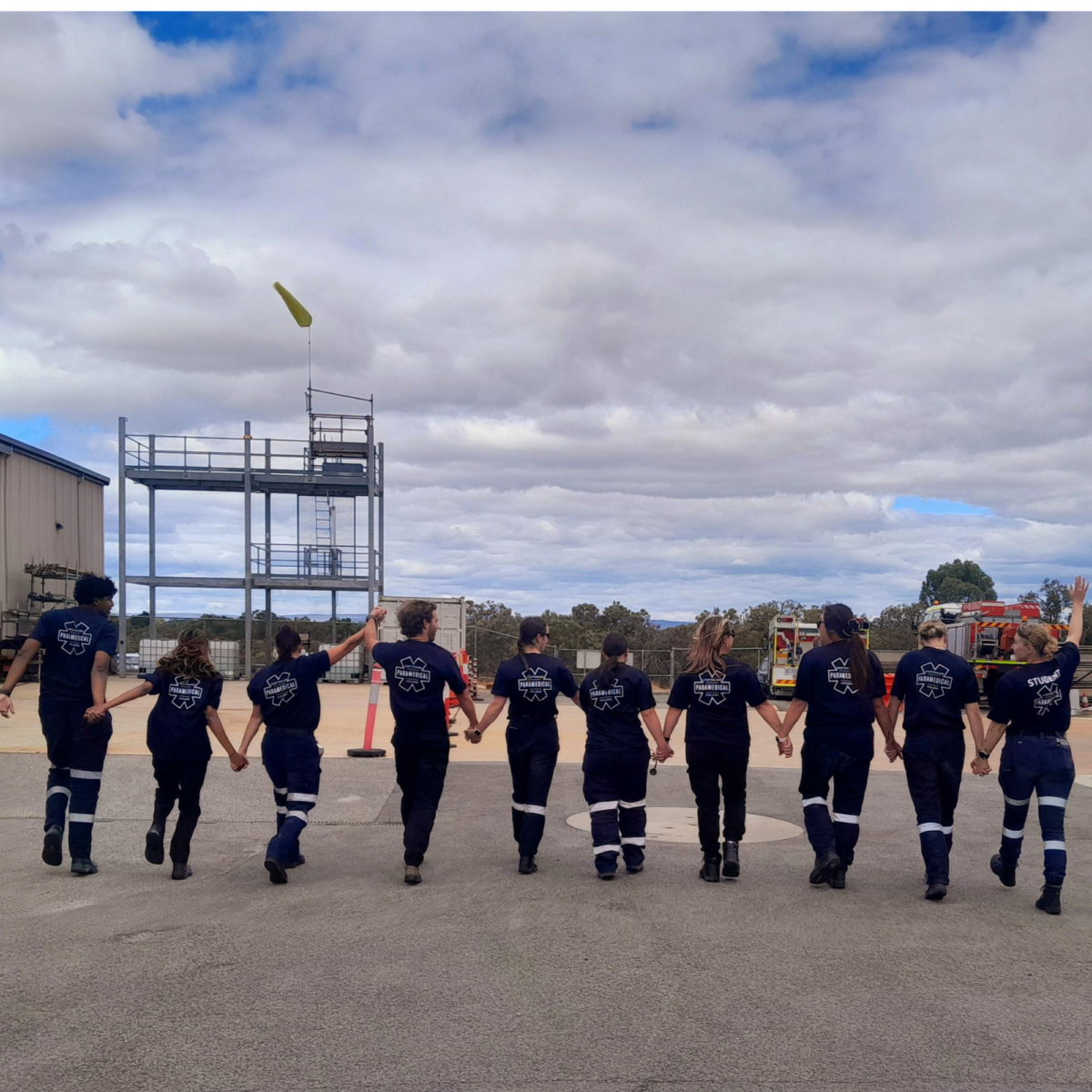
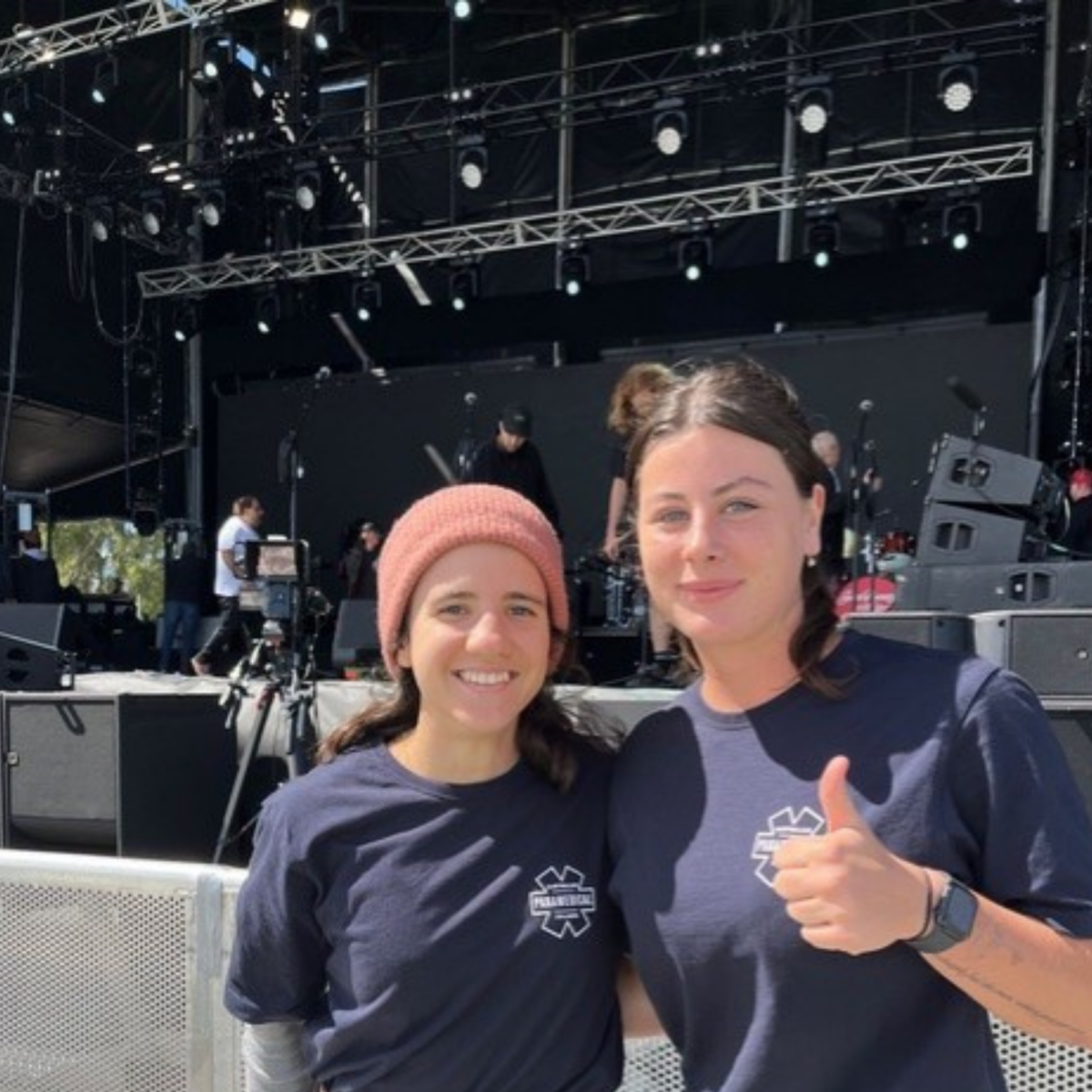
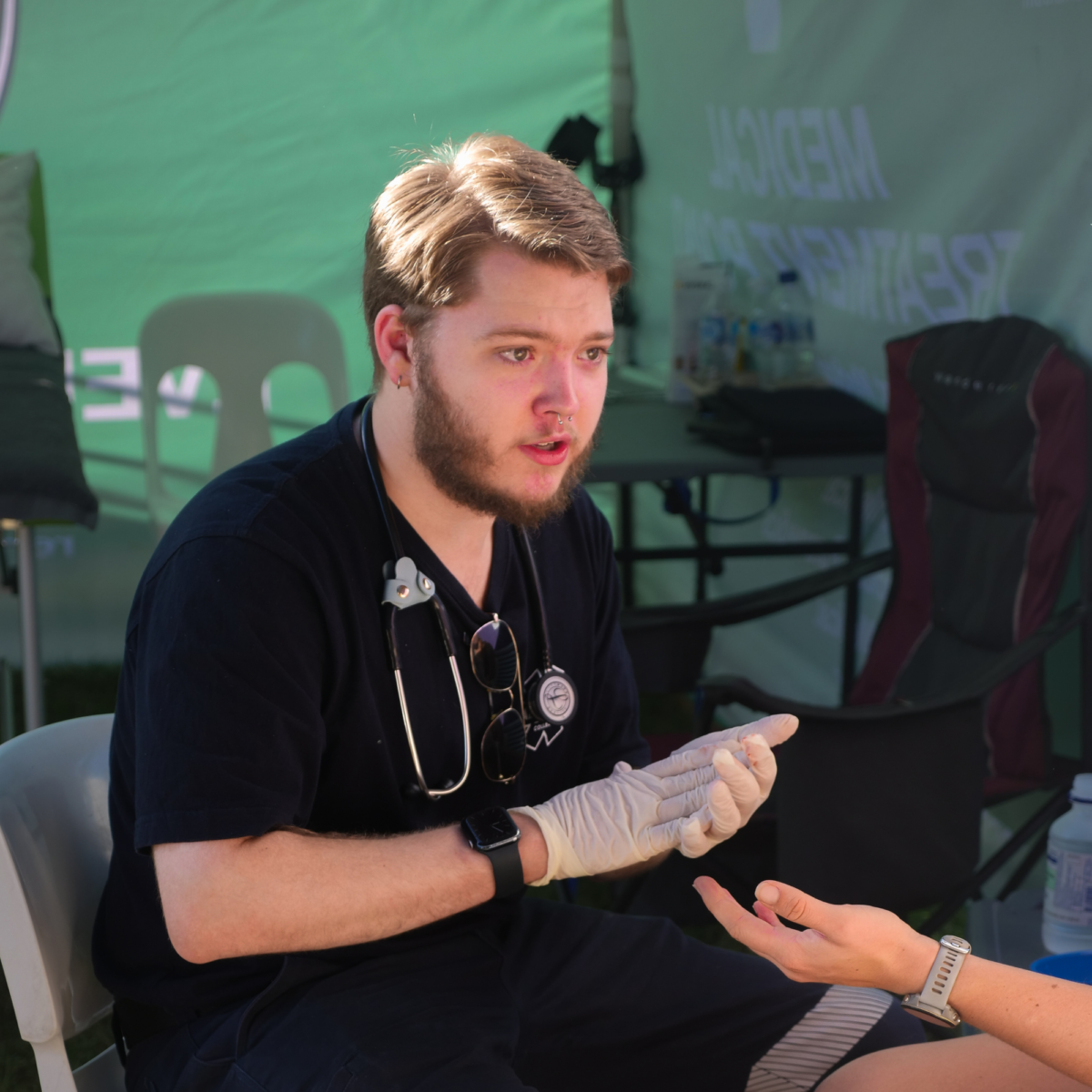
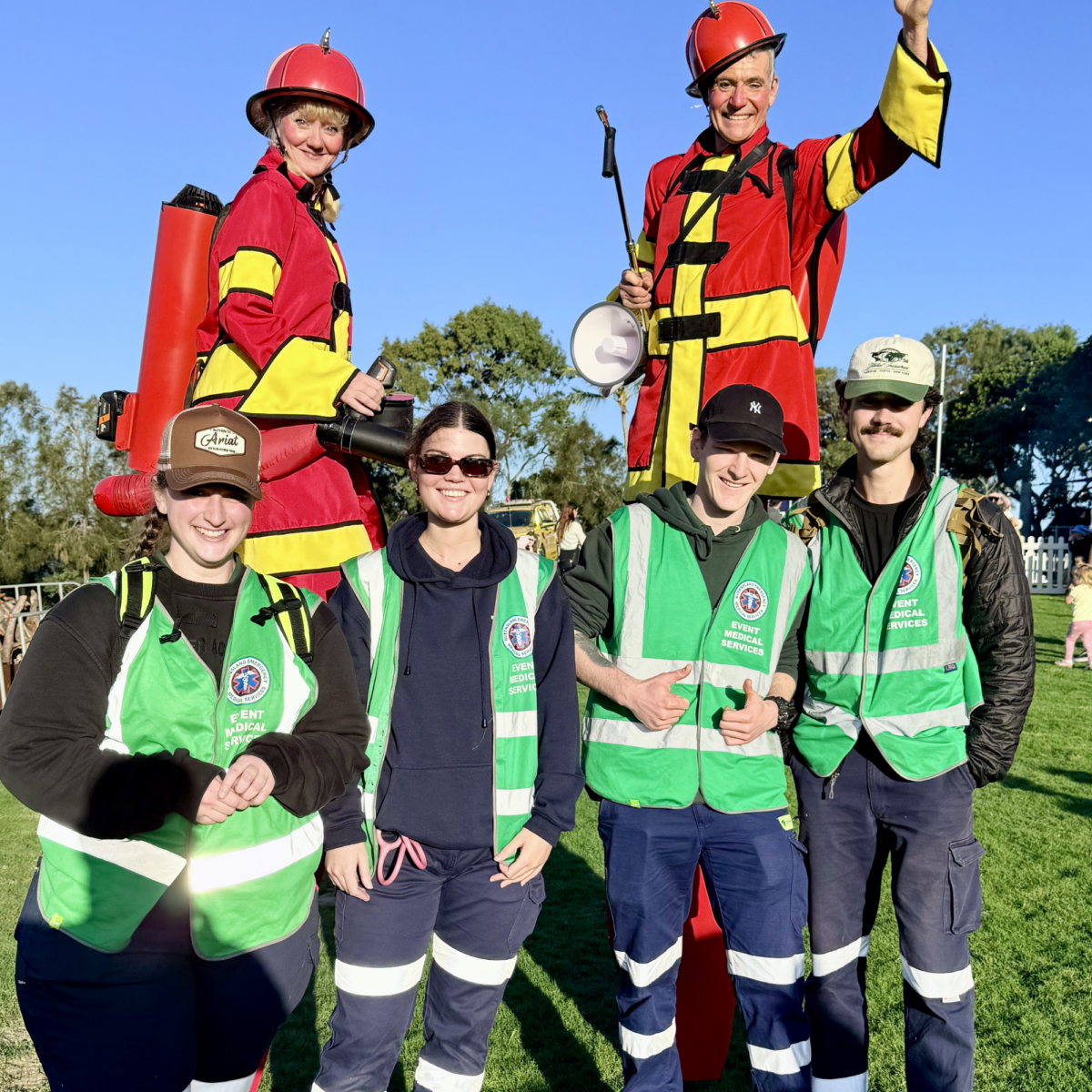
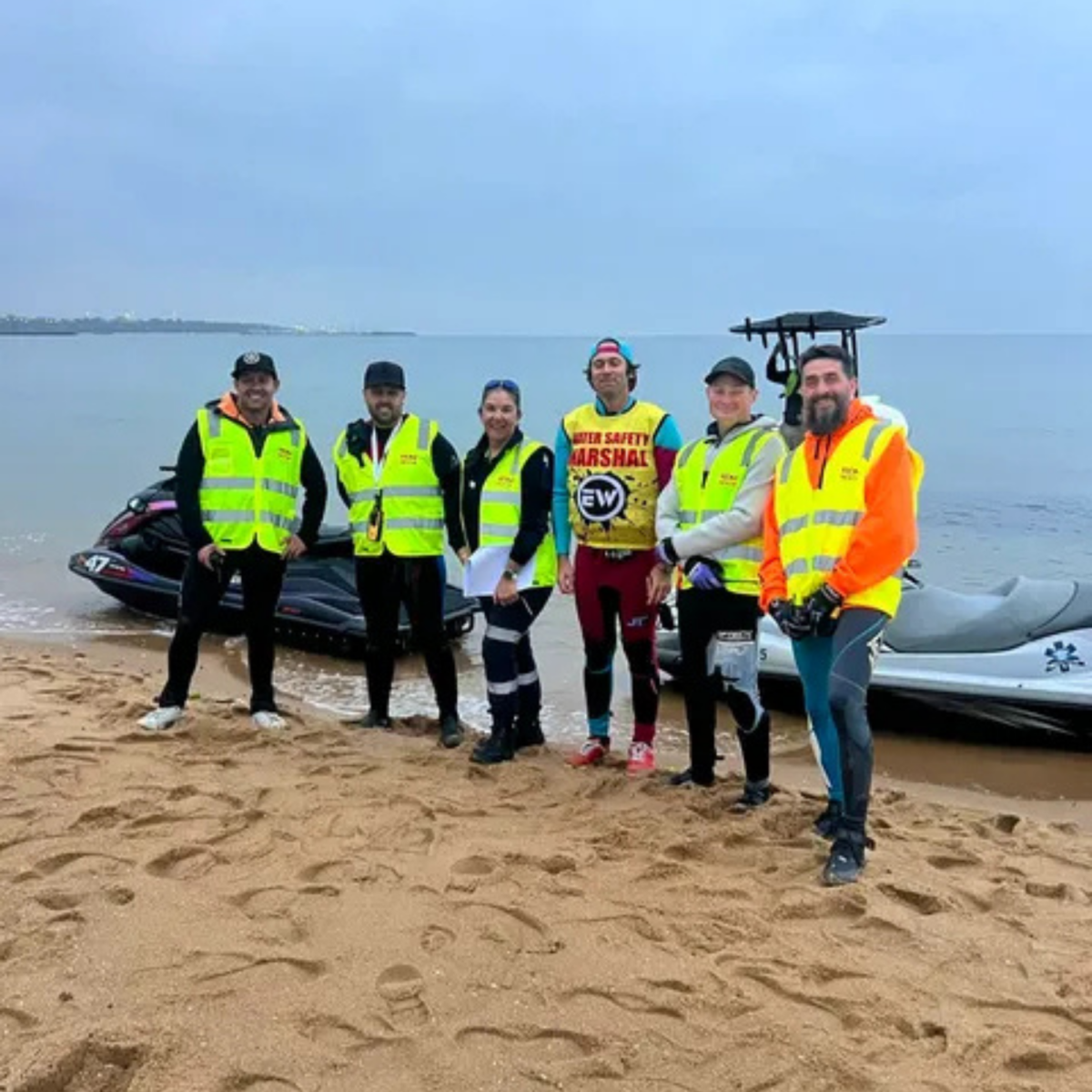
As part of your study / training, you’ll complete 160 hours of Clinical Placement, where you’ll gain practical, on-the-job experience in real-world emergency and pre-hospital settings. You’ll have the chance to work alongside industry professionals at events like music festivals, sporting events, or even remote mine sites, and apply your learning in high-pressure situations.
APC offers you the flexibility to tailor your clinical placement to your career interests and goals, with over 20 industry partners (including QEMS, Get First Aid, GroundMed and AirMed, Hato Hone St John and more) offering placements across Australia and New Zealand. Not only will this provide hands-on experience, but many students also receive job offers during their placement, as employers often use this time to evaluate potential candidates.
Your clinical placements will help you transition from theory to practice, preparing you for your career in emergency healthcare.
 |
 |
 |
 |
Frequently Asked Questions
No – it has now been superseded by HLT51020 Diploma of Emergency Healthcare.
Yes. The Diploma of Paramedical Science has been used by many students as an alternative pathway into university, particularly those who did not achieve the required ATAR or are applying as mature-age students. Entry requirements and credit arrangements vary between universities.
Yes. If you don’t have an ATAR or didn’t achieve the score needed for direct university entry, completing a nationally recognised diploma may provide an alternative pathway into a Bachelor of Paramedicine, depending on the university’s admission policies.
The HLT51020 Diploma of Emergency Healthcare (previously the Diploma of Paramedical Science) is a nationally recognised qualification across Australia and NZ.
Many students choose to complete a diploma first because it helps build clinical knowledge, confidence and practical experience before commencing university – especially for those who have never worked in healthcare. It may also provide access to private-sector employment while completing a Bachelor of Paramedicine.
Yes. Many mature-age students choose this pathway because of the flexible study options which make it easier to balance study with work and family commitments. It offers an alternative to relying on Year 12 results or an ATAR for university entry.
- You will be qualified to start working in the industry faster as you can apply for other emergency healthcare and pre-hospital roles such as a private medic, event medic, ambulance transport attendant and more whilst you study at University to complete your degree.
- Imagine graduating from university with real industry experience and connections
An Australian Paramedical College diploma may help you gain entry to university, even if you didn’t achieve the required ATAR or don’t have one as a mature-age student.
The APC Difference
Choose how you learn
Read, listen or watch your course content in your easy-to-use online portal.
Flexible study
Choose your own schedule and fit study into your lifestyle or work roster
Gain clinical skills
Clinical workshops are where you get to put the theory you’ve learned, into practice.
Job opportunities or go to uni to get a degree
Gain the qualifications to go straight into work, or progress to university to become a registered paramedic.
Ready to learn more?
Take a closer look at our courses and have a chat to one of our friendly Course Advisors to find out how APC can help you create that amazing career you’ve always dreamed of.