Re-published 28th, April, 2026
NSW Ambulance is one of Australia’s largest emergency health services, employing more than 7,500 staff across metropolitan, regional and remote NSW, including paramedics, control centre staff, and support personnel.* The service operates from over 220 ambulance stations and response locations statewide, supporting rapid emergency response across diverse communities.*
Each year, NSW Ambulance responds to more than 1.2 million Triple Zero (000) calls, highlighting the scale and demand placed on frontline paramedics.* In 2023, the service recorded over 1.4 million emergency responses, averaging a call every few seconds across the state.*
With a population of over 8 million people in NSW, the organisation plays a critical role in delivering emergency care, rescue, and transport services across one of the busiest ambulance jurisdictions in the world.*
Choosing a career with NSW Ambulance means joining a high-performing, fast-paced healthcare system at the frontline of emergency medicine – where every shift has a direct impact on saving lives.
If you’re interested in gaining employment with NSW Ambulance as a paramedic, make sure to read on… you may be surprised to know that you don’t always need to have a bachelor’s degree to get started!
*Source: NSW Government
*Source: NSW Ambulance
How Do You Work With NSW Ambulance? (2026 Pathways)
To work as a paramedic with NSW Ambulance, you must complete a University Bachelor of Paramedicine and meet NSW Ambulance’s recruitment and clinical requirements. University entry is competitive and typically based on ATAR results or equivalent pathways.
If you don’t meet the entry requirements straight away, or you want to strengthen your application, many students begin with vocational health training. Courses such as a Diploma of Emergency Health Care can help build clinical skills, industry knowledge, and academic readiness before applying to university paramedicine programs.
Pathways through APC
There are three pathways you can take to become a paramedic with NSW Ambulance:
- Diploma of Emergency Health Care (Foundational Pathway)
- Paramedic Intern (Graduate) pathway
- Qualified Paramedic pathway
Step 1: Diploma of Emergency Health Care (Foundational pathway)
The Diploma of Emergency Health Care is an important entry-level qualification for students exploring paramedic careers in NSW.
While it does not qualify you as a paramedic, it is valuable because it helps you:
- Build foundational clinical and patient care skills
- Learn core emergency healthcare and pre-hospital concepts
- Develop confidence before university study
- Strengthen your application for a Bachelor of Paramedicine NSW
This makes the diploma a strategic first step, especially for students who are not yet ready for direct university entry but are serious about NSW Ambulance jobs in the future.
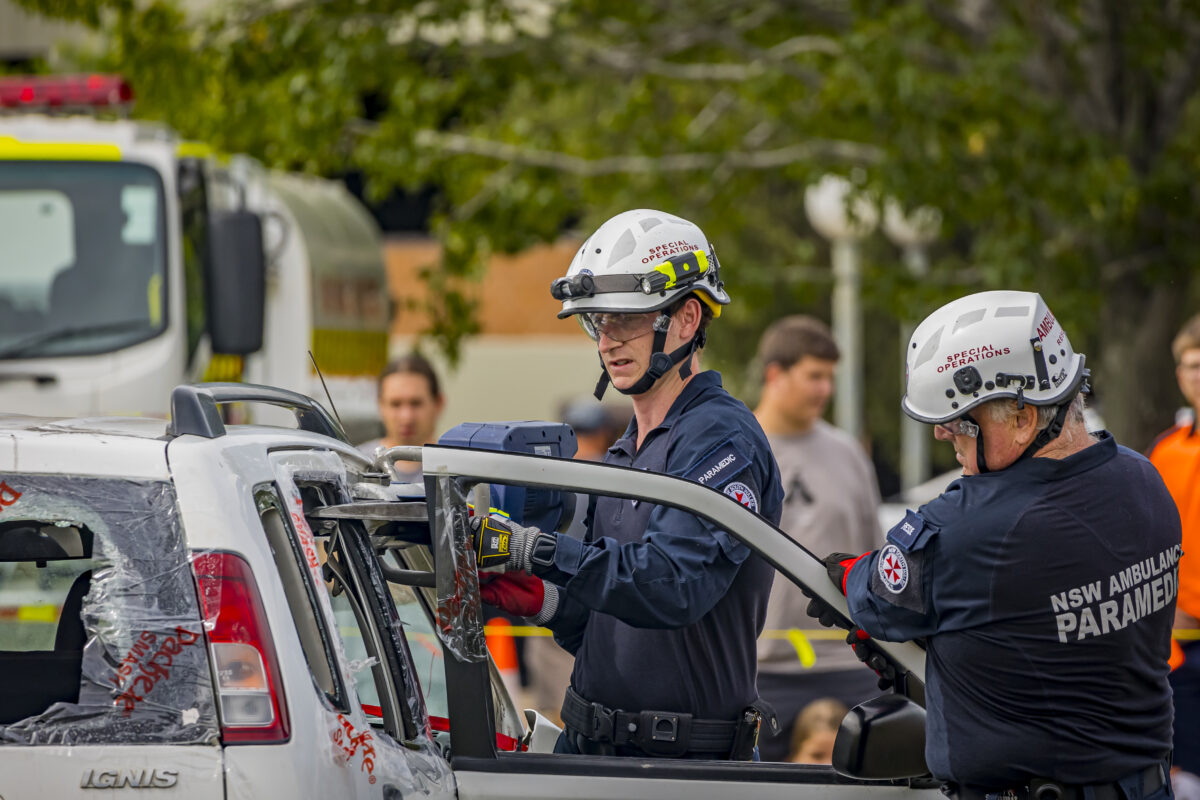 Image: Fleet Street Photography (2024)
Step 2: Bachelor of Paramedicine (Core qualification)
After completing the diploma (or meeting direct entry requirements), the next step is a Bachelor of Paramedicine at university.
This is the minimum qualification required for most NSW Ambulance paramedic roles.
Universities include:
- Charles Sturt University
- Western Sydney University
- Australian Catholic University
- University of Tasmania
Pathway 3: NSW Ambulance Graduate Recruitment
After completing a Bachelor of Paramedicine from an accredited Australian university, graduates can apply for the NSW Ambulance Graduate Paramedic Intern program.
This pathway is available to students who have recently completed, or are in the final stages of completing, a paramedicine qualification accredited by the Australian Health Practitioner Regulation Agency (AHPRA) and the relevant National Boards.
To work as a paramedic with NSW Ambulance, professional registration with AHPRA is a mandatory requirement.
What do I need to do to become a Paramedic?
Becoming a Paramedic is an extremely exciting and hard-earned position, but something that does not come overnight. Since 2018, the Paramedicine Board of Australia requires individuals to be registered to legally bear the title ‘paramedic’ in Australia.
To be qualified for registration, individuals must:*
- Complete a Bachelor of Paramedicine (or similar).
- Hold a Paramedicine qualification that is equivalent to, or based on similar competencies.
*Paramedicine Board (2026)
Can you work for NSW Ambulance without a degree?
You cannot become a registered paramedic without completing an approved qualification.
However, the Diploma of Emergency Health Care plays an important preparatory role, helping students enter university and build the foundational knowledge needed for paramedic training in Australia.
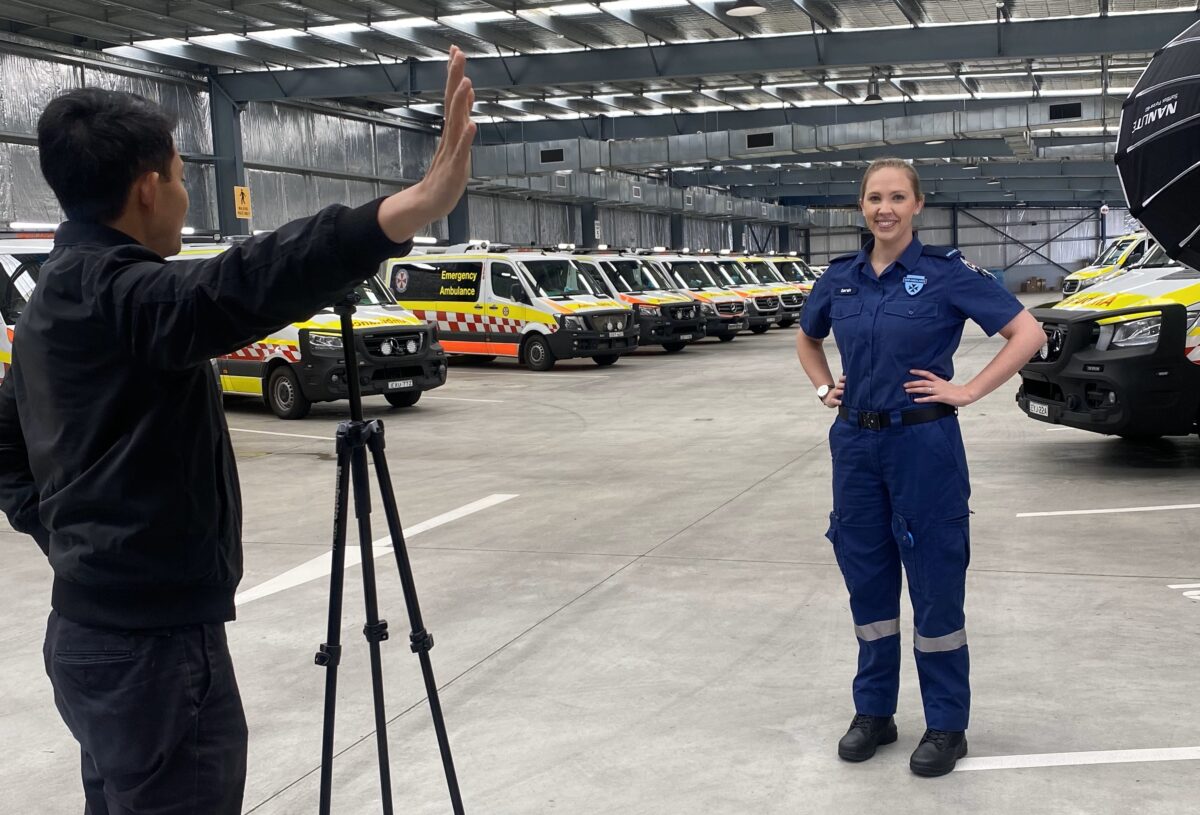 Image: APC Diploma graduate, Sarah Sgroi who completed a Trainee Paramedic (Vocational) pathway (2023) with NSW Ambulance.
Why the Diploma is valuable for NSW Ambulance careers
The Diploma is not an alternative to becoming a paramedic — it is a pathway accelerator.
It is valuable because it:
- Bridges the gap between school and university
- Builds confidence in emergency healthcare environments
- Strengthens academic readiness for paramedicine study
- Helps students confirm their commitment to NSW Ambulance careers before investing in a degree
For many students, it is the starting point that makes a future paramedic career achievable.
University Entry Criteria
You must also fulfil one (or more) of the following university criteria:
- Have completed a high school certificate with an ATAR of 80 (or higher, including adjustment factors) or equivalent
- Successful completion of a minimum of four (50 credit points) undergraduate units of study
- Completed an AQF Diploma or higher-level qualification of the HLT51020 Diploma of Emergency Health Care, HLT51015 Diploma of Paramedic Science, or HLT54121 Diploma of Nursing, or a combined JMED and Diploma of Nursing (ADF)
- Have completed a tertiary preparation course from an Australian university (or accredited provider), demonstrating a reasonable prospect of success through GPA results
- Completed a university diploma level or higher course at any Australian higher education provider (or equivalent overseas qualification)
Source: NSW Ambulance (2026)
*NSW Ambulance advertises positions for these programs intermittently, with no guarantee of ongoing availability or the number of places offered. Eligibility criteria may also change at any time. It is recommended to contact NSW Ambulance directly for the most up-to-date information on entry pathways.
Why study with Australian Paramedical College (APC)?
Australian Paramedical College delivers flexible, self-paced blended learning designed for students pursuing paramedic training in NSW and Australia.
It is ideal for individuals who:
- Want to begin a structured paramedic career NSW pathway
- Need flexible study around work or life commitments
- Plan to progress into a Bachelor of Paramedicine
With over 1,000 students trained into pre-hospital and emergency healthcare sectors, APC supports future professionals preparing for NSW Ambulance careers and emergency healthcare roles.